Tell us about the job
Takes about a minute. No obligation.
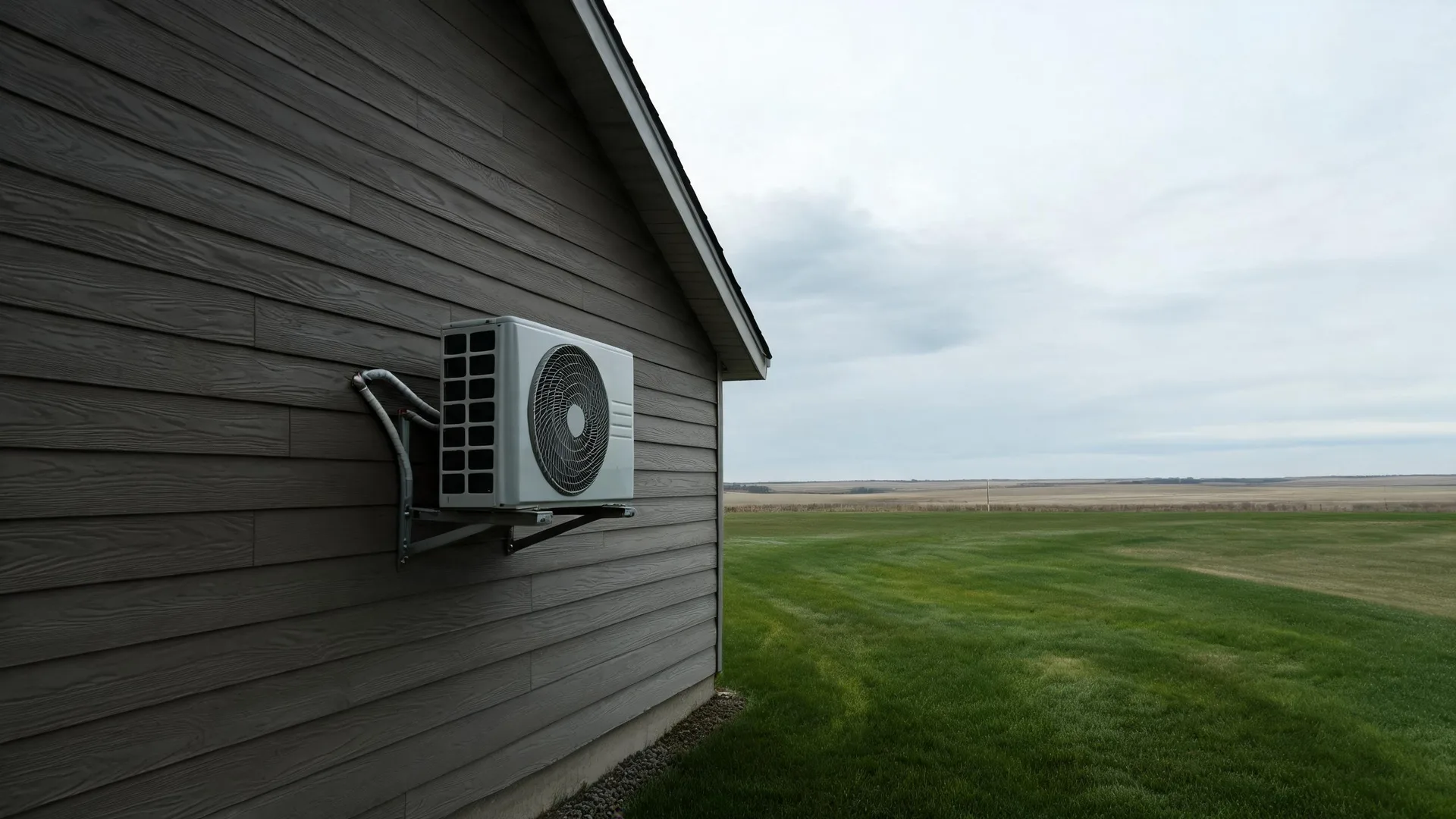
A contractor quoting a mini-split installation in Lyon County has to size the system for what the compressor will actually carry, not just for the hottest afternoon on record. Homes in Lyon County, KS run cooling about four months a year, from June through September. Across that stretch, the compressor starts and stops repeatedly, the condenser fan runs through sustained heat, and the contactor cycles far more than it would in a shorter season. A unit sized too small to handle that sustained demand runs longer at higher strain each cycle. The installer's load calculation has to account for the full seasonal run, because a compressor that is borderline adequate on paper reveals itself in early failure.
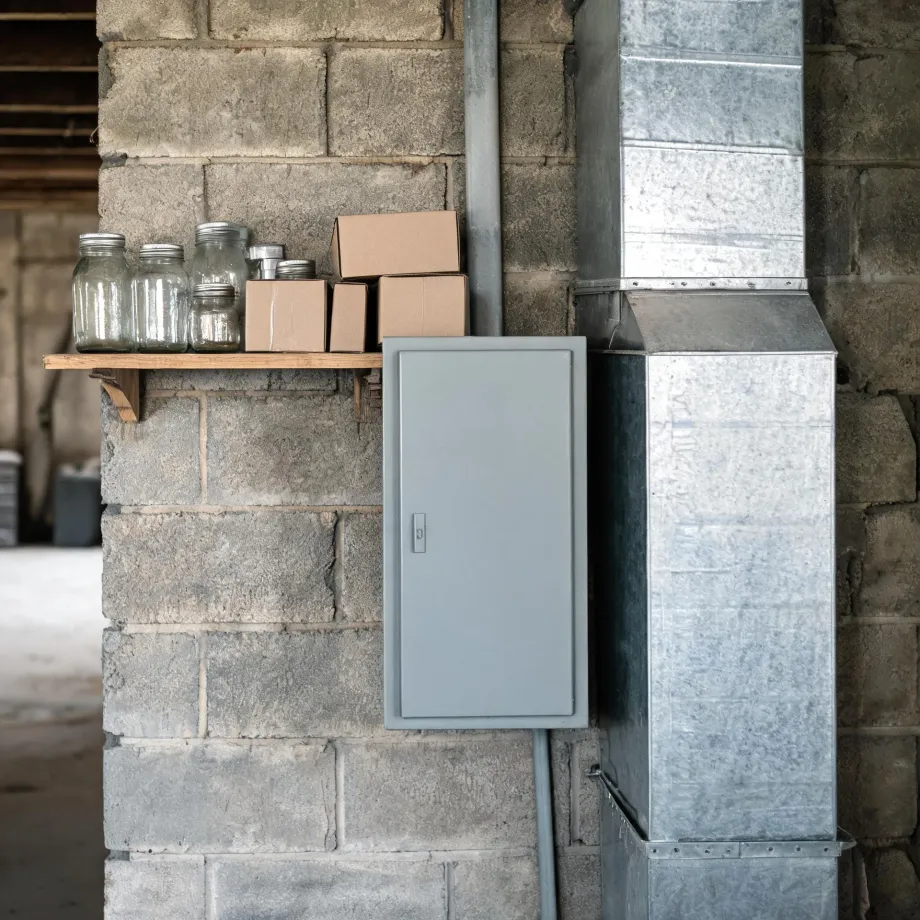
Older ductwork in a house like this is already a non-issue for a mini-split installation, since the whole point of the system is that it runs without ducts. What a contractor has to establish instead is whether the electrical service can carry the new load. Half the homes in Lyon County, Kansas were built in 1970 or earlier (2020-2024 ACS 5-year). Houses built in that era were wired for the heating equipment of that era, and a mini-split's demand at the panel can push past what the original service was sized to handle. A licensed contractor will measure that before anything else gets quoted.
What a Mini-split Installation Puts in Your Home
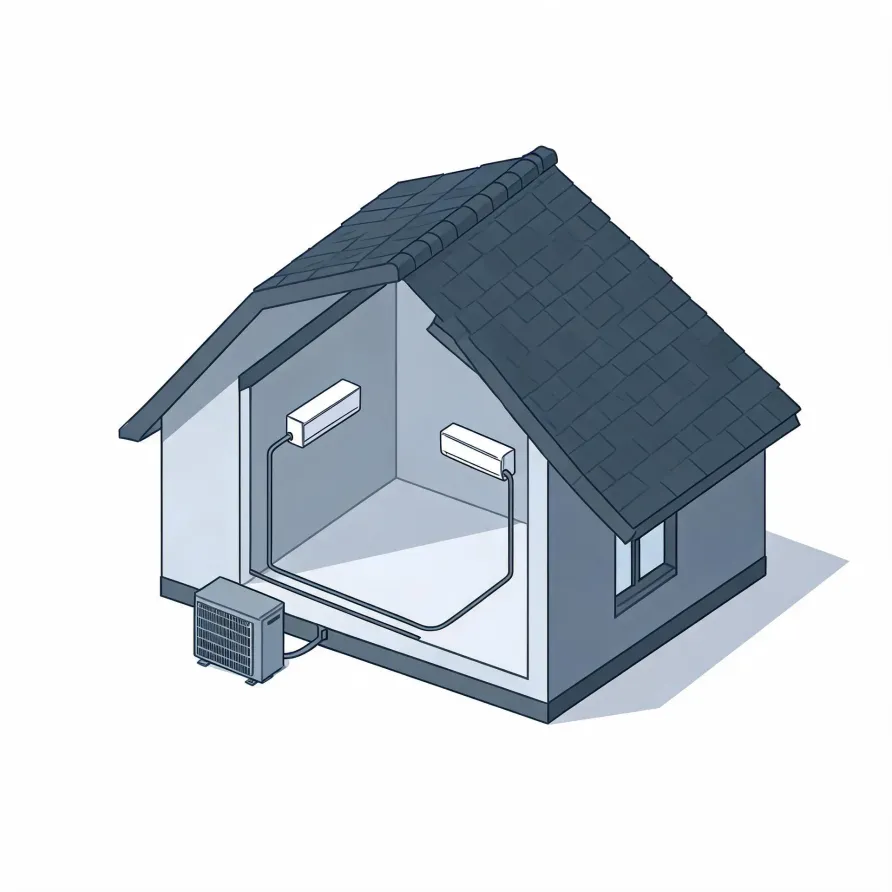
The indoor air handler mounts high on an interior wall inside the room being conditioned, and it is the piece the homeowner sees every day. The outdoor unit sits on the ground or on a wall bracket outside the house and holds the compressor and the condenser coil.
A set of refrigerant lines runs through a small opening in the wall to connect the two units, and a condensate drain line carries moisture from the indoor handler to the outside. A dedicated disconnect box is mounted near the outdoor unit to give the contractor a local shutoff point.
The drawing shows a typical layout, and a licensed contractor determines exactly how each piece is positioned and routed for your specific home.
Get matched in Lyon CountyLyon County, Kansas, by the numbers
194 severe weather events were recorded in Lyon County, Kansas between 2015 and 2024.
NOAA National Centers for Environmental Information, Storm Events Database, bulk CSV export, events 2015-01-01 through 2024-12-31.Half the homes in Lyon County, Kansas were built in 1970 or earlier (2020-2024 ACS 5-year).
U.S. Census Bureau, 2020-2024 American Community Survey 5-Year EstimatesLyon County, Kansas holds 15,027 housing units (2020-2024 ACS 5-year).
U.S. Census Bureau, 2020-2024 American Community Survey 5-Year EstimatesOwners occupy 57.9% of the occupied homes in Lyon County, Kansas (2020-2024 ACS 5-year).
U.S. Census Bureau, 2020-2024 American Community Survey 5-Year EstimatesSevere Weather Events in Lyon County
Weather extremes put real demands on heating and cooling equipment, and those demands vary by location. What Lyon County sees shapes what any mini-split installed here has to handle over its life.
194 severe weather events, 2015–2024. Source: NOAA National Centers for Environmental Information, Storm Events Database.