Tell us about the job
Takes about a minute. No obligation.
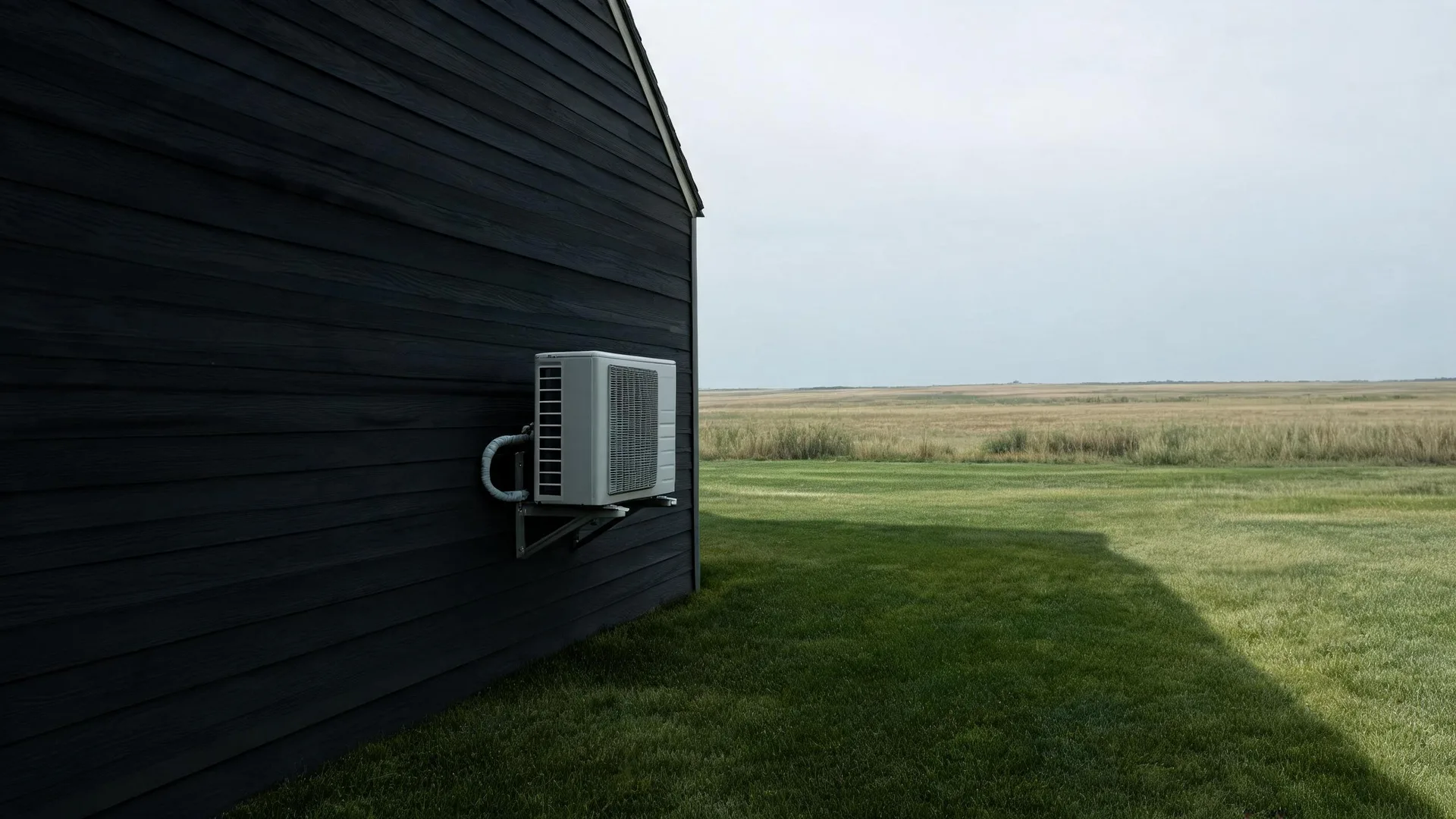
Sizing a mini-split for Chase County starts with what the compressor is actually asked to do here. Homes in Chase County, KS run cooling about four months a year, from June through September. That concentrated run puts real cycles on the compressor and the condenser fan, then leaves the system off for the bulk of the year. Long idle periods let refrigerant seals dry, contactors corrode, and drainage lines clog without any symptom showing up until the unit restarts. A contractor quoting an installation here accounts for that pattern when specifying equipment and choosing where the outdoor unit sits.
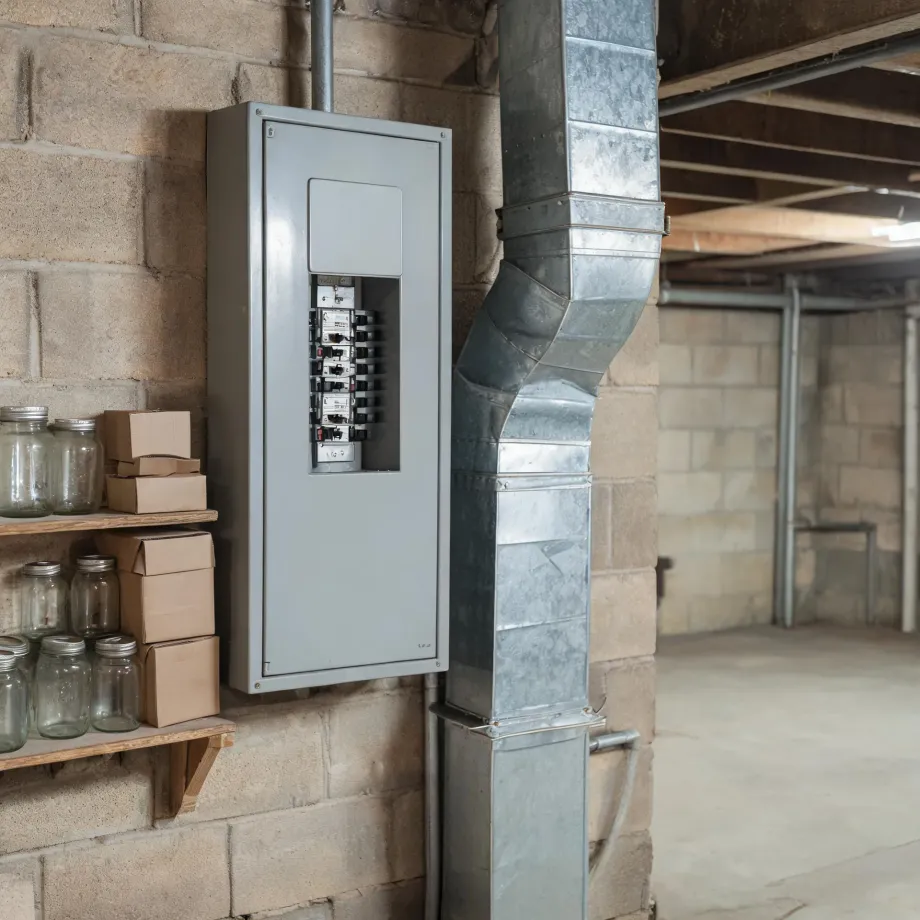
Older electrical panels were built for what was in the house at the time it was built, and a mini-split installation adds a load those panels were never sized to carry. Half the homes in Chase County, Kansas were built in 1958 or earlier (2020-2024 ACS 5-year). A contractor quoting a mini-split job here will open the panel box and read what is actually there before pricing the rest of the work, because what the service will support sets the ceiling on what can be installed. Ductwork is not the variable on a ductless system, but the electrical absolutely is.
What a Mini-split Installation Puts in Your Home
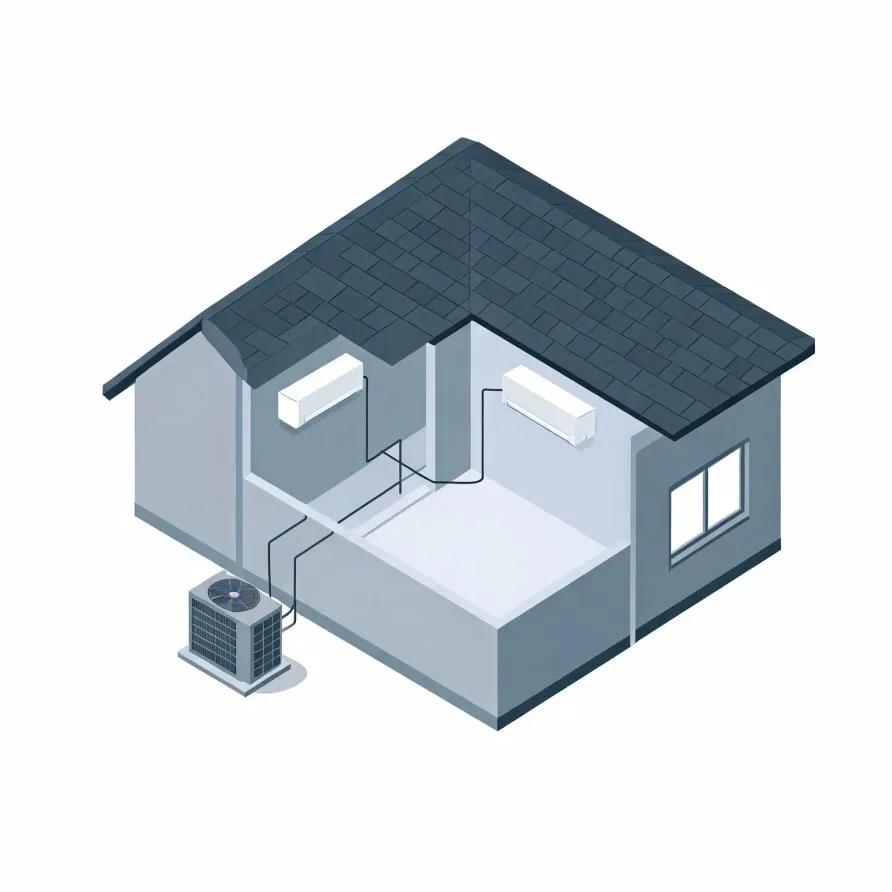
The indoor air handler mounts high on an interior wall in the room being conditioned, and it is the piece you see every day. The outdoor unit sits on the ground or a bracket outside the house and holds the compressor and condenser coil, doing the mechanical heavy lifting for the whole system.
A set of refrigerant lines and a condensate drain line run through a small hole in the wall to connect the two units, and a dedicated electrical line feeds the outdoor unit directly. A disconnect box is mounted near the outdoor unit so a contractor can safely cut power to the system.
The drawing alongside shows a typical layout, and a licensed contractor determines exactly how each piece is positioned and routed for your specific home.
Get matched in Chase CountyChase County by the numbers
91 severe weather events were recorded in Chase County, Kansas between 2015 and 2024.
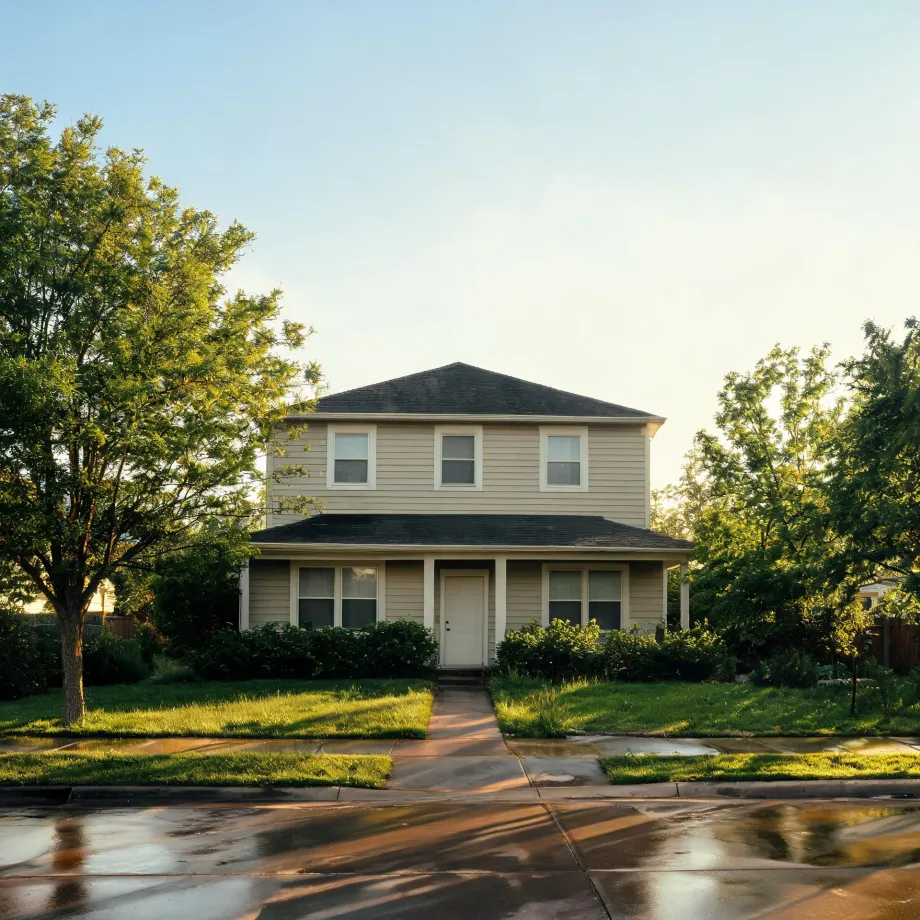
NOAA National Centers for Environmental Information, Storm Events Database, bulk CSV export, events 2015-01-01 through 2024-12-31.Half the homes in Chase County, Kansas were built in 1958 or earlier (2020-2024 ACS 5-year).
U.S. Census Bureau, 2020-2024 American Community Survey 5-Year EstimatesChase County, Kansas holds 1,388 housing units (2020-2024 ACS 5-year).
U.S. Census Bureau, 2020-2024 American Community Survey 5-Year EstimatesOwners occupy 73.3% of the occupied homes in Chase County, Kansas (2020-2024 ACS 5-year).
U.S. Census Bureau, 2020-2024 American Community Survey 5-Year EstimatesSevere Weather Events in Chase County
Kansas weather puts real demand on heating and cooling equipment, and that demand is not the same in every part of the state. A mini-split sized and installed for local conditions handles what Chase County actually throws at it.
91 severe weather events, 2015–2024. Source: NOAA National Centers for Environmental Information, Storm Events Database.