Tell us about the job
Takes about a minute. No obligation.
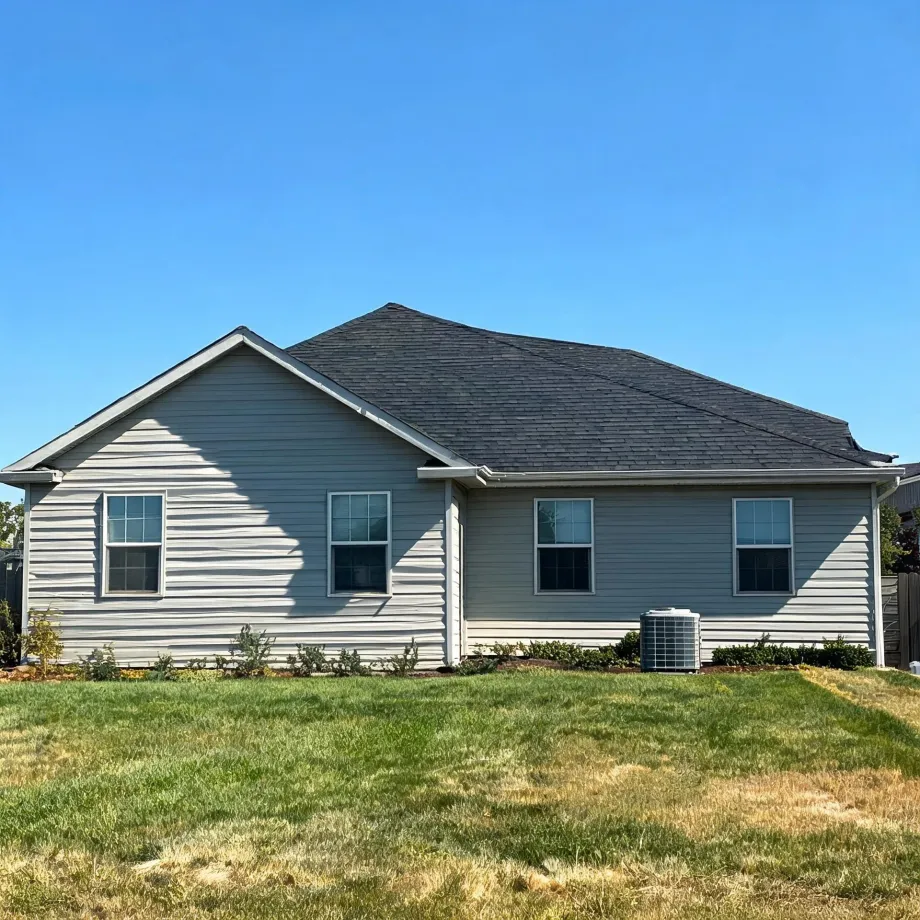
Sizing a mini-split for this area starts with understanding exactly what the compressor is being asked to do each summer. Homes in Greenwood County, KS run cooling about four months a year, from June through September. That concentrated cooling demand lands entirely on the compressor, the condenser fan, and the contactor, cycling them hard through June, July, August, and September, then leaving them idle the rest of the year. A contractor quoting a mini-split installation here has to match the unit's capacity to that peak load precisely, because an undersized system runs at its ceiling through the whole cooling window with no slack.
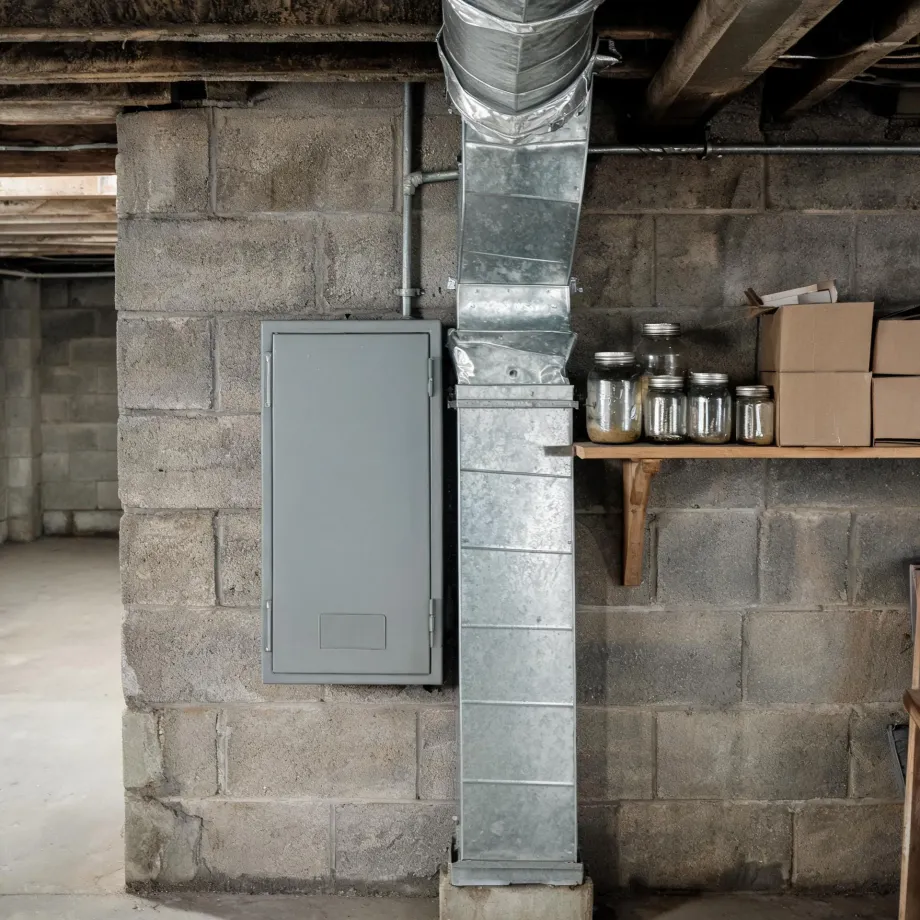
Older service panels are sized for what the house originally ran, and a mini-split draws differently than what most of this stock was wired to support. Half the homes in Greenwood County, Kansas were built in 1956 or earlier (2020-2024 ACS 5-year). A contractor quoting a mini-split here checks the panel before pricing the equipment, because undersized service means the install either waits on an upgrade or gets scoped around one. The ductwork question drops away with a ductless system, but the electrical question stays.
What a Mini-split Looks Like Once It's In
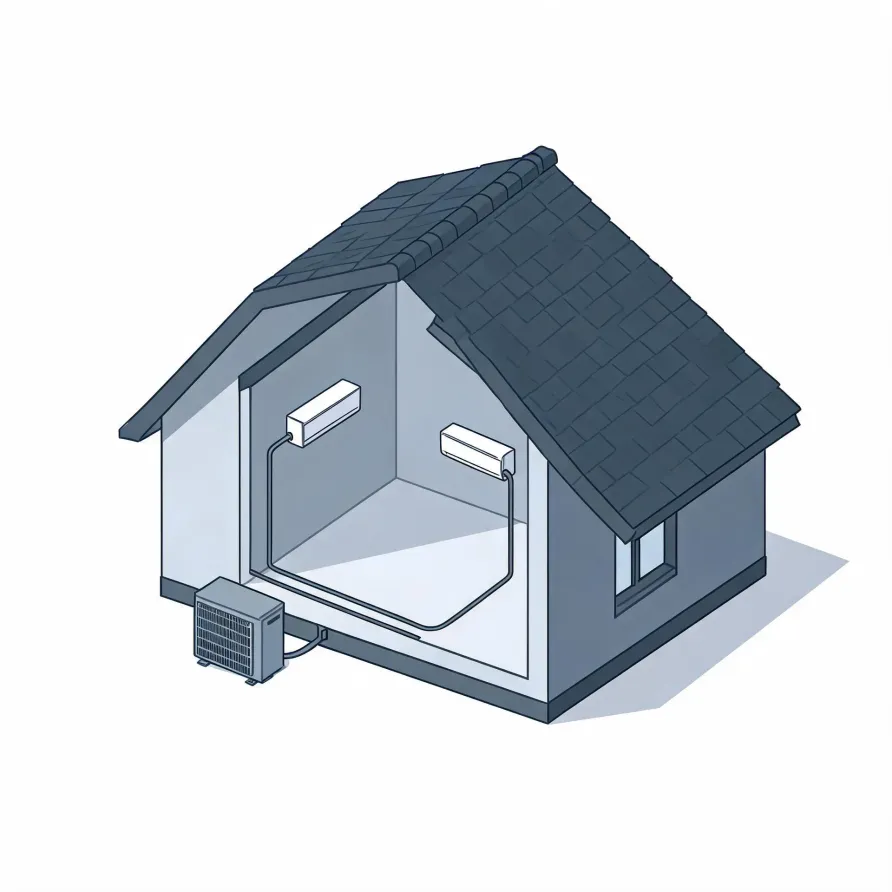
The indoor air handler mounts high on an interior wall, inside the room being conditioned. That is the piece the homeowner sees every day. The outdoor unit sits on a pad or bracket outside the house, typically against an exterior wall, and houses the compressor and the condenser coil.
A refrigerant line set runs through a small penetration in the wall to connect the two units, and a condensate drain line carries moisture from the indoor handler to the outside. A dedicated electrical circuit feeds the outdoor unit, with control wiring running alongside the line set.
The drawing shows a standard layout, and a licensed contractor determines exactly how each piece fits your particular home.
Find a contractor in Greenwood CountyGreenwood County, Kansas, by the numbers
120 severe weather events were recorded in Greenwood County, Kansas between 2015 and 2024.
NOAA National Centers for Environmental Information, Storm Events Database, bulk CSV export, events 2015-01-01 through 2024-12-31.Half the homes in Greenwood County, Kansas were built in 1956 or earlier (2020-2024 ACS 5-year).
U.S. Census Bureau, 2020-2024 American Community Survey 5-Year EstimatesGreenwood County, Kansas holds 3,666 housing units (2020-2024 ACS 5-year).
U.S. Census Bureau, 2020-2024 American Community Survey 5-Year EstimatesOwners occupy 80.5% of the occupied homes in Greenwood County, Kansas (2020-2024 ACS 5-year).
U.S. Census Bureau, 2020-2024 American Community Survey 5-Year EstimatesSevere Weather Events in Greenwood County
Weather extremes put real demands on heating and cooling equipment, from how hard a system works to how long it lasts. What happens in Greenwood County shapes what a mini-split installation here needs to handle.
120 severe weather events, 2015–2024. Source: NOAA National Centers for Environmental Information, Storm Events Database.