Tell us about the job
Takes about a minute. No obligation.
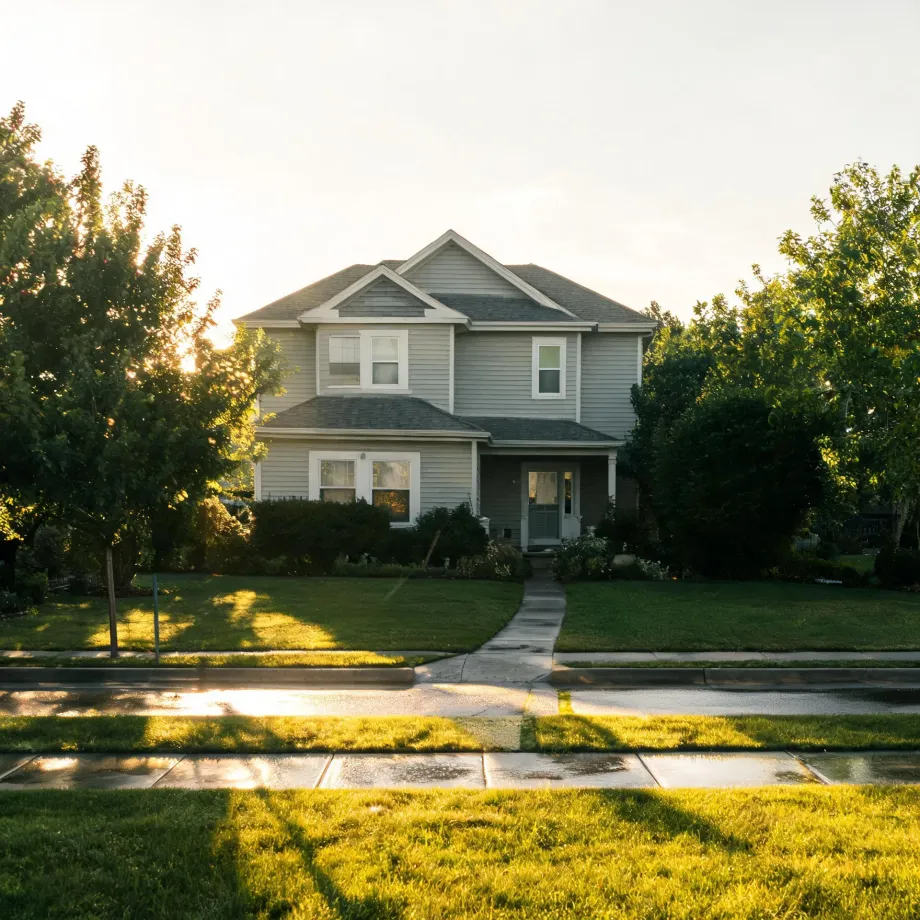
Sizing a mini-split for a Coffey County home means accounting for what the compressor is actually asked to carry, and for how long it carries it each year. Homes in Coffey County, KS run cooling about four months a year, from June through September. A compressor that is undersized for the load starts and stops more often than a matched unit does, and that cycling is where the contactor and the refrigerant circuit take their wear. A contractor establishing the right capacity before installation changes what the unit costs to run and how long it holds up.
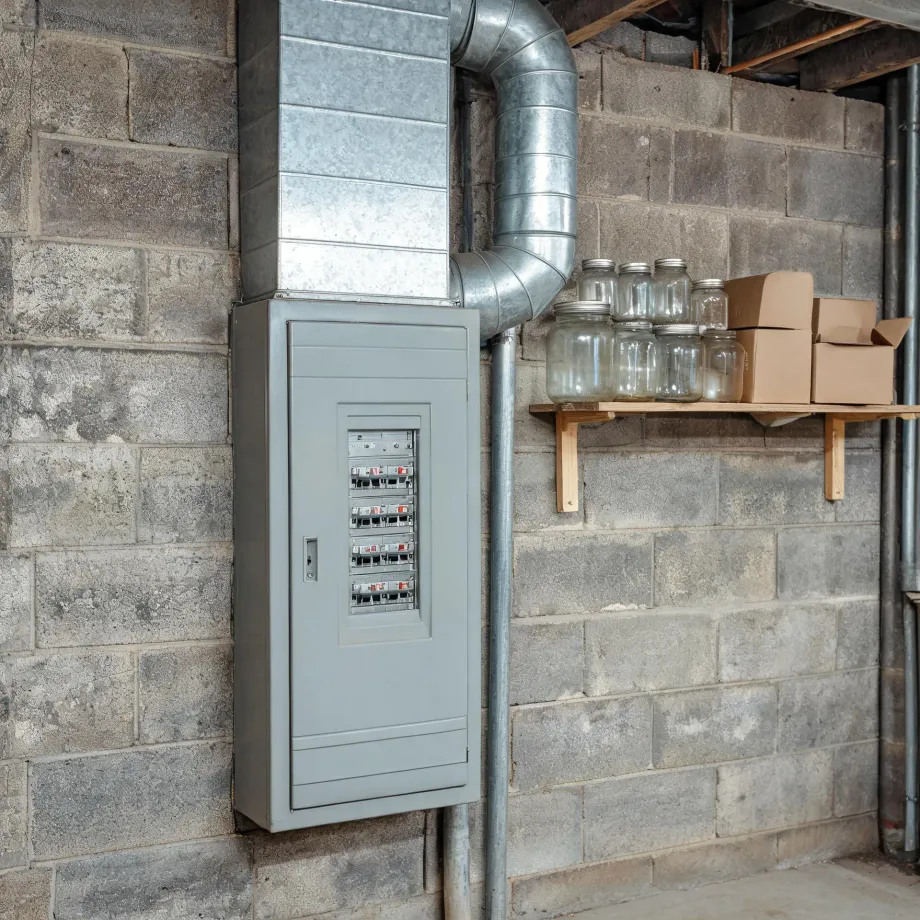
Electrical service panels in houses this old were sized for the loads those houses were expected to carry at the time they were built, and a mini-split draws differently than what was there before. Half the homes in Coffey County, Kansas were built in 1970 or earlier (2020-2024 ACS 5-year). A contractor installing a mini-split here will open the panel and work out whether it can carry the new unit, because that answer changes the scope of the job before the equipment is ever ordered. Ductwork is not part of a mini-split install, so that variable drops out, and the panel is where the real sizing question lives.
What a Mini-split Installation Puts in Your Home
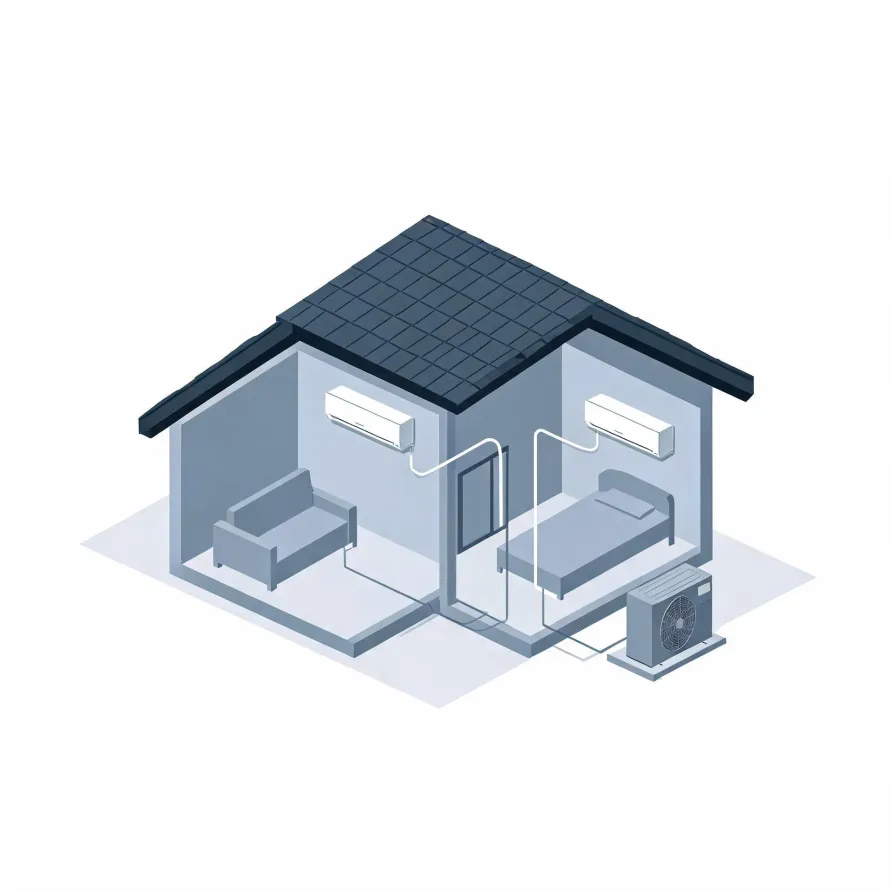
The indoor air handler mounts high on an interior wall of the room being conditioned, which is where most homeowners notice the system first. It draws room air across its coil and delivers conditioned air back into the space. Each room or zone gets its own unit.
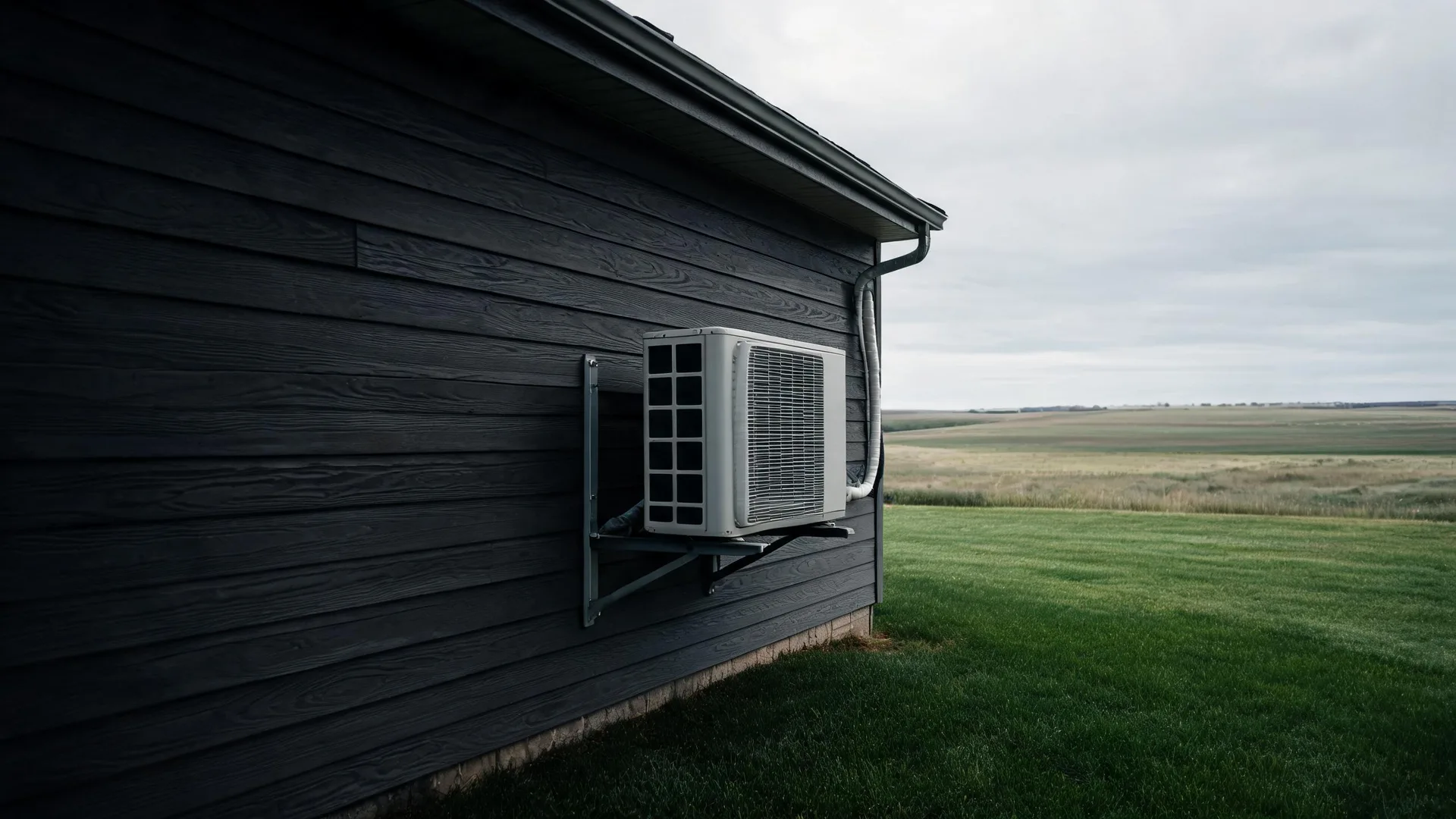
The outdoor condenser unit sits on a pad or bracket outside the house, typically on an exterior wall or at ground level nearby. A refrigerant line set and a condensate drain line run through a small penetration in the wall to connect the two units, and a dedicated electrical disconnect is mounted close to the outdoor unit.
The drawing shows the general layout of a mini-split system, and a licensed contractor determines exactly how each piece applies to your home.
Find a contractor in Coffey CountyCoffey County by the numbers
115 severe weather events were recorded in Coffey County, Kansas between 2015 and 2024.
NOAA National Centers for Environmental Information, Storm Events Database, bulk CSV export, events 2015-01-01 through 2024-12-31.Half the homes in Coffey County, Kansas were built in 1970 or earlier (2020-2024 ACS 5-year).
U.S. Census Bureau, 2020-2024 American Community Survey 5-Year EstimatesCoffey County, Kansas holds 3,998 housing units (2020-2024 ACS 5-year).
U.S. Census Bureau, 2020-2024 American Community Survey 5-Year EstimatesOwners occupy 75.9% of the occupied homes in Coffey County, Kansas (2020-2024 ACS 5-year).
U.S. Census Bureau, 2020-2024 American Community Survey 5-Year EstimatesSevere Weather Events in Coffey County, Year by Year
Coffey County's climate puts real demand on heating and cooling equipment, and that demand is not uniform from year to year. A mini-split sized and installed for local conditions handles that variability better than one spec'd without it.
115 severe weather events, 2015–2024. Source: NOAA National Centers for Environmental Information, Storm Events Database.