Tell us about the job
Takes about a minute. No obligation.
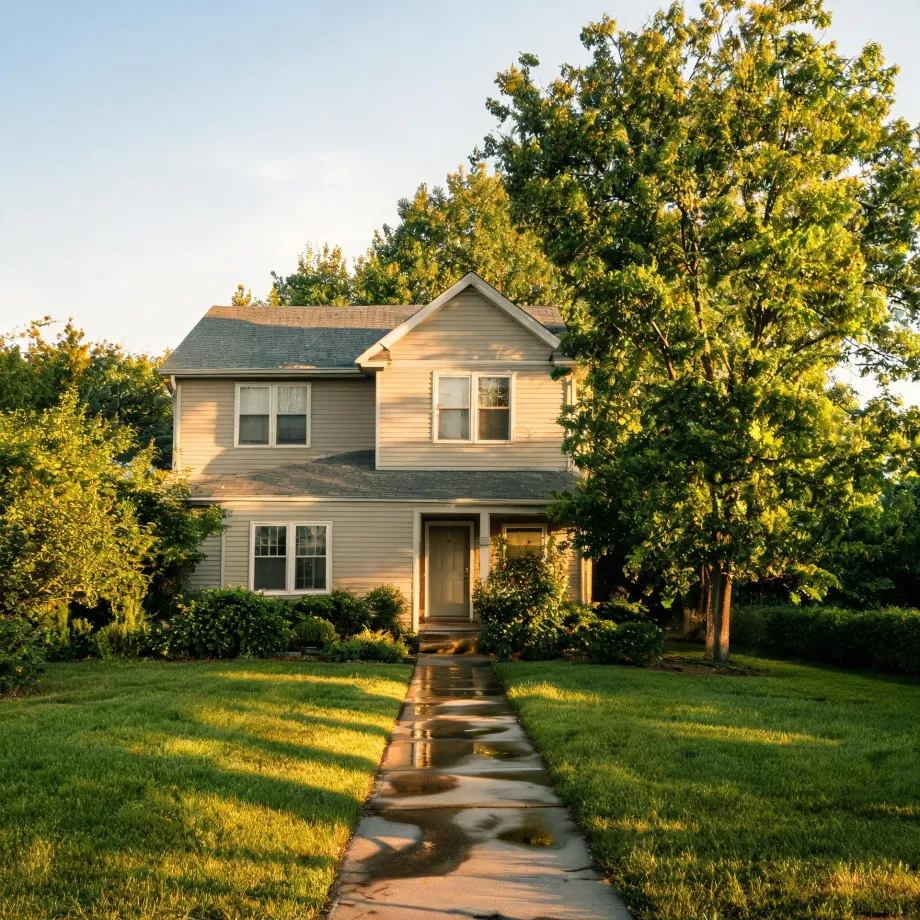
A contractor quoting a mini-split install in Smith County has to account for what a short idle period does to a system. Homes in Smith County, KS run cooling about three months a year, from June through August. A compressor that sits off for most of the year and then restarts in June is the one that exposes a bad refrigerant charge, an undersized unit, or a loose electrical connection fast. Sizing has to be right from day one, because there is no long season of gradual feedback to reveal a marginal install slowly. The contractor needs to commission the system correctly before summer arrives, not after.
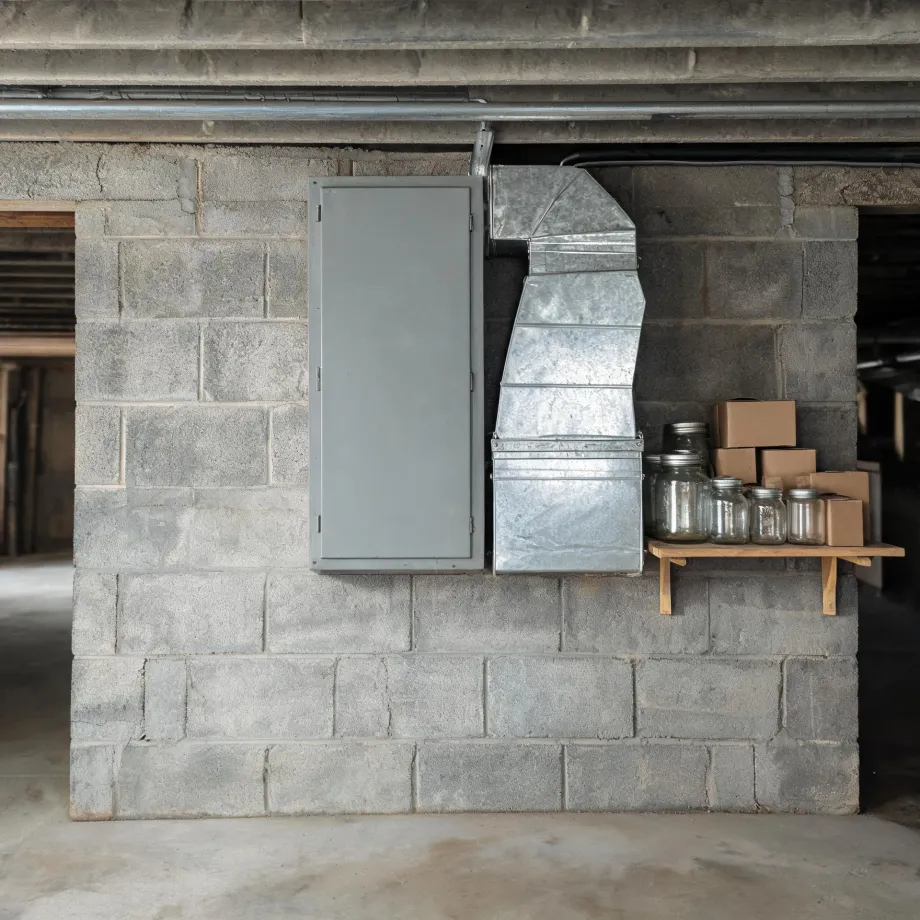
Electrical panels in much of Smith County's housing were sized for a lighter load than a mini-split places on them. Half the homes in Smith County, Kansas were built in 1954 or earlier (2020-2024 ACS 5-year). A contractor installing a new unit has to establish what the existing service will actually carry before the equipment question comes up at all. If the panel falls short, that work gets priced and scheduled before the mini-split goes in.
What a Mini-split Looks Like Once It's In
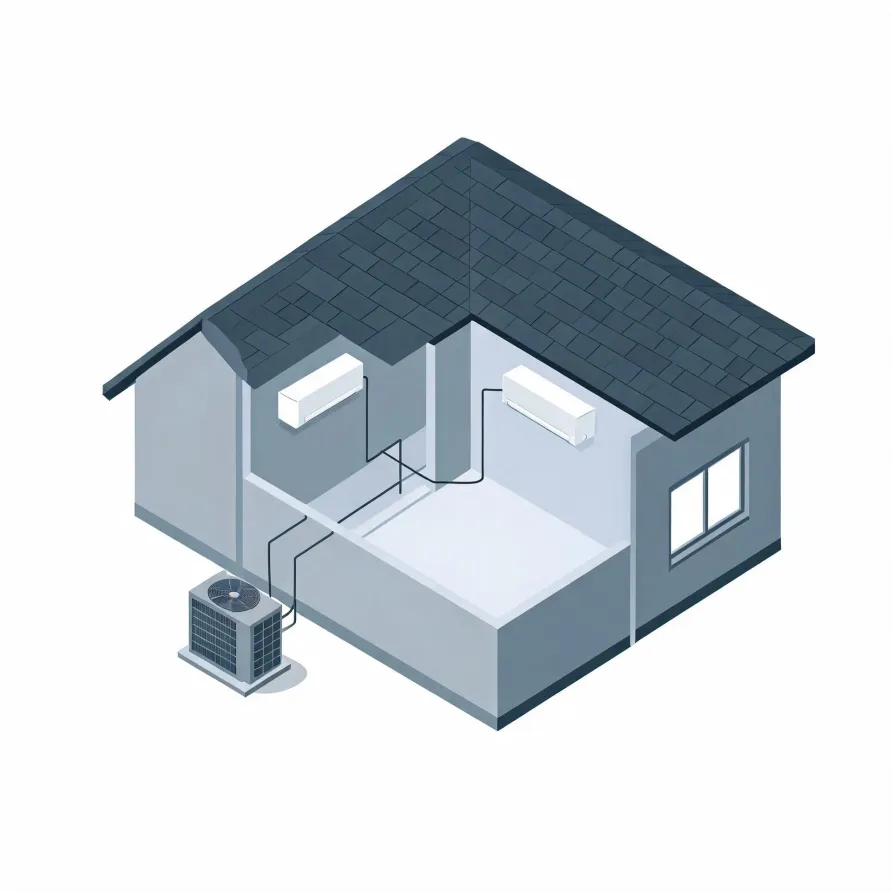
The indoor air handler mounts high on a wall inside the room being served, and that is the piece a homeowner sees every day. Outside the house, the condenser unit sits on a pad or bracket and houses the compressor and fan. These two units are the core of what a contractor places and connects during an installation.
A refrigerant line set runs between the indoor and outdoor units through a small opening in the wall, carrying the lines that tie the two halves together. A condensate drain line exits the indoor unit and routes moisture outside, and a power and communication cable runs alongside the refrigerant lines to link both units.
The drawing shows the general layout of a mini-split system, and a licensed contractor determines exactly how each piece positions and routes in your specific home.
Find a contractor in Smith CountySmith County, Kansas, by the numbers
123 severe weather events were recorded in Smith County, Kansas between 2015 and 2024.
NOAA National Centers for Environmental Information, Storm Events Database, bulk CSV export, events 2015-01-01 through 2024-12-31.Half the homes in Smith County, Kansas were built in 1954 or earlier (2020-2024 ACS 5-year).
U.S. Census Bureau, 2020-2024 American Community Survey 5-Year EstimatesSmith County, Kansas holds 2,024 housing units (2020-2024 ACS 5-year).
U.S. Census Bureau, 2020-2024 American Community Survey 5-Year EstimatesOwners occupy 84.8% of the occupied homes in Smith County, Kansas (2020-2024 ACS 5-year).
U.S. Census Bureau, 2020-2024 American Community Survey 5-Year EstimatesSevere Weather Events in Smith County
Weather extremes put a measurable load on heating and cooling equipment, and that load shapes what a mini-split in Smith County has to handle year after year. Sizing and installation decisions are tied to local conditions, which is why the record here matters.
123 severe weather events, 2015–2024. Source: NOAA National Centers for Environmental Information, Storm Events Database.