Tell us about the job
Takes about a minute. No obligation.
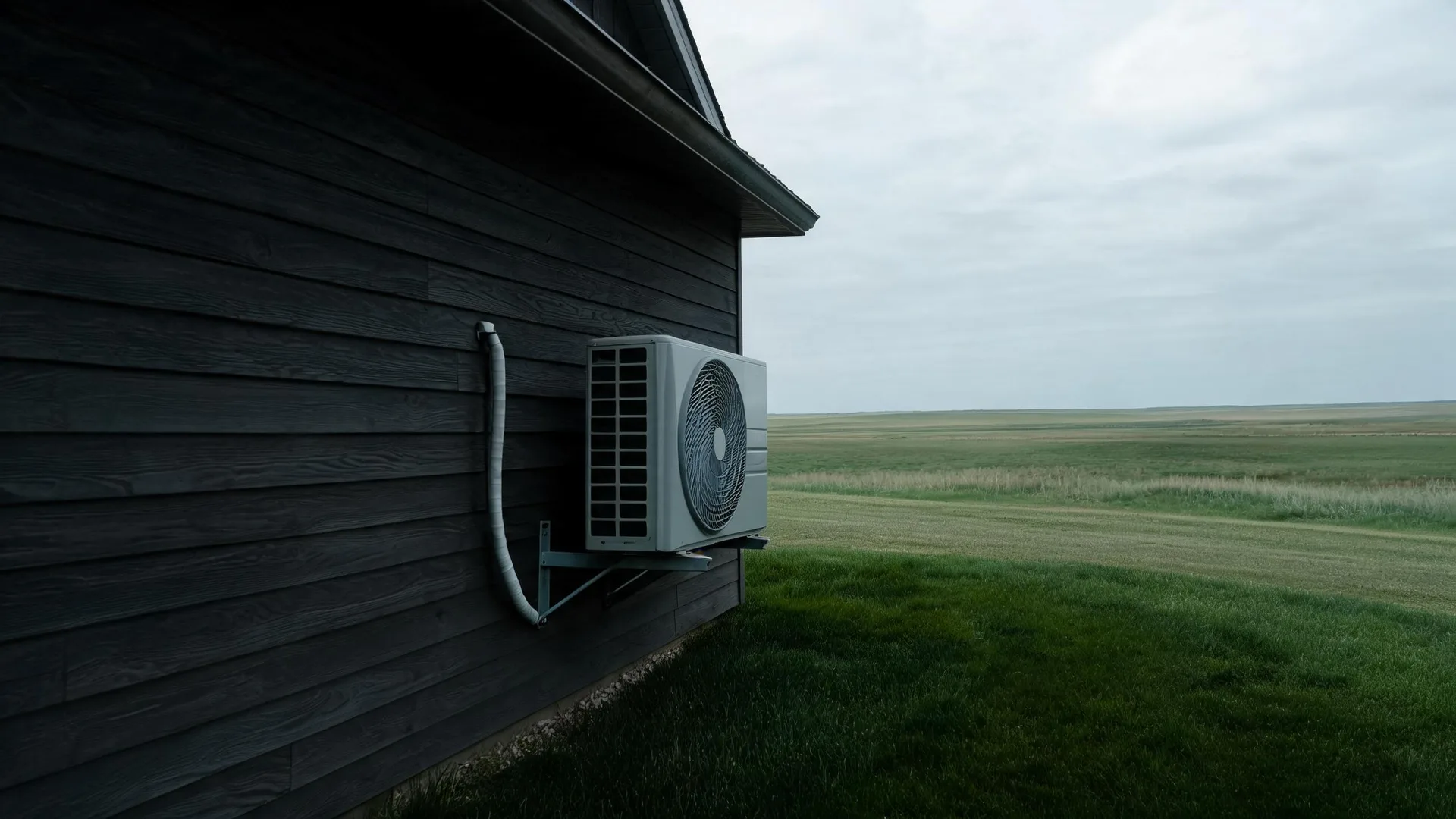
Sizing a mini-split for a house in Edwards County starts with what the compressor will actually be asked to carry. Homes in Edwards County, KS run cooling about four months a year, from June through September. That compressor starts and stops repeatedly across those months, and the contactor and condenser fan log the same hours. A unit that is even slightly undersized cannot catch up on the hottest afternoons, and the parts that cycle most wear toward their limits before a well-matched system would. A contractor has to get the load calculation right before anything else on the quote matters.
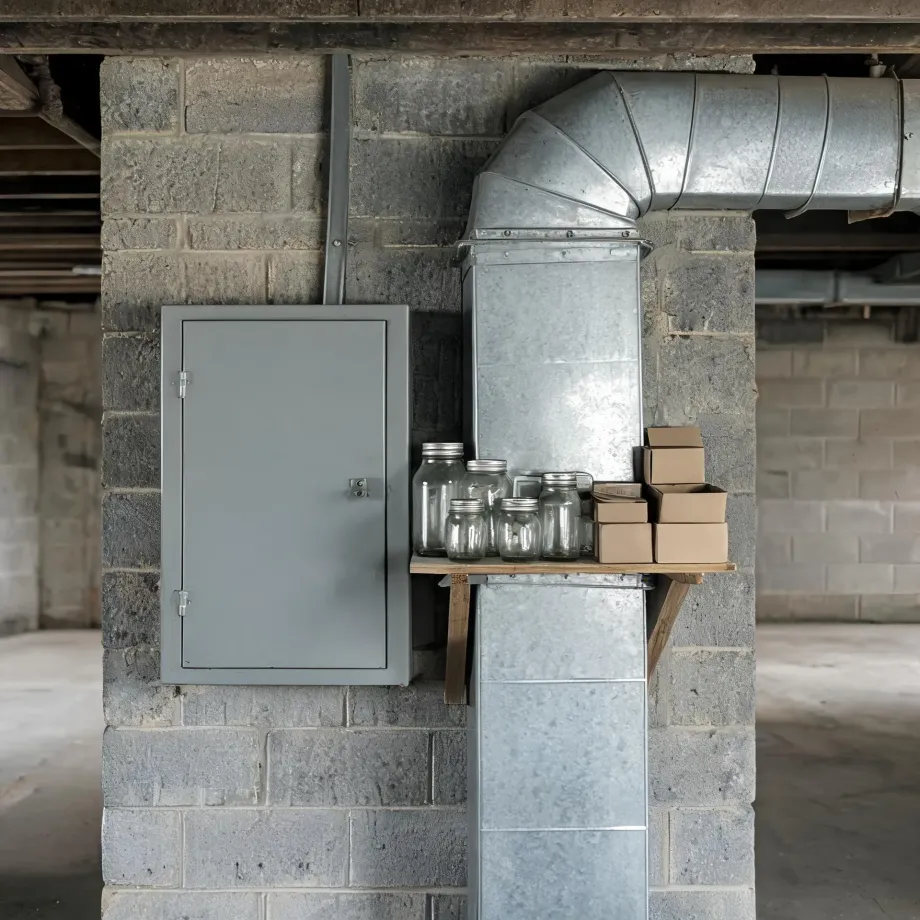
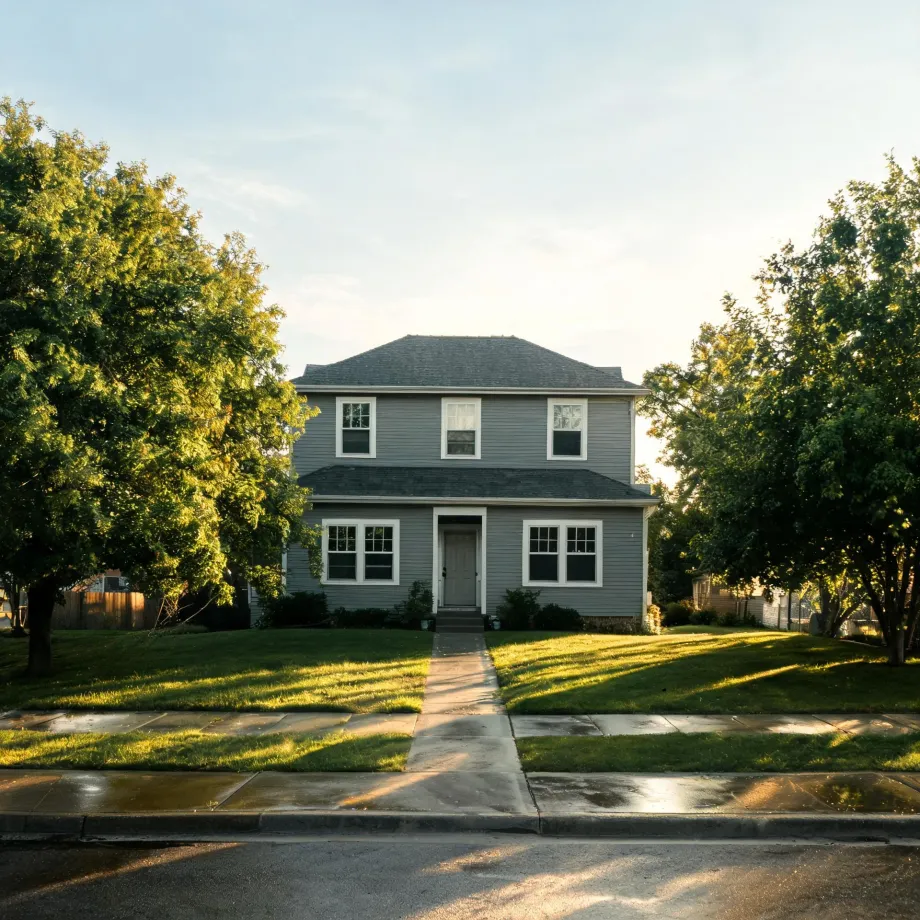
Wiring runs behind walls that were built for a different electrical load entirely. Half the homes in Edwards County, Kansas were built in 1948 or earlier (2020-2024 ACS 5-year). A mini-split installation in housing from that era puts a contractor at the service panel early, checking whether the existing amperage covers what the outdoor unit draws before any equipment selection is final. If the panel falls short, the electrical work goes on the quote alongside the equipment, and the scope of the job shifts accordingly.
What a Mini-split Installation Puts in Your Home
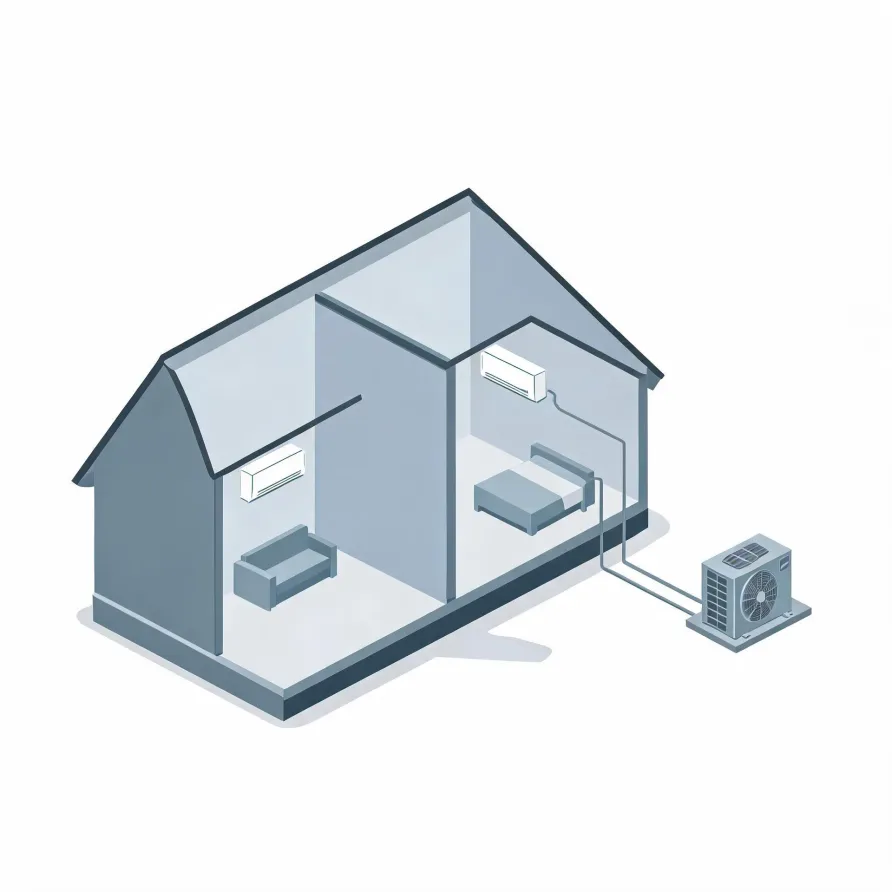
The indoor air handler mounts high on an interior wall in the room being conditioned, which is where the homeowner notices it first. It draws room air across its coil and moves conditioned air back into the space. The outdoor unit sits on the ground or a pad outside the house and holds the compressor and condenser coil.
A refrigerant line set runs through a small hole in the wall to connect the two units, carrying refrigerant between them. A condensate drain line runs from the indoor unit to move moisture out of the house. The outdoor unit also connects to a dedicated electrical circuit at the disconnect box mounted nearby.
The drawing shows a typical layout, and a licensed contractor determines exactly how each piece is positioned and routed in your home.
Find a contractor in Edwards CountyEdwards County, Kansas, by the numbers
122 severe weather events were recorded in Edwards County, Kansas between 2015 and 2024.
NOAA National Centers for Environmental Information, Storm Events Database, bulk CSV export, events 2015-01-01 through 2024-12-31.Half the homes in Edwards County, Kansas were built in 1948 or earlier (2020-2024 ACS 5-year).
U.S. Census Bureau, 2020-2024 American Community Survey 5-Year EstimatesEdwards County, Kansas holds 1,549 housing units (2020-2024 ACS 5-year).
U.S. Census Bureau, 2020-2024 American Community Survey 5-Year EstimatesOwners occupy 79.2% of the occupied homes in Edwards County, Kansas (2020-2024 ACS 5-year).
U.S. Census Bureau, 2020-2024 American Community Survey 5-Year EstimatesSevere Weather Events in Edwards County
Kansas weather puts real stress on heating and cooling equipment, and Edwards County has its own pattern of that stress. A mini-split sized and installed for local conditions handles the workload that local weather actually creates.
122 severe weather events, 2015–2024. Source: NOAA National Centers for Environmental Information, Storm Events Database.