Tell us about the job
Takes about a minute. No obligation.
The compressor in a mini-split starts and stops every time the indoor temperature climbs above the thermostat setpoint, and every start puts mechanical stress on the motor windings and the refrigerant valves. Homes in Grant County, KS run cooling about four months a year, from June through September. That compressor logs all its starts inside a tight window each year, then sits idle the rest. When a unit fails, a contractor looks first at the parts that bear that repeated cycling load: the compressor itself, the contactor, and the capacitor that kicks each start. Those are the components that accumulate wear here, and they are where a repair quote begins.
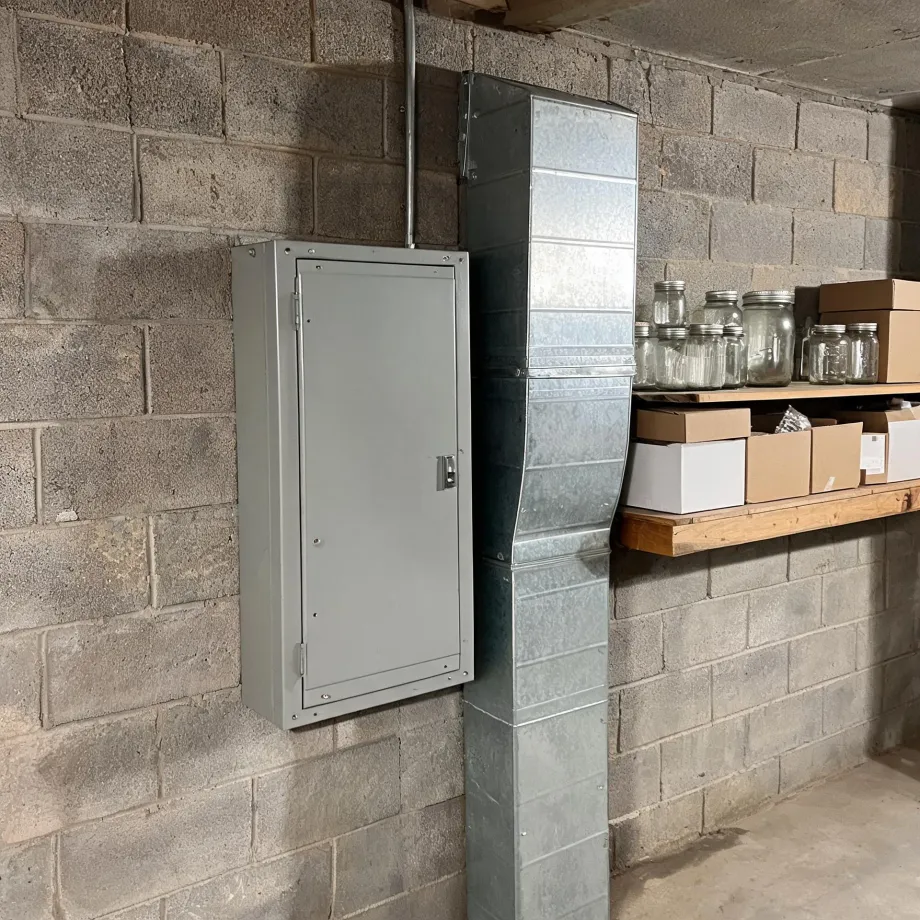
Refrigerant lines and electrical supply are where a mini-split repair gets complicated in Grant County. Half the homes in Grant County, Kansas were built in 1974 or earlier (2020-2024 ACS 5-year). Wiring put in for one generation of equipment has been adapted, extended, and sometimes patched to carry systems it was never sized for. When a contractor opens the unit and traces what feeds it, the condition of that supply circuit shapes the repair scope as much as anything inside the head unit itself.
The Parts of a Mini-split a Contractor Checks First
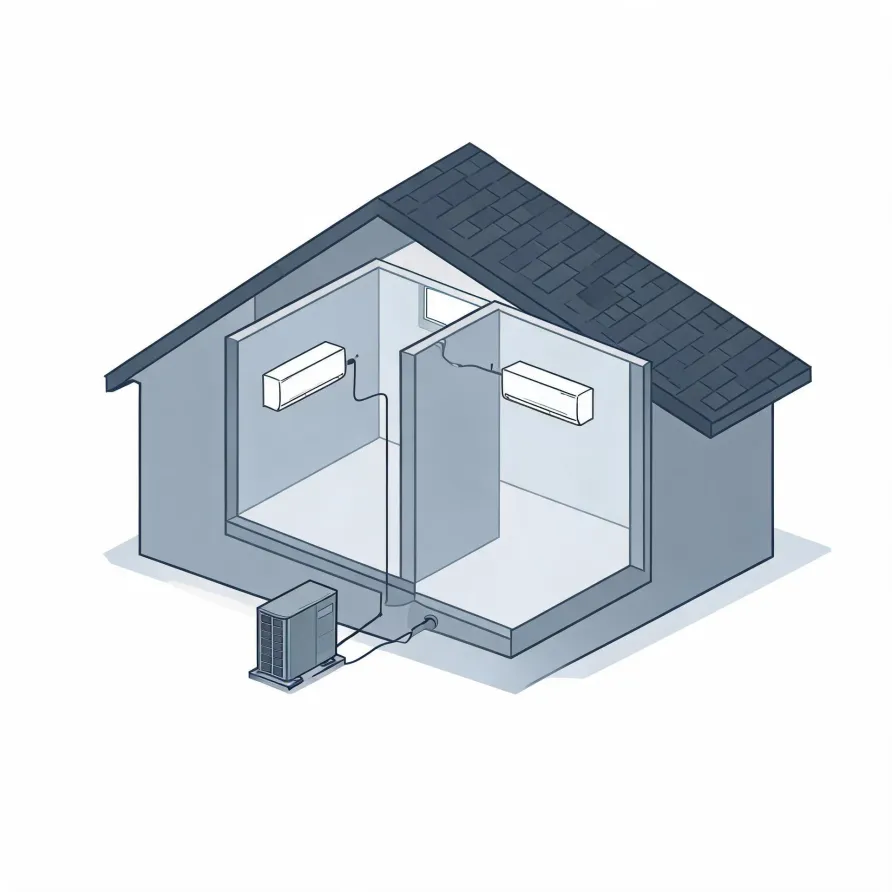
The indoor air handler mounts high on an interior wall and pushes conditioned air directly into the room. Its blower wheel, coil, and sensors are all failure points a contractor reads carefully. A unit that stops cooling, freezes over, or leaks water is usually traced back here first.
The outdoor compressor unit sits on a pad or bracket outside the house and is where refrigerant is pressurized and cycled. The line set, a pair of refrigerant lines wrapped together, runs through a small penetration in the wall and connects the two units. The condensate drain and the wiring that carries low-voltage control signals run along that same path and both get checked when something is off.
The drawing shows the general layout of a mini-split system, and a licensed contractor determines which parts and connections apply to your specific installation.
Find a contractor in Grant CountyGrant County, Kansas, by the numbers
149 severe weather events were recorded in Grant County, Kansas between 2015 and 2024.
NOAA National Centers for Environmental Information, Storm Events Database, bulk CSV export, events 2015-01-01 through 2024-12-31.Half the homes in Grant County, Kansas were built in 1974 or earlier (2020-2024 ACS 5-year).
U.S. Census Bureau, 2020-2024 American Community Survey 5-Year EstimatesGrant County, Kansas holds 2,933 housing units (2020-2024 ACS 5-year).
U.S. Census Bureau, 2020-2024 American Community Survey 5-Year EstimatesOwners occupy 76.7% of the occupied homes in Grant County, Kansas (2020-2024 ACS 5-year).
U.S. Census Bureau, 2020-2024 American Community Survey 5-Year EstimatesSevere Weather Events in Grant County
Weather in Grant County puts a measurable load on heating and cooling equipment over time. How hard a mini-split has worked, and what wear it has accumulated, is partly a local story.
149 severe weather events, 2015–2024. Source: NOAA National Centers for Environmental Information, Storm Events Database.