Tell us about the job
Takes about a minute. No obligation.
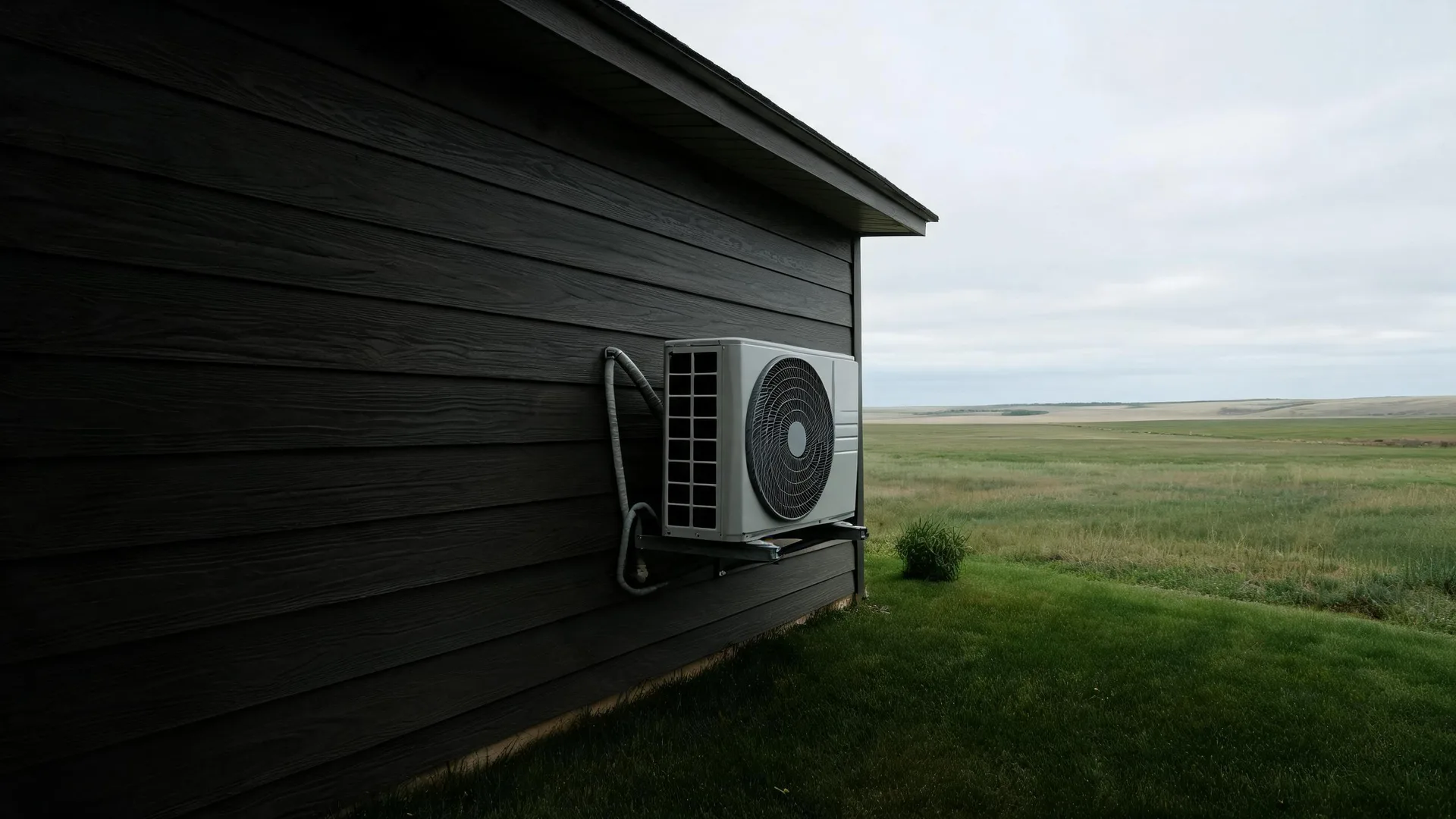
Sizing a mini-split for a Saline County house means accounting for a compressor that earns its keep in a concentrated push. Homes in Saline County, KS run cooling about four months a year, from June through September. The compressor starts and stops through that window repeatedly, and a unit that was undersized or installed with a refrigerant charge even slightly off will show stress in the coil and contactor before the season is out. A contractor quoting an installation here has to get the load calculation right from the start, because there is no mild shoulder season to mask a marginal setup.
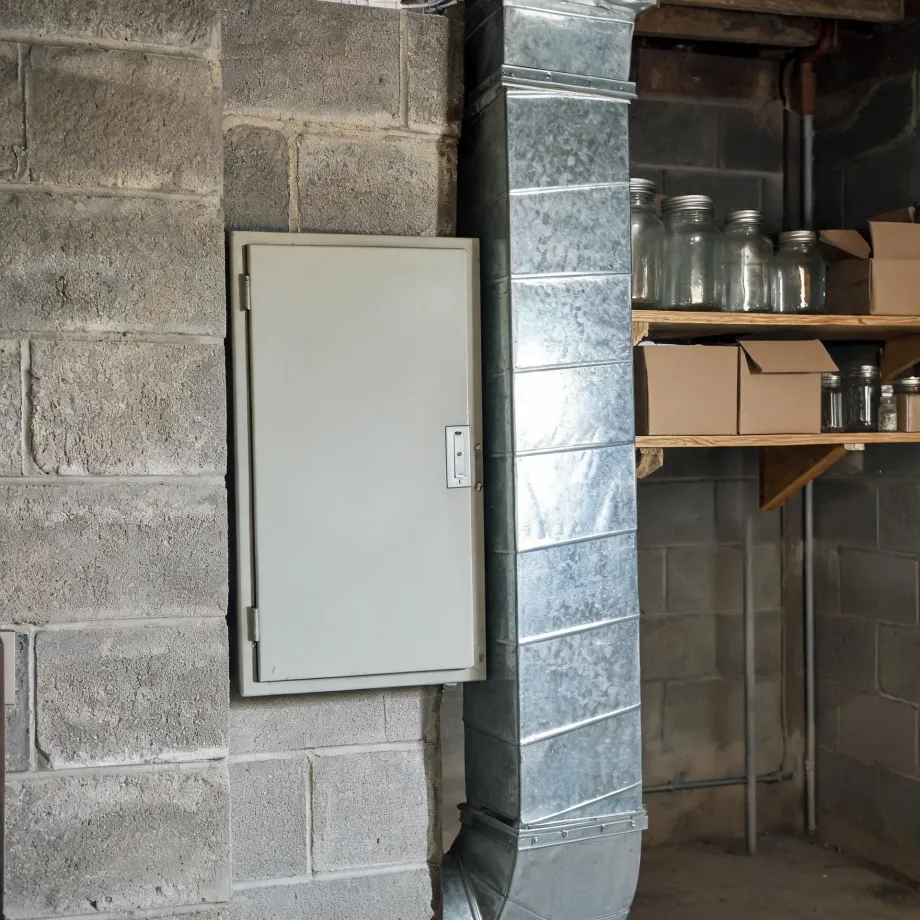
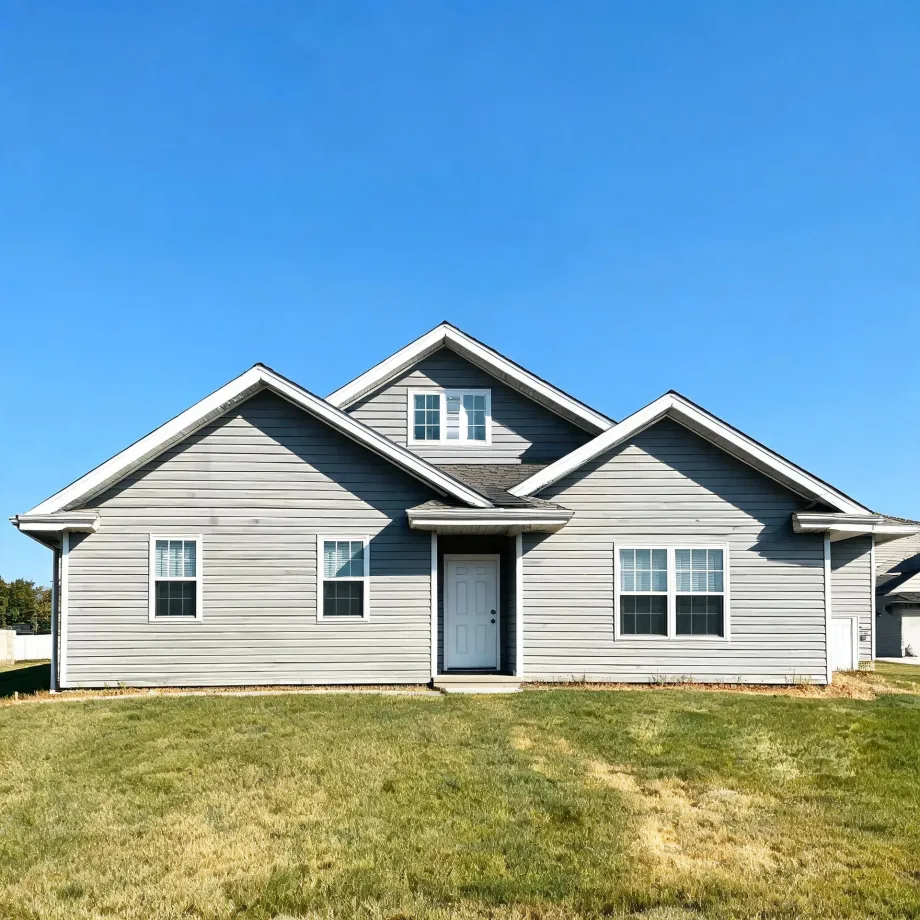
Electrical service is where a mini-split installation in Saline County gets settled. Half the homes in Saline County, Kansas were built in 1966 or earlier (2020-2024 ACS 5-year). Houses built in that era were wired for loads that reflect the equipment of the time, and a panel sized for that original draw often falls short of what a modern outdoor unit pulls at startup. A contractor will confirm the service capacity before anything else is quoted, and in a meaningful share of jobs here, a panel upgrade runs alongside the equipment install.
What a Mini-split Installation Puts in Your Home
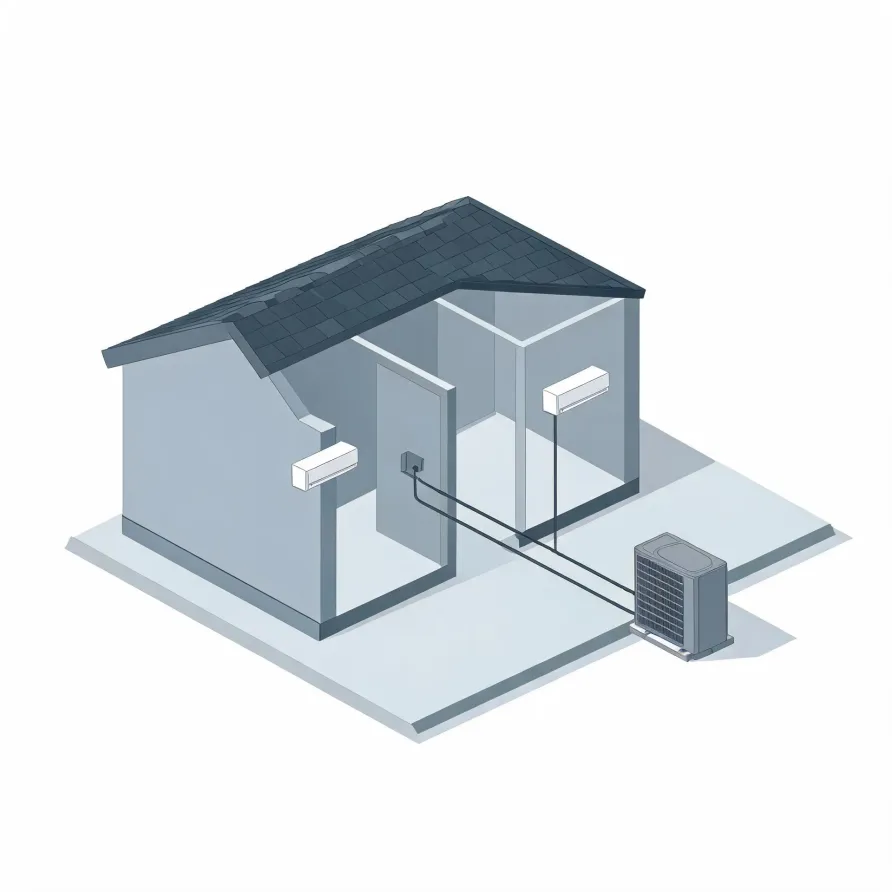
The indoor air handler mounts high on a wall inside the room being served, which is where the conditioned air enters the space. The outdoor condenser unit sits on the ground or a bracket outside, housing the compressor and the components that do the heavy mechanical work of the system.
A refrigerant line set runs between the two units through a small opening in the wall, carrying refrigerant back and forth, and a condensate drain line runs from the indoor unit to route moisture out of the house. A dedicated disconnect box is placed near the outdoor unit as part of the electrical connection for that equipment.
The drawing shows the general layout of a mini-split system, and a licensed contractor will determine what applies to your particular home.
Find a contractor in Saline CountySaline County, Kansas, by the numbers
211 severe weather events were recorded in Saline County, Kansas between 2015 and 2024.
NOAA National Centers for Environmental Information, Storm Events Database, bulk CSV export, events 2015-01-01 through 2024-12-31.Half the homes in Saline County, Kansas were built in 1966 or earlier (2020-2024 ACS 5-year).
U.S. Census Bureau, 2020-2024 American Community Survey 5-Year EstimatesSaline County, Kansas holds 24,157 housing units (2020-2024 ACS 5-year).
U.S. Census Bureau, 2020-2024 American Community Survey 5-Year EstimatesOwners occupy 67.1% of the occupied homes in Saline County, Kansas (2020-2024 ACS 5-year).
U.S. Census Bureau, 2020-2024 American Community Survey 5-Year EstimatesSevere Weather Events in Saline County
Kansas weather puts real demands on heating and cooling equipment, and Saline County gets its share of conditions that push systems hard. Sizing and installing a mini-split here means accounting for what the local climate actually does, not a national average.
211 severe weather events, 2015–2024. Source: NOAA National Centers for Environmental Information, Storm Events Database.