Tell us about the job
Takes about a minute. No obligation.
Sizing a mini-split for a Kingman County home means accounting for what the compressor will actually be asked to carry each year. Homes in Kingman County, KS run cooling about four months a year, from June through September. The compressor and condenser fan run through that whole stretch, cycling on and off as outdoor temperatures climb, and an installation that cuts corners on load calculation or refrigerant charge puts stress on those parts from the first summer. A contractor quoting the job here works out the heat load from the house itself: its orientation, insulation, and window area. Get that wrong and the compressor runs long cycles to compensate, which is where wear starts.
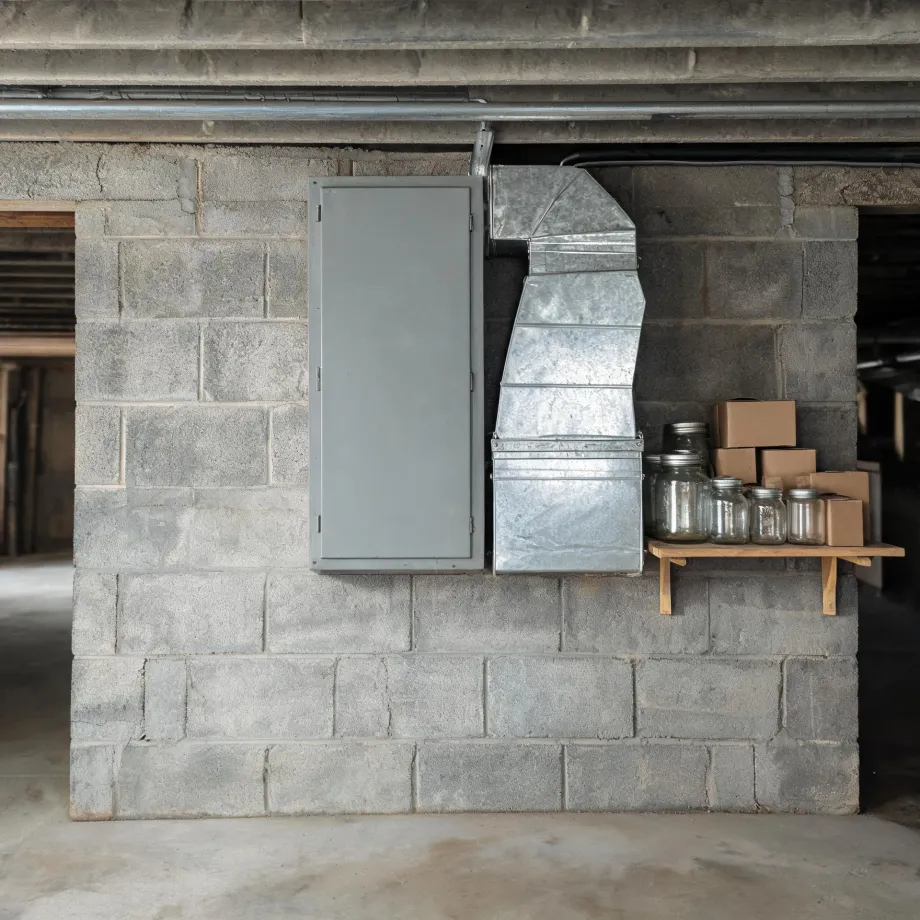
Wiring put in for a window unit or a furnace blower does not meet what a mini-split draws today. Half the homes in Kingman County, Kansas were built in 1956 or earlier (2020-2024 ACS 5-year). That gap between what the house was built to carry and what modern equipment actually pulls is what shapes the installation assessment here. A contractor working through a job in this county will often find the panel decision comes before the equipment decision, because the service capacity sets the ceiling on what can run.
What a Mini-split Looks Like Once It's In
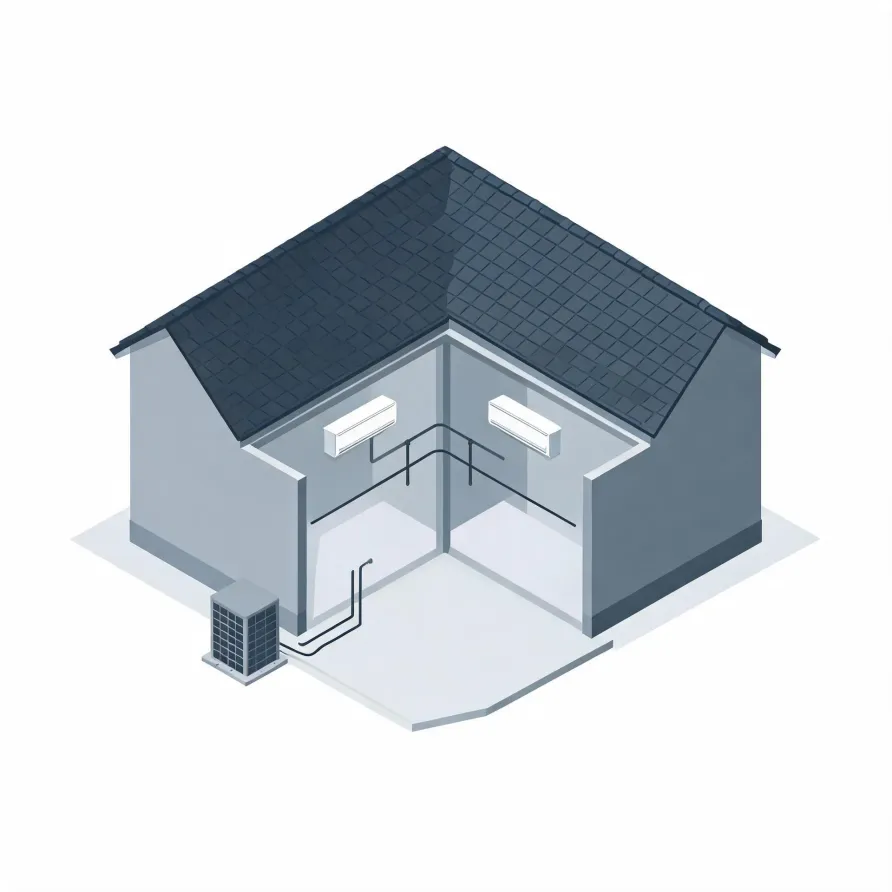
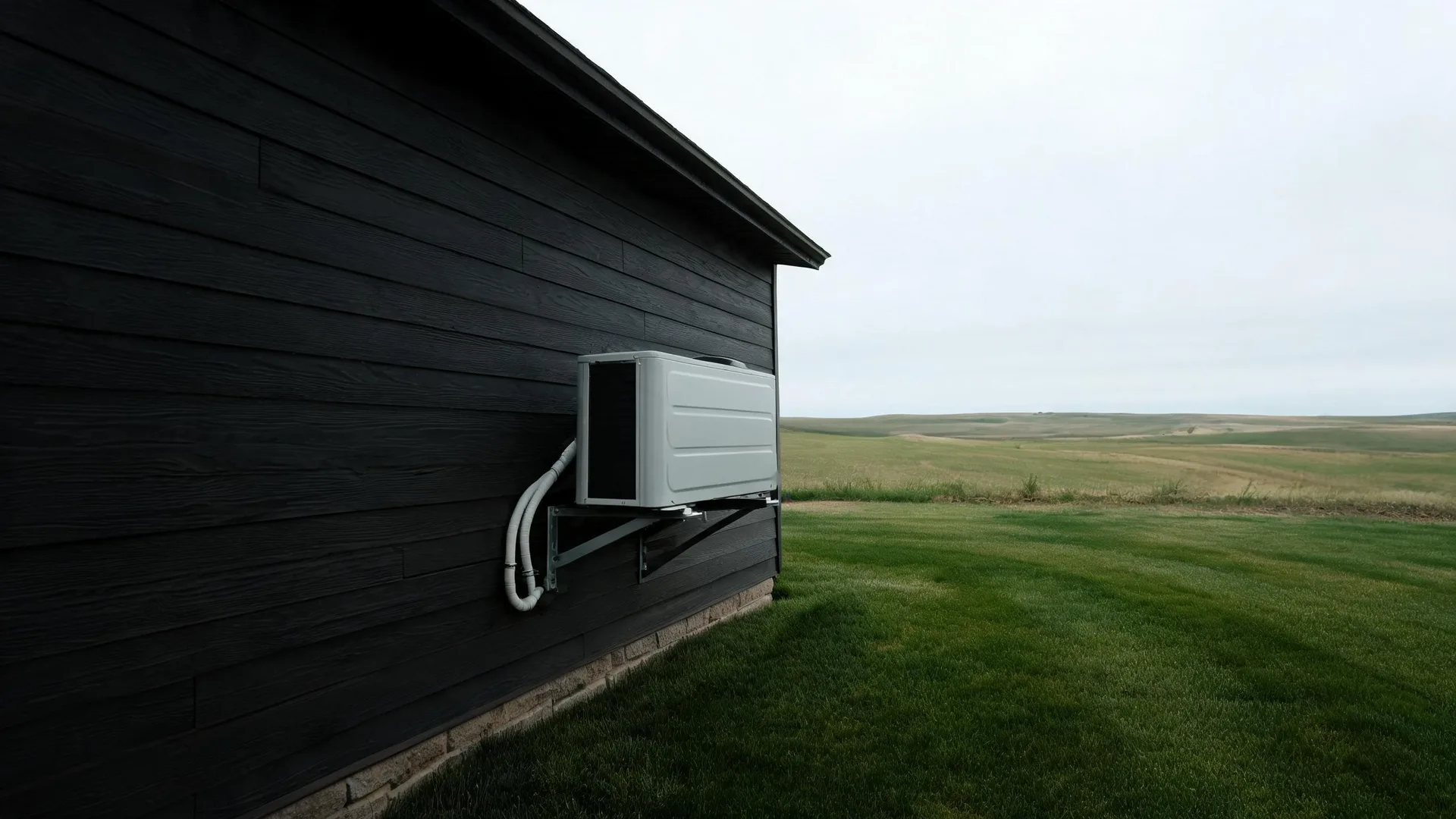
The indoor air handler mounts high on a wall inside the room, which is where most homeowners notice the system first. It delivers conditioned air directly into that space. Outside the house, the outdoor unit sits on a pad or bracket and houses the compressor and the condenser coil.
A conduit bundle carries the refrigerant lines, a power cable, and a condensate drain line through a small opening in the wall to connect the two units. A dedicated disconnect box is mounted near the outdoor unit as well.
The drawing shows a typical layout, and a licensed contractor determines what applies to your specific house.
Find a contractor in Kingman CountyKingman County, Kansas, by the numbers
113 severe weather events were recorded in Kingman County, Kansas between 2015 and 2024.
NOAA National Centers for Environmental Information, Storm Events Database, bulk CSV export, events 2015-01-01 through 2024-12-31.Half the homes in Kingman County, Kansas were built in 1956 or earlier (2020-2024 ACS 5-year).
U.S. Census Bureau, 2020-2024 American Community Survey 5-Year EstimatesKingman County, Kansas holds 3,685 housing units (2020-2024 ACS 5-year).
U.S. Census Bureau, 2020-2024 American Community Survey 5-Year EstimatesOwners occupy 66.3% of the occupied homes in Kingman County, Kansas (2020-2024 ACS 5-year).
U.S. Census Bureau, 2020-2024 American Community Survey 5-Year EstimatesSevere Weather History in Kingman County
Kingman County's weather puts real demands on heating and cooling equipment over time. How hard a system has to work, and how reliably it needs to hold up, is a local question, and that makes local conditions worth knowing before any installation decision.
113 severe weather events, 2015–2024. Source: NOAA National Centers for Environmental Information, Storm Events Database.