Tell us about the job
Takes about a minute. No obligation.
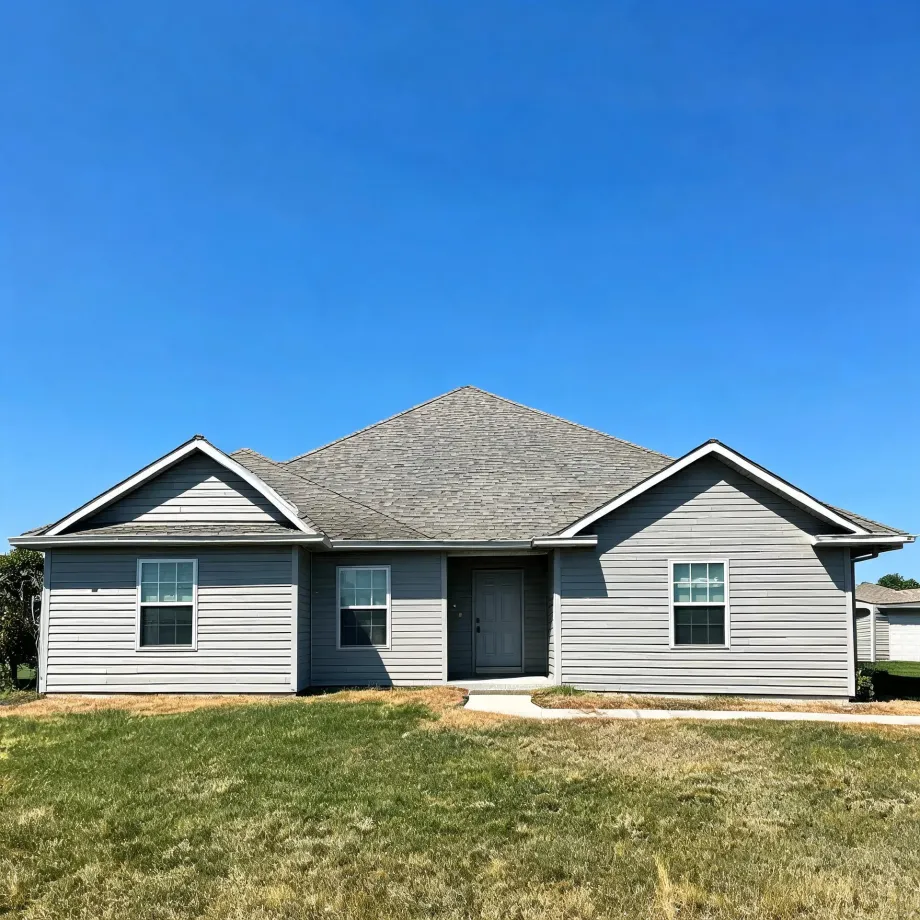
Sizing a mini-split for a Harper County home starts with how hard the compressor will actually work each year. Homes in Harper County, KS run cooling about four months a year, from June through September. The compressor, condenser fan, and contactor all cycle repeatedly through those months, and the parts that wear fastest are the ones that start and stop under load. A unit that is undersized runs longer cycles and rests less, which concentrates that wear. Contractors doing a proper install here calculate the load before they spec the equipment, because a unit that fits the house rather than just the room keeps the compressor inside its design range across every cooling season.
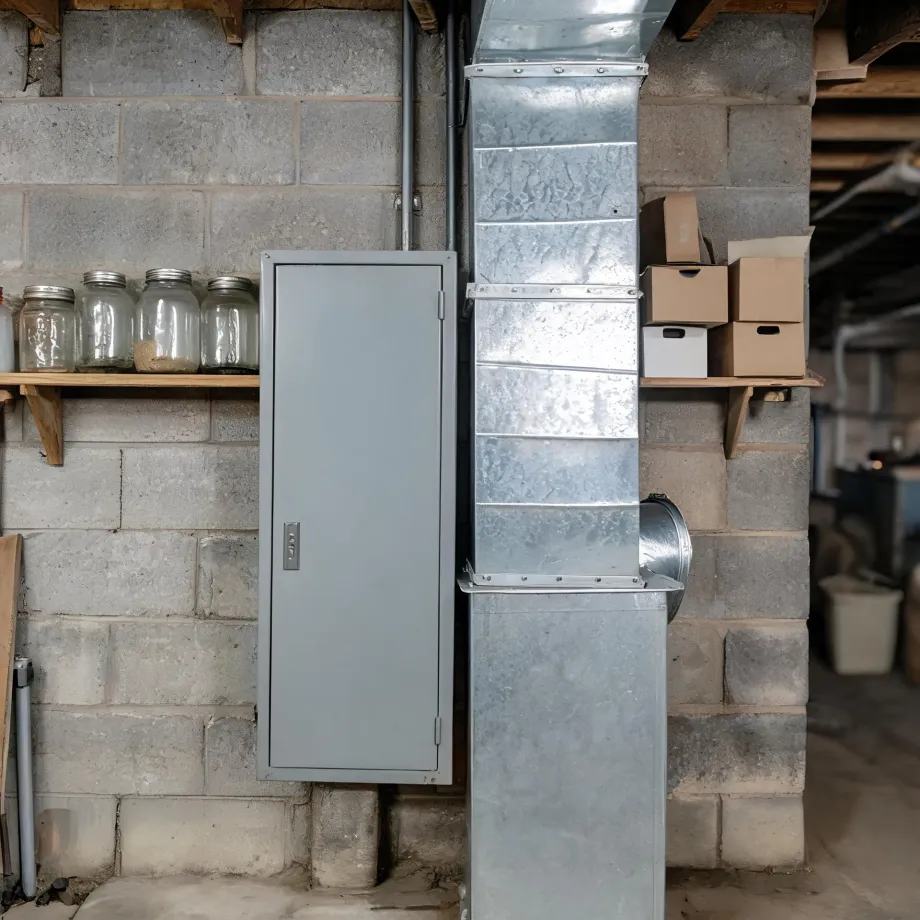
Electrical panels and duct runs in a house carry the history of every system that ever ran through them. Half the homes in Harper County, Kansas were built in 1956 or earlier (2020-2024 ACS 5-year). That means a contractor sizing a mini-split here is working inside walls and chases that were designed around something else entirely, and the ductwork layout from that era reflects load calculations and air-delivery logic that do not map to how a mini-split moves conditioned air. The panel may have been upgraded since, or it may not. Both answers change the scope of the job before the equipment question comes up at all.
What Gets Installed With a New Mini-split
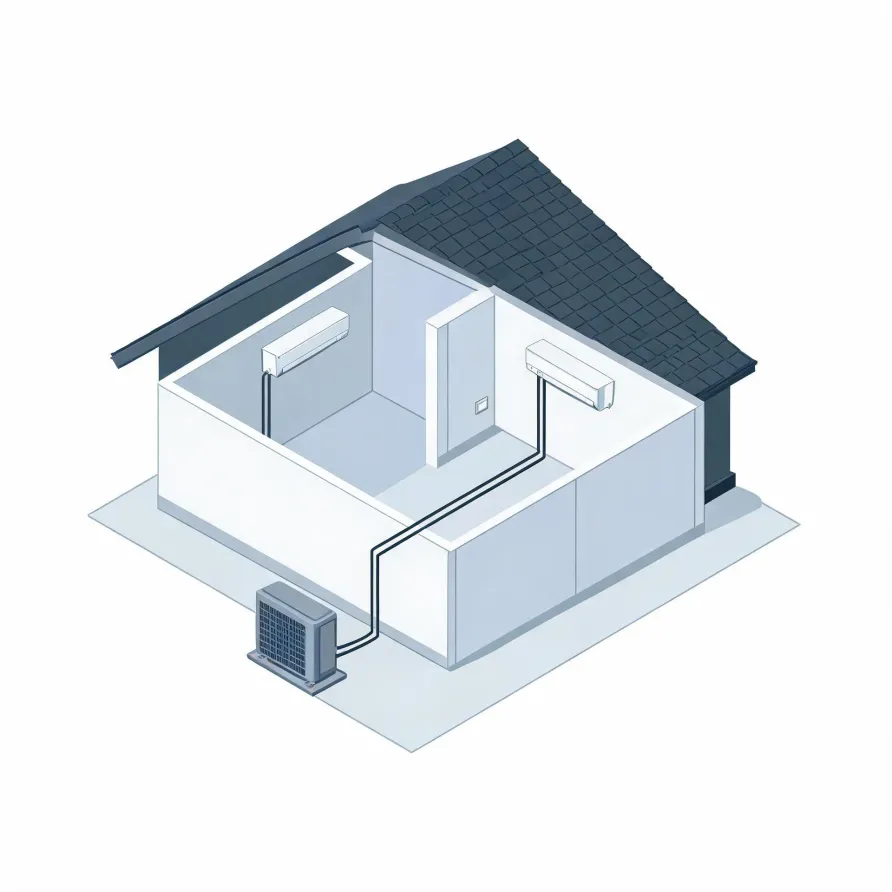
The indoor air handler is what a homeowner sees first. It mounts high on an interior wall and delivers conditioned air directly into the room. The outdoor condenser unit sits on a pad or bracket outside the house and is the other half of the pair.
A refrigerant line set runs through a small hole in the wall and connects the two units. A condensate drain line runs alongside it, carrying moisture out of the indoor unit. A dedicated electrical disconnect is mounted near the outdoor unit as well.
The drawing shows a typical layout, and a licensed contractor will determine exactly what applies to your home.
Get matched in Harper CountyHarper County by the Numbers
95 severe weather events were recorded in Harper County, Kansas between 2015 and 2024.
NOAA National Centers for Environmental Information, Storm Events Database, bulk CSV export, events 2015-01-01 through 2024-12-31.Half the homes in Harper County, Kansas were built in 1956 or earlier (2020-2024 ACS 5-year).
U.S. Census Bureau, 2020-2024 American Community Survey 5-Year EstimatesHarper County, Kansas holds 3,020 housing units (2020-2024 ACS 5-year).
U.S. Census Bureau, 2020-2024 American Community Survey 5-Year EstimatesOwners occupy 75.1% of the occupied homes in Harper County, Kansas (2020-2024 ACS 5-year).
U.S. Census Bureau, 2020-2024 American Community Survey 5-Year EstimatesSevere Weather Events in Harper County
Kansas weather puts real demand on heating and cooling equipment, and Harper County is no exception to that pressure. A mini-split sized and installed for local conditions handles the workload that the weather here actually creates.
95 severe weather events, 2015–2024. Source: NOAA National Centers for Environmental Information, Storm Events Database.