Running clean
A mini split that smells like nothing at startup is doing what it should. Air moves across the coil and out the vents with no odor, no haze near the louvers, no dust catching the light when the unit kicks on.
Send the request today and let a mini split pro reach out to you.
Hand it overA smell from your mini split when it's heating usually means dust burning off the coil, since the unit sits unused most of the year once Kansas summers end. It can also mean mold or mildew built up inside the indoor unit, especially if it ran in cooling mode all summer and never fully dried out before switching over. A musty smell points to that moisture. A burning dust smell usually fades within an hour of running and isn't a sign of damage on its own. A sharper, chemical or electrical smell is different. That can mean a wiring issue or a failing part inside the unit, and it's worth having someone look at before you run the system again. Since most homes here heat with gas and the mini split may only run for heat occasionally, a short burning smell at startup each time you switch it on is normal. If the smell doesn't fade, or it smells electrical rather than dusty, that's the one to get checked.

A mini split that smells like nothing at startup is doing what it should. Air moves across the coil and out the vents with no odor, no haze near the louvers, no dust catching the light when the unit kicks on.

Dust and grime built up on the vents and intake grille will burn off every time the heat comes on. That's the smell. Left alone, it keeps happening each time the unit cycles, not just once.

It's a January afternoon and you're at the desk in the home office, the mini split on the wall behind you pushing out heat against the Kansas cold. You catch it before you see it, a sour, mildewed smell under the warm air. Then you notice the wall. A wet streak runs down from the bottom of the indoor unit, dark against the paint. You grab a towel off the hall closet shelf and lay it on the floor under the drip. The smell doesn't fade like it did last fall when the unit first kicked on for the season. It's still there an hour later, and so is the water.
Describe what your mini split is doing once, in one form.
Asking costs nothing, and the choice to hire stays yours.
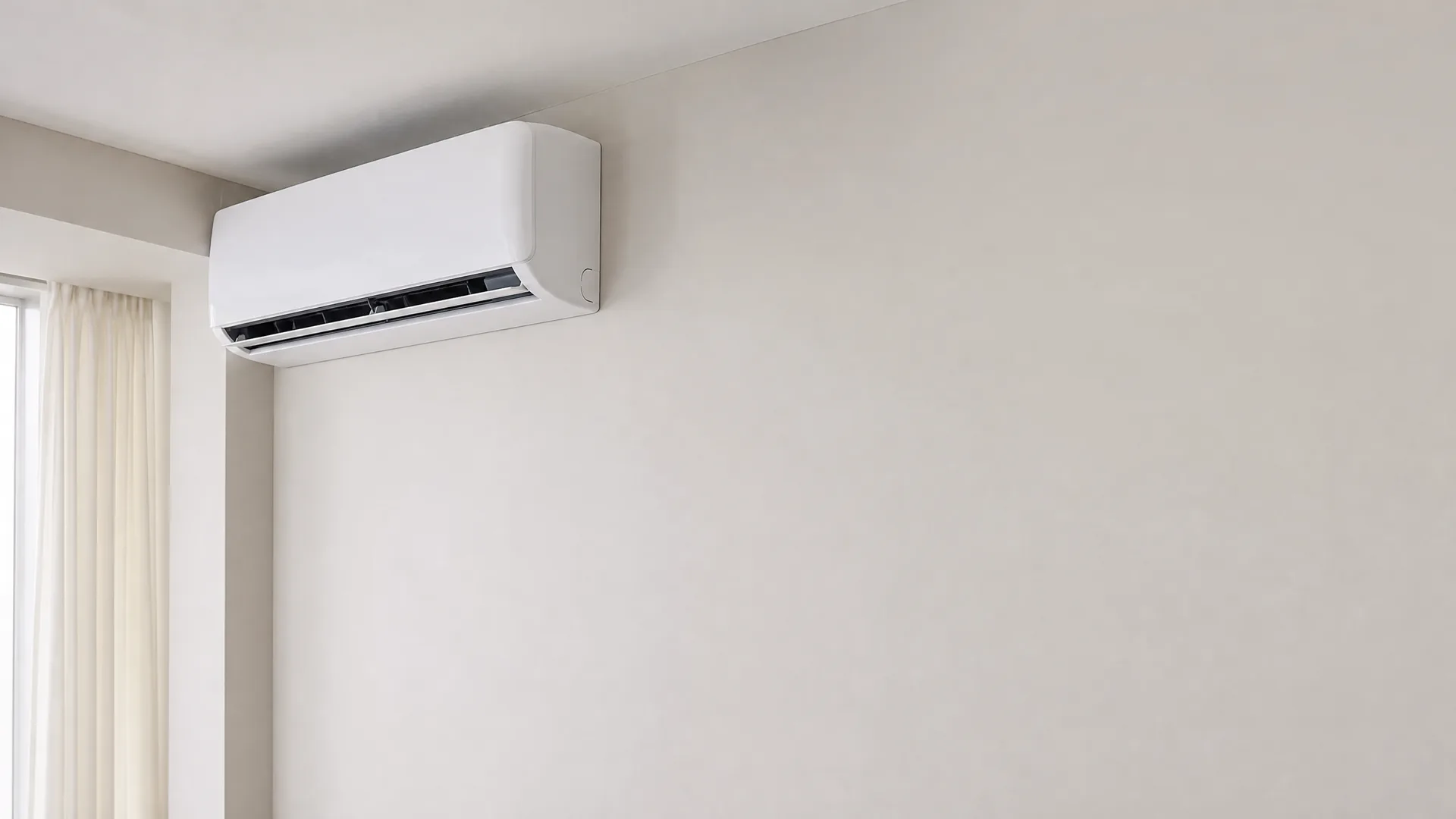
The indoor coil sits behind the louvers where you can't see it. Over a summer of cooling, it collects dust pulled in with the room air, and if the unit ran with condensation on it, that dust can turn into a thin film instead of drying off clean. When heat first hits the coil in the fall, that film is what burns and smells. A clean coil doesn't hold enough dust to notice.
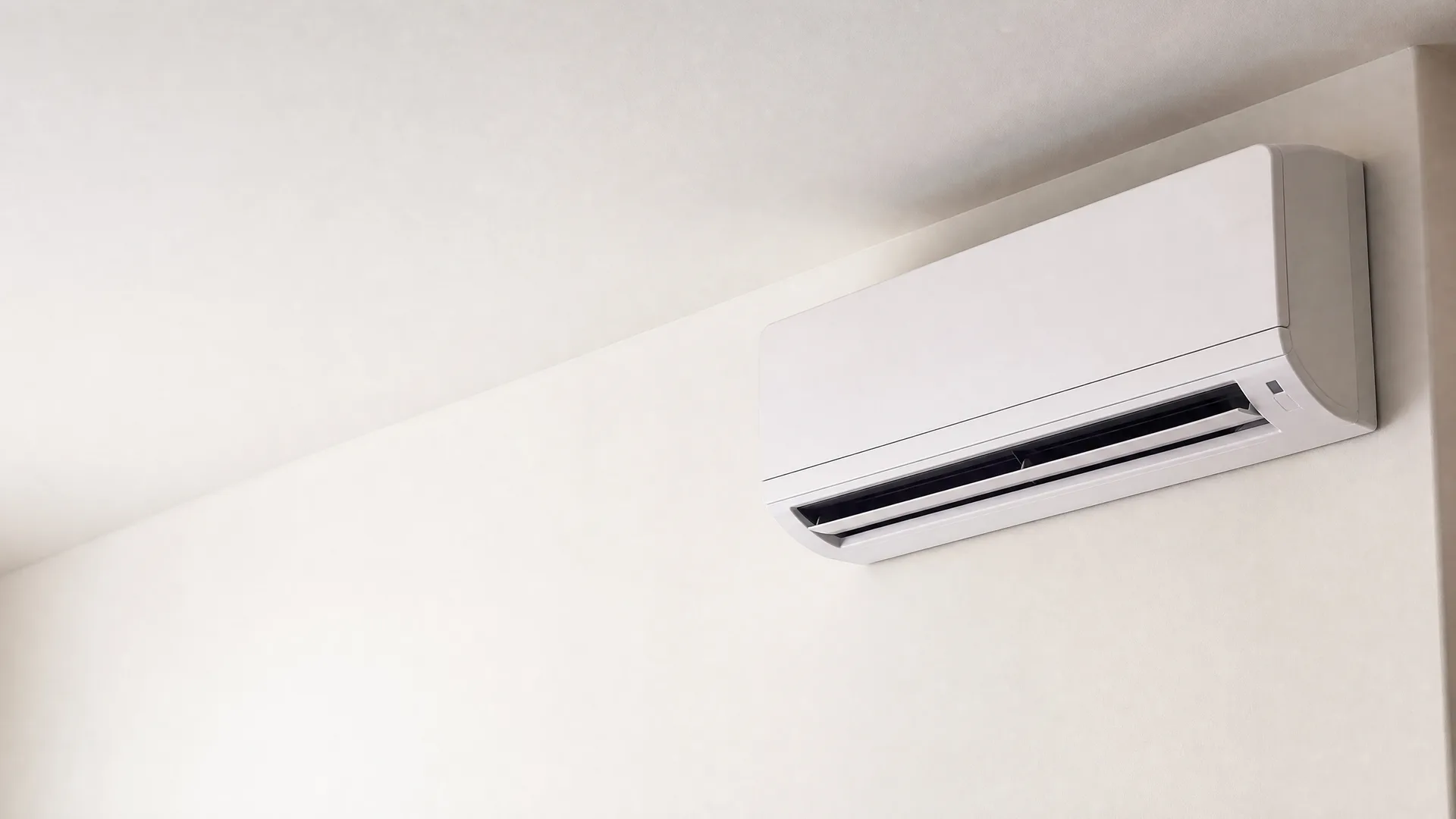
Every mini split has a drain line that carries condensation out of the indoor unit during cooling. If that line is slow or partly blocked, water sits in the pan longer than it should, and standing water in a warm, closed unit is where mold grows. That smell doesn't burn off in an hour like dust does. It comes back every time the blower turns on, because the mold is still there, not on the coil but in the pan or the line itself.
You switched the mini split over to heat for the first cold stretch and got a musty smell instead of warm air. The unit sat in cooling mode all summer, and Kansas summers get sticky enough that the indoor coil stays wet for stretches at a time. You want to know if that smell means something is growing in there or if it's just dust, and whether it's something to deal with now or let run its course.
A musty smell points to moisture, not dust. When a mini split cools, the indoor coil stays cold and wet most of the time it runs, and in a humid Kansas summer that coil can stay damp for hours after the unit shuts off. If the drain pan or the line out didn't clear that water fast enough, mold or mildew can take hold on the coil or inside the housing around it. Switch the unit to heat and the fan pulls air across that same coil, carrying the smell into the room. A burning dust smell fades in an hour. A musty one usually doesn't, because what's causing it is still sitting on the coil, not burning off.

The unit on the wall runs quiet and clean. Warm air moves out across the room with nothing riding on it, no musty edge, no dust smell at startup, no haze near the vents. The top stays free of dust and the coil behind the louvers isn't holding anything it shouldn't.

Dust sits visible on top of the unit and dark residue rings the vents where the air comes out. That residue is what's loading up the coil behind the louvers, and it's what carries into the room as a smell once the unit switches over to heat for the winter.


Summer humidity keeps condensation sitting on the indoor coil for months.
Dust pulled in with room air sticks to that wet coil.
Mold and mildew grow in the damp film the dust forms.
Switching to heat pushes air across that coil and carries the smell into the room.


At 14.44 cents a kilowatt-hour, running your mini split's fan to chase down a smell on your own costs you something every hour it's on. A tech finds the coil or mold problem fast instead of you guessing at settings while the meter runs.
EIA-861 2025 statewide residential average





A mini split that smells when it switches to heat is reacting to what sat on the coil all summer, dust, mold, or both. Burning dust clears off on its own within a couple hours. A musty smell from mold doesn't, and it comes back every time the unit runs until someone cleans the coil.
You don't have to figure out which one it is by sniffing around the indoor unit after work or reading through forum threads about mini splits. A technician checks the coil, tells you what's growing on it, and cleans it so the smell doesn't come back with the next cold snap. That's one call instead of a string of them to find someone who works on these units.


Answer a few questions instead of calling shop after shop.