Split Systems KS
A white wall-mounted mini-split air conditioner on a dark gray interior wall above a framed picture, with a potted plant and curtained window to the right.

A pro who works on mini splits

Why your mini split makes noise in a Kansas winter

Cold snaps are when a mini split's noises get worse, and in a Kansas winter you notice it. Clicking at startup, a rattle in the outdoor unit, or a hum that wasn't there before. This page gets into what's causing it. Skip the search and calling around, and get matched with a contractor who can take a look.

Connect with a pro

A mini split that clicks, rattles, or hums louder in cold weather is usually reacting to the defrost cycle. Kansas winters bring stretches cold enough that the outdoor unit ices over, and the system has to reverse itself to melt that ice off. That reversing valve is what you hear click. The rattle often comes from the outdoor fan slowing or stopping during defrost, which can loosen a blade guard or let debris shift inside the housing. A hum that's new this winter can be the compressor working harder to push through a cold start, or a fan motor bearing wearing down. None of this means the unit is broken outright, but it does mean something in the defrost cycle, the fan assembly, or the compressor itself is being asked to do more than it should, and that's worth having looked at before a part fails outright in the middle of a cold snap.

A white wall-mounted mini-split air conditioner indoor unit installed near the ceiling on a plain light-colored wall, with its horizontal outlet vent and louvers visible.
Before you get your mini split repair
A white wall-mounted mini-split air conditioner on a beige interior wall, with a curtained window on the left and wood flooring with a light rug below.
After you get your mini split repair

The noise has a sequence behind it. When the outdoor coil gets cold enough to frost over, the system reverses itself to send heat outside and melt that ice off. The reversing valve is what makes that switch happen, and its slide moving into place is what you hear as a clunk or click. Right around that moment the outdoor fan cuts back or stops, so the compressor sound that's usually in the background comes through louder. Ice buildup on the coil changes things too. At first it dulls the sound, then as the unit works to clear it, the hum climbs. If you hear a rattle only on the coldest days, check whether a fan blade is catching on ice rather than assuming a part has come loose. Once the coil is clear, the valve reverses again and the sound should drop back to normal within a few minutes. Kansas cold snaps mean this cycle runs often, which is why you notice it more some weeks than others.

What's Happening Inside the Unit

  • The reversing valve switches the refrigerant flow to run the system backward and send heat to the outdoor coil.
  • That shift makes a distinct clunk or click as the valve's slide changes position, loudest right when defrost starts or ends.
  • During defrost the outdoor fan slows or stops, so the compressor noise you normally don't notice becomes more obvious.
  • Ice on the outdoor coil muffles sound at first, then the unit runs harder to melt it, which raises the hum.
  • A rattle that shows up only below freezing often points to a fan blade hitting built-up ice rather than a loose part.
  • Once defrost finishes, the valve reverses again and the system should settle back to its normal running sound within a few minutes.
A woman with dark hair in a bun wearing a cream knit sweater sits on a gray sofa in a bright living room, looking off to the side.
A woman wrapped in a knit blanket sits on a gray sofa in a living room, looking toward a bright window with houseplants and an armchair in the background.
A woman in a gray cowl-neck sweater sits on a light sofa with cushions, smiling and looking to the side, with a kitchen and window visible behind her.
A woman with dark hair in a bun, wearing a light linen shirt, sits on a sofa and looks to the side, with a window, houseplants and a kitchen with pendant lights blurred behind her.

What This Means for Your House

  • A mini split that clicks and rattles through defrost every cold night can wake a light sleeper in the next room.
  • If the outdoor unit ices over and can't shed it between cycles, the indoor head blows cooler air until defrost finishes.
  • A noise that was occasional in November and runs every hour once Kansas temperatures drop into the teens is getting worse, not settling down.
  • Ice that never fully melts off the outdoor coil can back up against the fan blade and strain the motor.
  • A rattle that's actually a loose panel or bracket will keep working itself looser with every freeze and thaw.
  • Left alone through a hard Kansas cold snap, a defrost problem can leave the room it heats running colder than you'd expect for the thermostat setting.

The defrost cycle is normal, but how it shows up in your house depends on where the outdoor unit sits and who's trying to sleep near it. A bedroom wall backing up to the outdoor unit will carry that clunk and rattle straight through, hour after hour, on the coldest nights. If someone in the house wakes easily, a cycle running every hour once temperatures drop into the teens is the kind of thing that adds up over a January week. There's also what you don't hear: the room served by that head running cooler than the thermostat says while the system is mid-defrost and not actively heating. That's easy to blink past if you're not paying attention to the vent, but it's worth noticing if a room feels off for a few minutes at a stretch. The bigger risk is ice that doesn't fully clear between cycles. It builds against the fan blade, and a fan motor working against ice is working harder than it should, night after night. A rattle is worth checking too. Panels and brackets loosen a little with every freeze and thaw, and a sound that was faint in November can be a real knock by February if nothing's tightened. None of this means the unit is failing. It means the cold is exposing something that was already a little off, and a Kansas winter doesn't let up long enough for it to fix itself.

A white wall-mounted mini-split air conditioner on a beige interior wall, next to a window with sheer white curtains and green foliage outside.
A quiet, steady hum means the unit is cycling through defrost without a fight, even on a cold Kansas night.
A dusty, discolored wall-mounted mini-split air conditioner indoor unit on a plain white wall, with its horizontal louvers and vent grille visible.
A coil caked in dust and grime makes the unit work harder to move heat, and that strain often shows up as noise.
  1. The thermostat calls for heat and the compressor ramps up outside.

  2. Frost builds on the outdoor coil as cold air moves across it.

  3. A sensor reads the frost and triggers the defrost cycle.

  4. The reversing valve shifts and sends hot refrigerant outside to melt the ice.

Power costs 14.44 cents per kilowatt-hour statewide

At 14.44 cents per kilowatt-hour, a mini split that's running longer defrost cycles or straining through a dirty coil is costing you more to limp along than to fix. A repair that quiets it down also gets it back to heating efficiently.

EIA-861 2025 statewide residential average

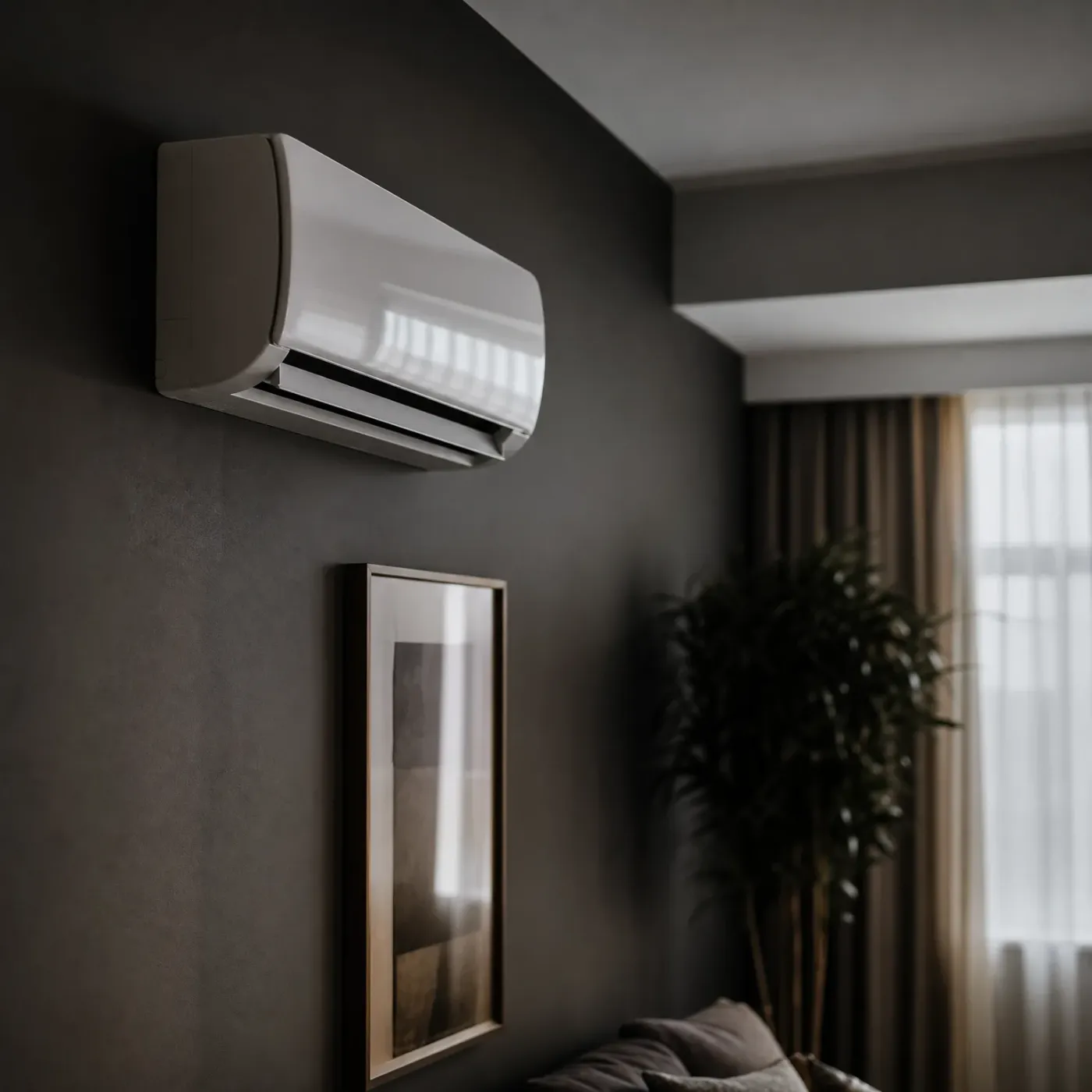
A wall-mounted mini-split air conditioner leaking water down a dim gray wall onto a towel on the floor, beside a window with a desk, lamp and monitor.

It's late afternoon and you're at the desk in the home office, the mini split on the wall humming the way it always does. You look up when you hear the drip. A wet streak is running down the wall under the indoor unit, already past the outlet cover, and you've got a towel down on the floor catching what it can. Outside it's another sticky Kansas afternoon, the kind that's had the system running since morning. You wipe the sill, check the towel again, and wonder how long it's been going before you noticed.

Get your mini split to the right pro

A mini split that's grinding through defrost every night isn't going to fix itself once it starts. The ice buildup that triggers those cycles tends to get worse as the cold stretches on, not better, and a reversing valve that clicks loudly now can wear toward a harder failure later in the season. You could spend an evening searching contractors, calling a few, explaining the clicking and the rattle and the hum to each one, then sitting with quotes trying to guess who actually knows mini splits versus who's guessing too. Or you could hand that off. Fill out the request once and it goes to a contractor who works on these systems, who calls you instead of the other way around. You're not describing the noise to five different people hoping one calls back before the next cold snap. One person gets your situation and reaches out. The mini split still needs the work done. What you don't need is the legwork of finding who should do it.

A white wall-mounted mini-split indoor unit installed high on a gray interior wall, with a sofa, dark table and window visible in an adjoining room to the right.

Running normally

This is what a mini split should sound and look like in winter. A steady hum while it's heating, the louvers set and moving air, the casing clean. Defrost kicks in now and then without turning into a racket you notice from the next room.

A wall-mounted mini-split air conditioner indoor unit with a dusty beige casing and dark louvered vent, installed near the ceiling on a plain beige wall.

Struggling through winter

Dust and yellowing on the casing often go along with a coil that's just as dirty underneath. A coil caked like that can't shed heat the way it should, so the unit runs longer and louder to keep up, especially during defrost on a cold Kansas night.

What's that noise coming from your mini split tonight

Walk past the indoor head on a cold night and you might catch a clunk right as it switches over, then a few minutes of air that feels cooler than it should before it warms back up. Outside, the unit might rattle or buzz louder than you remember from last winter. Some nights it's steady. Other nights, when Kansas drops hard after sunset, it runs through that cycle again and again. If you're hearing it from another room with the door closed, it's loud enough to notice from where people sleep. Left alone, a unit straining through ice every night is also one that's heating your house less evenly while it does it.

A single-story house with light gray horizontal siding, dark gray shingled gables, black shutters and a dark front door, fronted by a mulched bed of small shrubs and a large lawn under a clear blue sky.

The noise in winter traces back to summer, in a roundabout way. Kansas summers run heavy, with dew points averaging 64°F across June, July and August, and a mini split that spends those months pulling moisture out of thick air is working its coil hard in both directions. Grime builds on the same coil that ices over on cold nights. A coil that went into winter already coated from a sticky summer has less room to shed frost cleanly, so defrost runs longer and the reversing valve cycles more often. That's more clunks and hums for you to hear through the wall.

NASA POWER T2MDEW county cells weighted by homes

A smiling older woman with gray shoulder-length hair in a cream cable-knit turtleneck sweater stands behind a wooden board holding a round loaf of bread, in a warmly lit kitchen with a dark window and shelves behind her.
A woman and a child wrapped together in a thick knitted blanket on a sofa, both with eyes closed, with a lit table lamp and houseplant in the dim background.
A man in a dark blue shirt stands in an open front doorway of a stucco and wood-clad house, facing a blond woman seen from behind in the foreground on a stone walkway.

A noisy mini split in winter is telling you something specific

The noise is the defrost cycle working harder than it should, usually because ice is building up faster than the system can clear it or the coil is too dirty to move heat the way it needs to. That's the answer. The clicking, the rattle, the hum that wasn't there last winter, it all traces back to that.

Knowing the cause doesn't fix it, and tracking down someone who works on mini splits in Kansas, explaining the noise over the phone, then doing it again with the next company while you compare quotes, takes time you'd rather spend on the rest of what's going on at home. Once you request a repair here, that part is done. You're matched with a contractor who handles mini splits and knows what a Kansas winter does to them, and they'll reach out to you directly.

Interior corner of a dining room with a round wooden table, a ceramic vase holding olive branches, a dark spindle-back chair near a curtained window, and a sideboard with a lamp against beige walls.
A single-story stucco house at dusk with a lit paver walkway lined by low path lights, desert plants and boulders in front, and distant mountains under an orange and blue sky.

Mini Split Repair

The right pro for this job

Step 1 of 3: Equipment
  • A cream chunky cable-knit throw draped over a beige upholstered armchair beside a bright window, with a wooden side table holding a book and a vase of leafy branches at left.
    • Describe your mini split job, and a local pro who handles it gets in touch.
    • Say what's going on with your mini split, and a pro who works on them reaches out.
  • Living room corner with a gray sofa holding beige pillows and a knit throw, a round wooden coffee table with a dark planter and shallow bowl, a jute rug, a floor lamp, a framed landscape print on the wall, and a window showing trees.
    • Send the request today and let a mini split pro reach out to you.
    • Get the mini split repair search off your mind today.
  • A living room corner with a cream sofa and cushion, knit throw, wooden coffee table holding a shallow bowl and dark ceramic vase with green foliage, a floor lamp, potted plant in a woven basket, and linen curtains at a window.
    • Describe your mini split job once, to one pro.
    • Fill out one short form instead of calling around.
  • A round reclaimed-wood coffee table with a black metal base sits on a woven rug in front of a cream sofa with cushions, with a lit built-in fireplace and a tall indoor tree in the background.
    • Your request goes to one pro, not a list of companies.
    • The pro who reaches out is licensed in Kansas.