Running the way it should
The panel stays closed and dry, no streaking down the wall below it. Inside, the coil defrosts on schedule and the water drains out where it's supposed to. Nothing to see, which is the point.
A mini split that leaks water in winter is usually icing up and then dripping as it thaws. In cold weather the outdoor unit pulls heat from the air, and when temperatures drop into the 20s and 30s, the coil can frost over faster than the defrost cycle clears it. Kansas winters swing hard between mild days and hard freezes, and that swing is what catches a lot of systems: the unit handles a cold snap fine, then a defrost cycle runs during a quick thaw and the melted frost has nowhere to go but down, through the case, onto your floor or wall. It can also mean the condensate drain itself is clogged or frozen, so water that should run outside backs up inside the indoor unit instead. Either way, the leak is a symptom. The cause is something in the system not doing its job, and that's worth having looked at before the ice does any damage behind the wall.
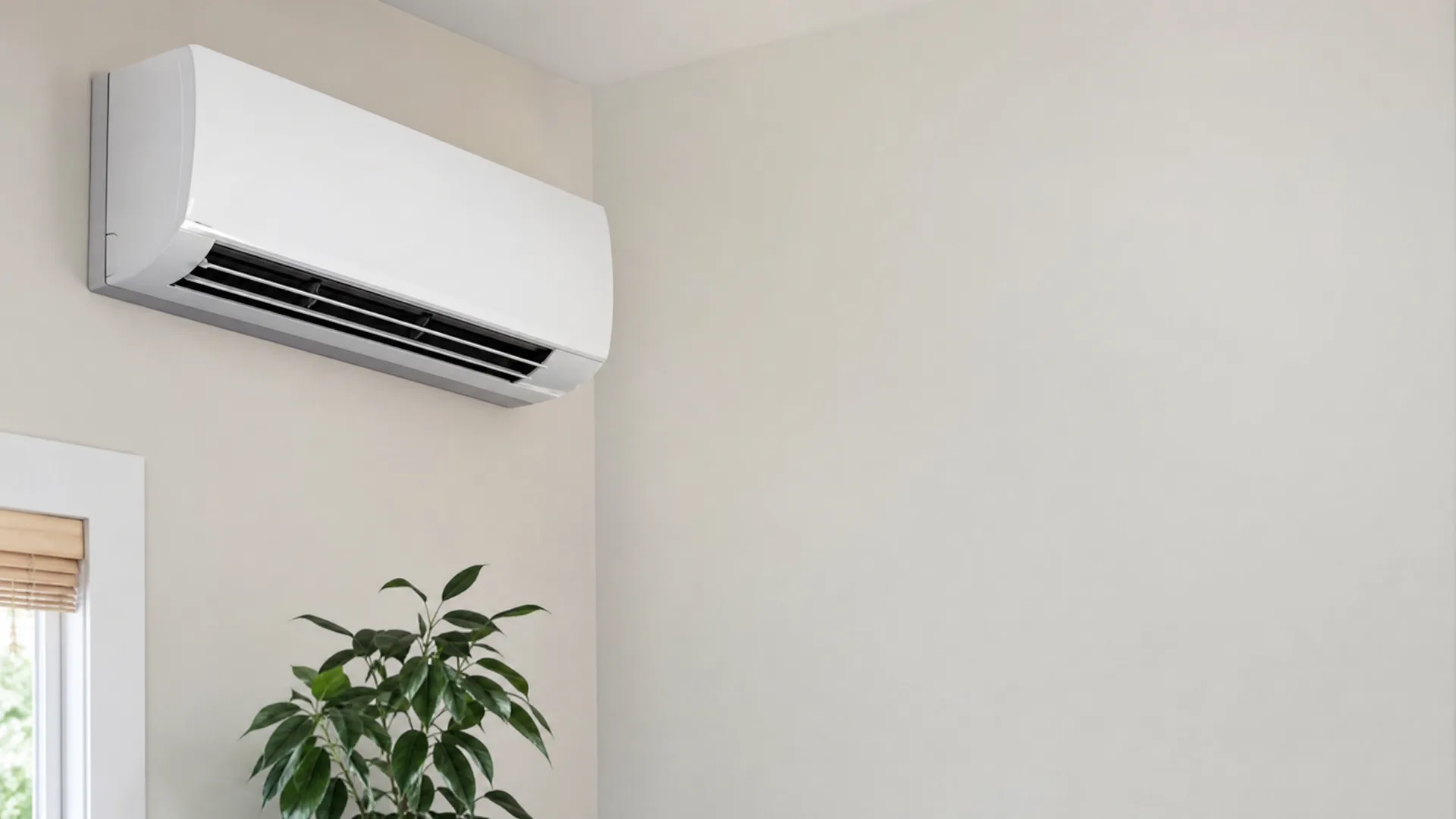
The outdoor unit reverses itself every so often to melt frost off the coil. Hot refrigerant runs through it for a few minutes, the ice turns to water, and that water is supposed to drain out the bottom pan. If that pan or its drain is cracked, clogged, or iced shut, the melt has nowhere to go. It backs up into the unit and shows up as a leak instead of draining away like it should.
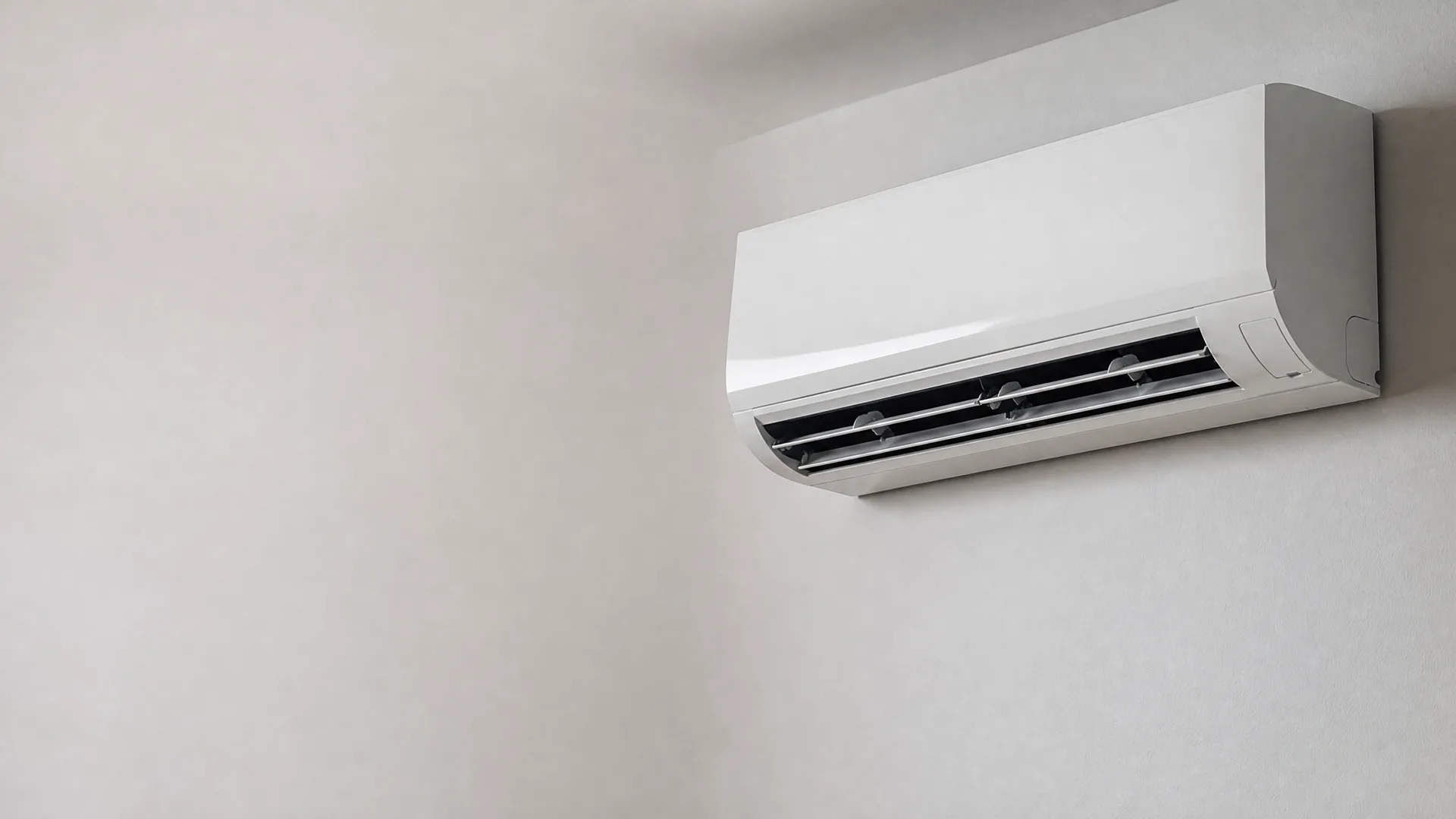
The indoor head also drains water, through a line that runs to the outside of your house. Algae and dust build up inside that line over months and narrow it until it backs up. In a Kansas winter, any water sitting in that line near an exterior wall can freeze solid. Once it's frozen, condensate has nowhere to go but back into the indoor unit, and that's water on your floor instead of outside where it belongs.
What you're probably seeing is water collecting under the indoor head, or a drip stain spreading on the wall below it. Outside, you might notice ice building up on the outdoor unit's coil, or a puddle that freezes overnight and turns into a slick spot by the back door. Some homeowners hear it too, a dripping sound from inside the wall as the line set sweats. Left alone through a Kansas winter, that water can soak into drywall and trim, warp flooring under the indoor unit, and if it's tracking down inside the wall cavity, it can sit there long enough to grow mold where nobody sees it. The leak itself won't damage the mini split quickly, but the house around it is what pays for the delay.
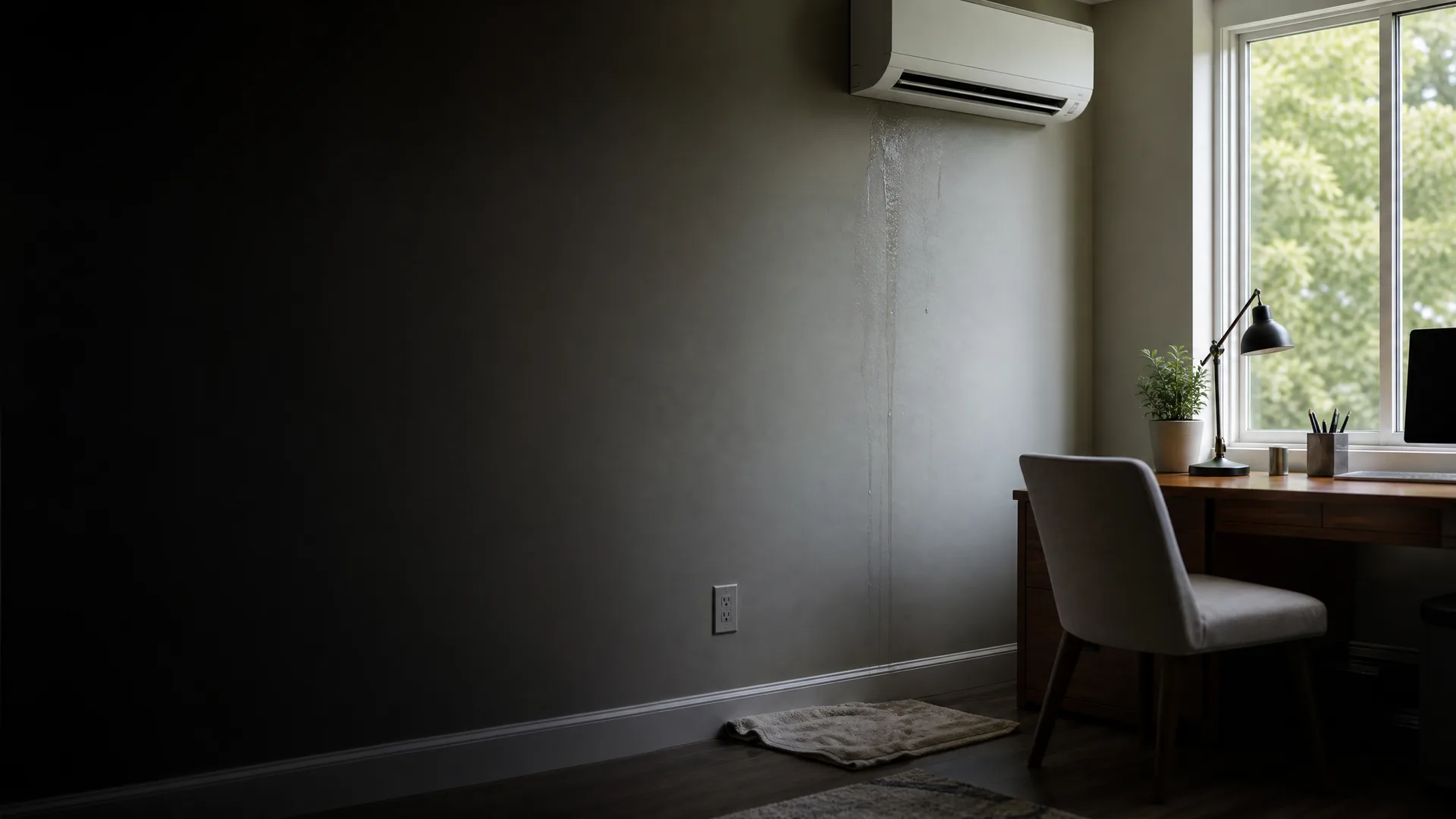
You're at your desk on a January afternoon, working through email with the mini split humming behind you, when you notice the wall looks wrong. A streak has worked its way down from the indoor unit, dark against the paint, and the carpet under it is damp enough that you've already put a towel down. Outside the window, bare branches, the kind of gray Kansas afternoon where the sun never quite gets through. You crouch down and touch the wall. Still wet. You check the towel, wring it out, lay it back down, and go back to your desk, listening for the unit to click into its next cycle, wondering how long this has been happening before you saw it.
You've noticed the leaking only shows up on the coldest days, not during a mild stretch in November or a warmer spell in March. That pattern feels random, but it isn't. There's a temperature threshold where the unit starts behaving differently, and once you know what's happening at the coil when it gets that cold, the leak stops looking like a mystery.
A mini split defrosts on a timer, not on how much frost is actually on the coil. In mild weather that schedule keeps up fine. Once temperatures drop into the 20s and below, the coil pulls in colder, often damper air and ice forms faster than the defrost cycle runs. The unit ends up clearing more ice in the same few minutes it always gets, so more water hits the drain pan at once. If that pan or the line out of it is already partly blocked, mild weather never produces enough runoff to show it. Hard cold does. That's why the same unit can run clean for weeks and then leak only on the nights it drops into the teens or lower.

The panel stays closed and dry, no streaking down the wall below it. Inside, the coil defrosts on schedule and the water drains out where it's supposed to. Nothing to see, which is the point.

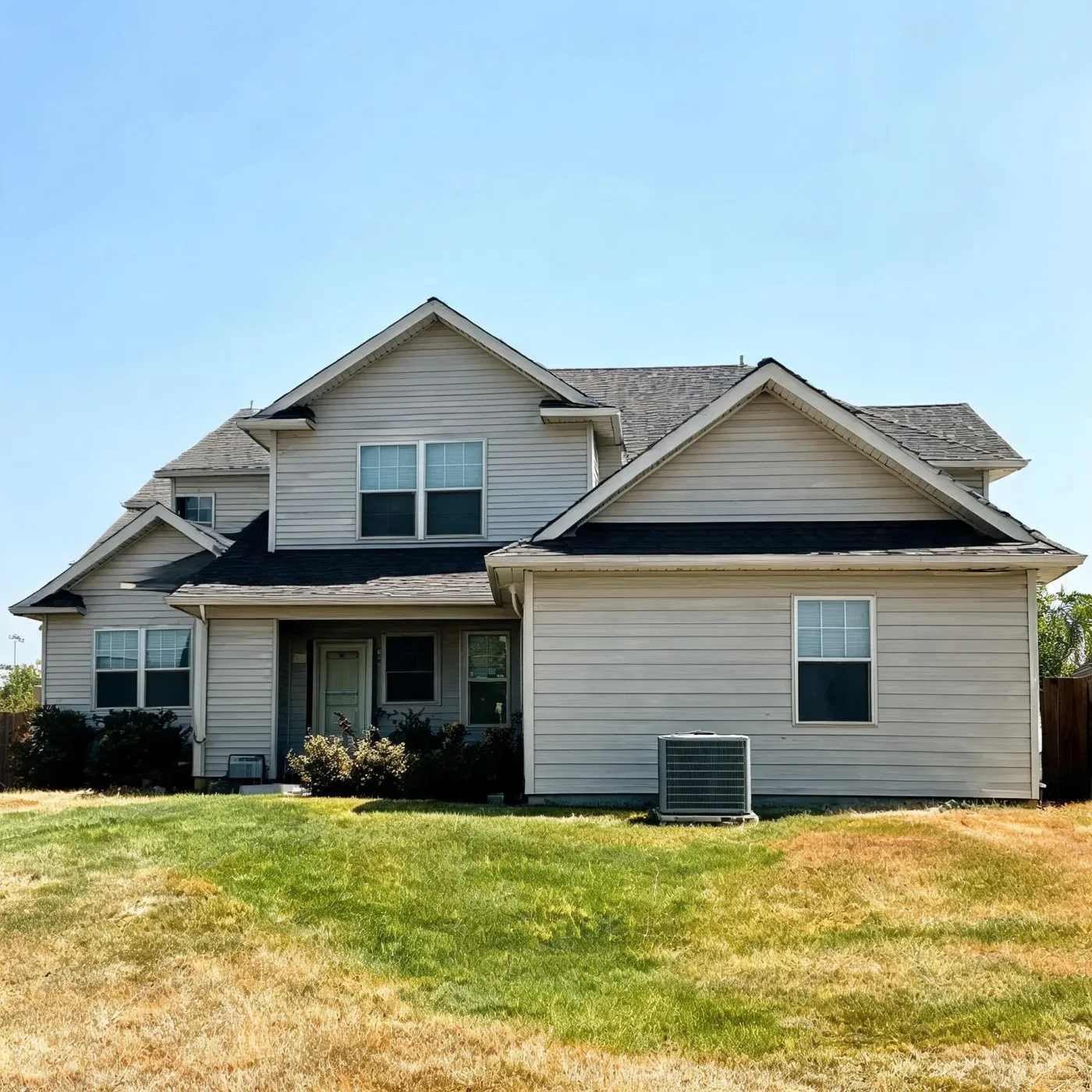
A case gone this dusty and discolored has been working hard for years without much attention. A clogged coil or filter makes the unit run harder to keep up, and that's often what pushes a defrost cycle past what it can clear before the next freeze sets in.




Summer here runs humid, with the dew point averaging 64°F across June, July and August, NOAA climate data for Kansas shows. That's the kind of air that makes a mini split work hard pulling moisture out of your house all summer, and it's a different job than the one it's doing in January. The leaking you're dealing with now is a winter problem, tied to frost on the outdoor coil, not summer humidity. Once you send in the request, you're not the one who has to track down a contractor who knows both sides of this system. Someone local who services mini splits through every season, summer's moisture load and winter's defrost cycle alike, takes it from there.
NASA POWER T2MDEW county cells weighted by homes
Your request goes to one pro, not a list of companies.
It costs nothing to send, and you don't have to hire anyone.
Some homeowners just put a towel under the indoor head and wait for a warmer stretch. The ice outside does eventually melt, and the dripping slows down. But the drain pan or line that caused the backup in the first place is still blocked, or the defrost board still isn't cycling right, so the next cold snap brings the same puddle back. Meanwhile the water sitting against the wall or soaking the carpet underneath doesn't care why it's there. A few days of that in a Kansas January can leave a stain or soft drywall that wasn't there before.
A local contractor who services mini splits through a Kansas winter has seen this exact pattern before: the frozen coil, the clogged pan, the defrost sensor that quit reading cold correctly. They can open the unit, find which part failed, and clear or replace it before the next freeze hits. One contractor means one visit instead of fielding calls from several companies trying to get on your schedule first. It also means the fix addresses what's actually wrong, not just the puddle on the floor, so the same leak doesn't show up again the next time it drops into the 20s.


A mini split moves water out through a drain line that only works if it keeps sloping down and out. If that line sags anywhere along its run, water sits in the low spot instead of draining, and it backs up into the pan. From there, a few different things can push it over the edge. A dirty coil or a wet filter blocks airflow enough that moisture builds up faster than the pan can clear it. A float switch, if the unit has one, is there to catch that and shut things down before it overflows, but a stuck switch won't trip. Some of this traces back to the refrigerant charge. A system running low gets colder than it should at the coil, which means it frosts up in weather that wouldn't normally cause trouble. And the insulation wrapped around the refrigerant lines matters too. Any gap in it lets condensation form somewhere outside the pan entirely, which is why water sometimes shows up in a spot that doesn't seem to connect to the drain at all.


Let it keep running the way it is, and the drain pan backs up again the next time temperatures drop, sending water down the same wall or across the same stretch of floor.
Get the drain checked and cleared by someone licensed to work on it, and the unit defrosts the way it was built to, with the water going out the line instead of into your house.
Power here runs 14.44 cents a kilowatt-hour, close to typical nationwide. A mini split that's icing up and short-cycling through defrost draws more to fight that water problem than one draining the way it should. Getting the drain cleared stops that extra draw along with the leak.
EIA-861 2025 statewide residential average
A mini split that drips in winter is telling you something specific: ice formed on the outdoor coil, and when it thawed, the water had nowhere good to go. That's the whole story, whether it shows up as a stain on your wall or a puddle by the outdoor unit. The exact cause still needs sorting out. Sometimes the defrost cycle isn't firing on schedule. Sometimes the drain pan is clogged with debris or the condensate line has sagged enough to let water pool instead of running downhill. Each of those gets fixed differently, which is why guessing at it from the couch doesn't get you anywhere lasting.
A towel under the indoor head and a stretch of warmer weather will make the dripping stop for a while. It comes back the next time temperatures drop, because nothing about the drain or the defrost cycle changed. The fix is someone opening up the unit, finding which part of that system failed, and correcting it.
That's work for a contractor who's licensed to work on mini splits and who sees this exact problem every winter in Kansas, not someone guessing from a phone script. You'll be matched with one local technician, so you're talking to the person actually doing the work instead of fielding quotes from three different companies. Once the drain runs clear and the defrost cycle resets on schedule, the coil stops icing over, and the water stops showing up where it shouldn't.





The pro who reaches out is licensed in Kansas.
No charge to send it. You decide if you hire them.
