Why your mini split blows cold air in Kansas

Step 1 of 3: Equipment

Why is my mini split blowing cold air when it's set to heat?

You switched your mini split over to heat and cold air is coming out of the vents, or air that is barely warm. In Kansas that gets noticed fast once the weather turns, because you are depending on that unit to carry part of the house through the cold months alongside the gas furnace. You want to know if this is normal while it catches up or if something is actually wrong.

It usually means the unit is stuck in defrost or low on refrigerant

A mini split pulls heat from the outside air, so in cold weather it can briefly blow cool air while it runs a defrost cycle to clear frost off the outdoor coil. That should pass in a few minutes. If it keeps blowing cold the whole time it runs, the outdoor unit is likely low on refrigerant, the reversing valve that switches it between heat and cool may be stuck, or the outdoor coil is iced over and not defrosting properly. None of those clear up on their own. The longer it runs that way, the harder the compressor works for no heat, and on a cold night in Kansas that leaves you relying on whatever backup heat you have while it gets sorted out.

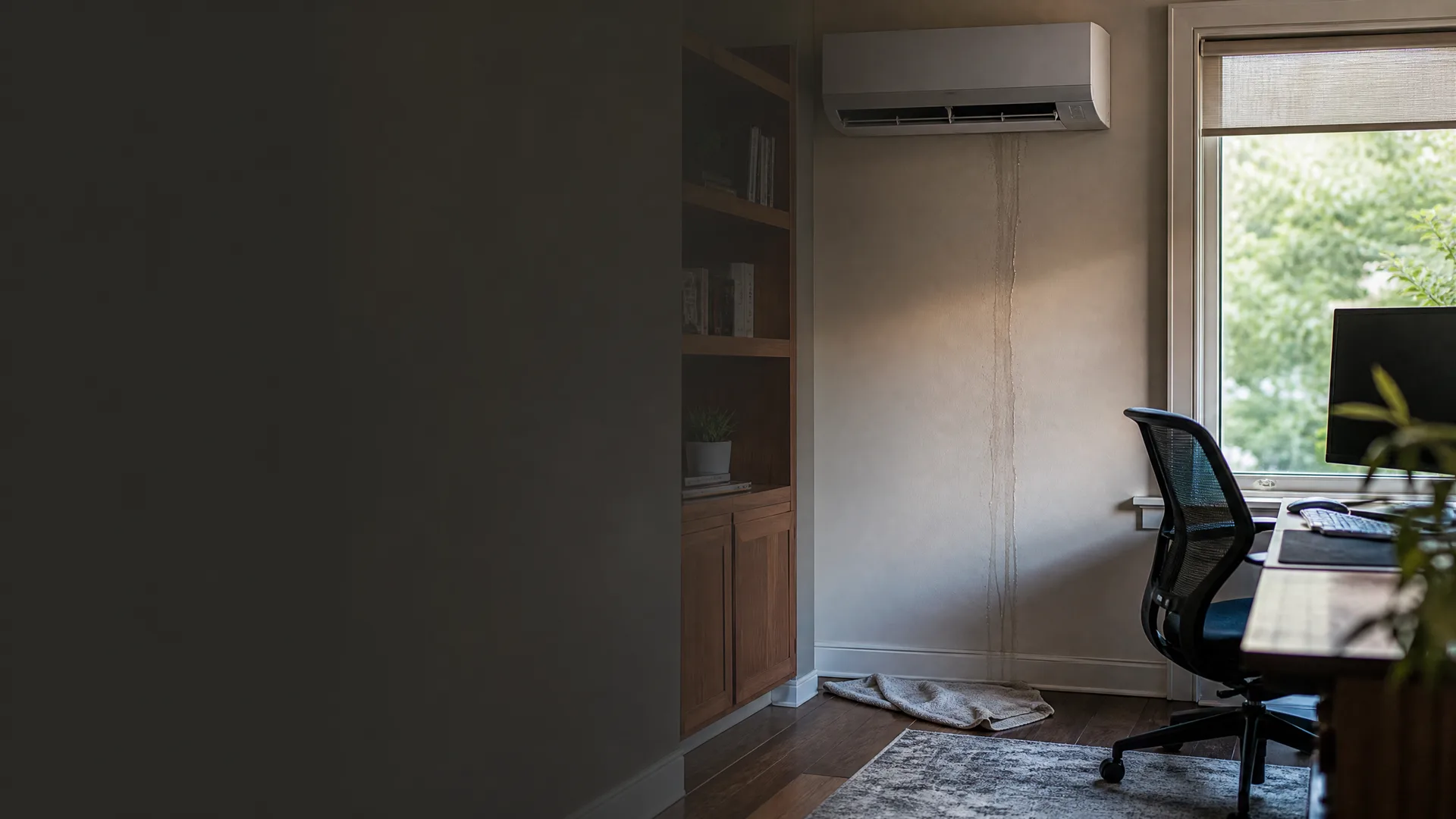
A dim room with a white wall-mounted mini-split air conditioner above a wall with a vertical line mark, a wooden built-in shelving unit with books and a potted plant at left, and a desk with monitor, keyboard and mesh office chair by a window at right.

You're at your desk on a muggy afternoon, mini split humming away on cooling, and you notice the wall under the indoor unit has gone dark. A wet streak runs down toward the baseboard. You grab a towel and lay it on the floor where the drip is landing, then stand back and watch another bead of water form on the unit and slide down. The papers on your desk are still dry, but you've already moved your laptop a foot to the left, just in case. You're not leaving the room, you're just watching it now, waiting to see how fast it comes back.

A white wall-mounted mini-split air conditioner installed near the ceiling on a light-colored interior wall, with a window and green foliage visible at the left edge.
The unit here looks clean at the vents and the airflow feels right against your hand.
A dusty white wall-mounted mini-split air conditioner indoor unit installed high on a beige interior wall below a white ceiling and trim.
This one has a thick layer of dust packed into the intake grille and along the fins.
A smiling man in a blue denim shirt over a white tee sits at a light stone kitchen counter with a grey mug and a bowl of oranges and bananas, with pendant lights and shelving behind him.
A smiling bearded man in a grey long-sleeved shirt sits at a kitchen counter with a dark mug, with a dining table, pendant light and glass doors onto greenery behind him.
A bearded man in a dark green knit sweater smiles and looks off to the side while standing at a kitchen counter with a white mug of coffee, with open shelving, a potted tree, and a dining table near large windows behind him.
A man with dark curly hair in a dark green sweater stands smiling and looking to the side in a kitchen with white cabinets, a potted plant, a stone countertop with a ceramic mug, and a dining area with framed art in the background.
A closed silver laptop and a white cup of coffee on a saucer sit on a wooden table in front of a wooden chair, a plain beige wall, a potted leafy plant and a window with greenery outside.

What happens inside the unit when it won't heat

A mini split doesn't make heat the way a furnace does. It pulls heat out of the outdoor air with refrigerant and moves it inside through the coil in the wall unit. On a cold snap that process has to work harder, and the outdoor unit will run a defrost cycle to clear frost off its coil. During defrost the indoor fan can keep blowing and what comes out feels cold, because for a few minutes the system really is running in reverse to melt that frost. That's normal. Cold air that doesn't warm back up once the cycle ends is a different problem, often a reversing valve stuck in the wrong position or a refrigerant charge that's too low to move heat at all.

Either way, it's not something to diagnose by guessing at the thermostat settings or hoping it clears up overnight in a Kansas January. Once you send the form, you're done hunting through reviews, calling three different companies to see who answers, and explaining the same symptoms over and over to whoever picks up. A licensed contractor gets the details and takes it from there.

A wooden table holding a stone vase with a bare branch, two stacked books and a small dark bowl, beside a window with green foliage outside and a sofa in the dim background.
A two-story house with beige horizontal siding, stone veneer at the base, dark shingled gable roofs and a concrete walkway leading to the front door, set behind a patchy green lawn under a clear blue sky.

Summer air in Kansas carries a dew point around 64°F, averaged across June, July and August, per NOAA climate data. That's sticky enough that your mini split spends most of its time pulling moisture out of the air, not just cooling it. The indoor coil stays wet longer to do that, and if the drain line or the filter is dirty, water backs up instead of draining out. That's often why you see cold air with no real drying effect, or water showing up where it shouldn't. The thicker the air outside, the harder the coil works, and the more that condensate has to go somewhere.

NASA POWER T2MDEW county cells weighted by homes

Cold Air on Heat Mode: Normal or Not

Call for repair now

  • If cold air keeps coming out on heat mode for more than a few minutes, something in the switch to heat is failing, not just adjusting.
  • A frozen outdoor coil or a refrigerant leak won't fix itself and tends to get worse the longer the unit runs.
  • If you hear clicking or short cycling along with the cold air, the reversing valve may be stuck and needs a technician to confirm it.
  • Waiting through a cold snap with no heat at all is a different problem than a few minutes of cool air before it warms up.
  • A unit that ices over outside while trying to heat can damage the compressor if it keeps running that way.

Give it a few minutes

  • Right after you switch from cool to heat, the indoor coil is still holding cold refrigerant, so a short burst of cool air is normal.
  • The outdoor unit needs time to reverse the refrigerant flow and start pulling heat from the outside air.
  • If the air warms up within five or ten minutes and stays warm, the system did what it was supposed to do.
  • A defrost cycle on a cold morning can also send a brief puff of cool air inside while the outdoor coil clears itself of frost.
  • If this only happens once, right after a mode change, there's nothing to schedule yet.
A white wall-mounted mini-split air conditioner on a light gray wall in an empty room with dark wood flooring, white baseboards, a tray ceiling with recessed lights, and a window at the left.

Running the way it should

This unit sits clean near the ceiling, vents clear, nothing dripping or staining the wall below it. Set it to heat and the air coming off the coil climbs steadily until the room catches up to the thermostat. No cold surprise partway through.

A wall-mounted mini-split air conditioner indoor unit with a yellowed plastic casing and dark horizontal vent louvers, installed on a plain light-gray wall.

A unit losing the fight

Dust has built up across the top and packed into the vents, with dark residue ringing the grille. Airflow drops when a coil gets caked like this, and a mini split working that hard to move heat is one more cold snap away from not switching over at all.

A wall-mounted mini-split air conditioner indoor unit with a dusty, discolored cover, installed near the ceiling on a plain light-colored wall.
Before you get your mini split repair
A white wall-mounted mini-split air conditioner unit installed high on a light gray interior wall below crown molding, with a bamboo-shaded window at the lower left.
After you get your mini split repair

Finding a pro stops being your job

Skip searching for a mini split pro and answer a few questions instead.

Asking costs nothing, and the choice to hire stays yours.

The reversing valve and what it does

  • A reversing valve flips the refrigerant flow so the outdoor coil gives up heat instead of absorbing it.
  • If that valve sticks halfway, refrigerant keeps running the cooling path even though the thermostat says heat.
  • A failing valve often makes a soft clunk or hiss when it tries to switch and fails.
  • Low refrigerant charge can keep the system from building enough pressure to heat the indoor coil at all.
  • A defrost cycle stuck on will blow cold air on purpose while it melts ice off the outdoor unit.
  • The indoor coil only gets warm once refrigerant pressure on the heating side climbs high enough to carry heat.

Your mini split has one part that decides whether it heats or cools: the reversing valve. It sits between the indoor and outdoor units and controls which direction the refrigerant flows. Switch the thermostat to heat and the valve is supposed to flip, sending refrigerant through the outdoor coil so it pulls heat from the outside air instead of dumping heat outside the way it does on cooling. When that valve is working, you feel the change at the indoor unit within a few minutes.

When it sticks, the system stays on the cooling path no matter what the thermostat says. Refrigerant keeps moving the way it did all summer, so the indoor coil stays cold instead of warming up. You might hear a clunk or a hiss as the valve tries to move and fails to seat. A low refrigerant charge causes a similar result for a different reason. There is not enough refrigerant in the system to build the pressure needed to carry heat into the indoor coil, so the air coming out stays cool or barely warm.

There is one case where cold air is normal. Ice builds up on the outdoor coil during cold, damp weather, and the system runs a defrost cycle to clear it. During defrost the indoor fan can blow cool air for a few minutes on purpose. If that lasts longer than that, or happens every time the unit runs, something else is wrong.

Power costs 14.44 cents per kilowatt-hour statewide

At 14.44 cents per kilowatt-hour, a mini split stuck blowing cold air on heat mode still draws power the whole time it runs, just without warming the room. Leaving it set to heat while it struggles only adds to the bill with nothing to show for it.

EIA-861 2025 statewide residential average

Keep running it while you wait on a fix, and the unit cycles on and off trying to reach a setpoint it can't hit, pulling power each time with no warm air to show for it.

Get it looked at and the reversing valve or sensor behind the problem gets replaced, and the unit goes back to switching between heat and cooling the way it did when it was new.

A smiling man in a dark blue T-shirt sits on a light gray sofa in a living room with a wooden shelf and window behind him, with a laptop edge visible in the foreground.
A bearded man in a plaid flannel shirt stands indoors looking out a frost-covered window, with a steaming dark blue mug on the wooden sill and snow-covered trees outside.

Still handling it yourself

You keep resetting the thermostat, checking the vents, waiting to see if it warms up on its own. Calling around to find someone who can actually look at it is still sitting on your list.

Fill out one form

Send the form

Once it's sent, finding a contractor who works on mini splits in your area stops being your job. No calling around, no explaining the problem twice.

Fill out one form

A mini split that blows cold air on heat mode has a reversing valve stuck in the wrong position, a sensor sending bad information, or a coil that's frozen over and can't do its job. None of those clear up by resetting the thermostat or waiting out the week. You already know that, which is why you caught it instead of letting it ride. What's left is the part you can't do from your living room: finding someone licensed to get into the unit, pin down which of those three it is, and fix it. That usually means calling a few places, explaining the cold air and the heat setting and the noise it makes more than once, then sitting with quotes trying to guess who's worth the call back. Send the form instead and that search is done. You're not left digging through reviews or waiting on hold to describe the same problem again. Someone qualified gets in touch, and from there it's a repair, not a project you have to manage.

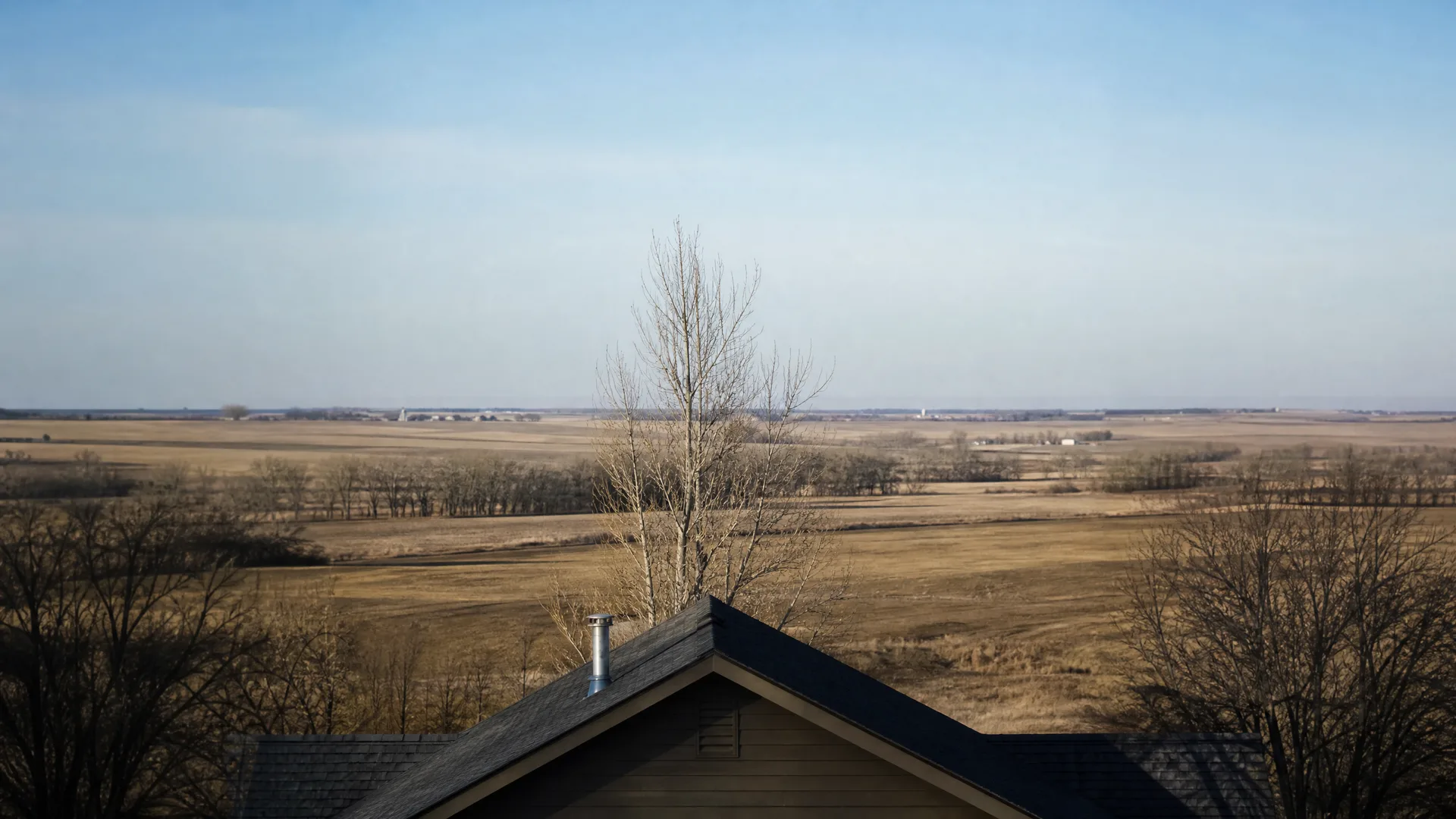
View over a dark shingled gable roof with a metal flue pipe toward flat brown fields, bare trees, and a hazy horizon under a pale blue sky.

One request and it's handed off

Skip the search

Sending the form costs nothing.

Winter mornings in Kansas aren't the time to find out your mini split won't actually warm the house. Send the request and you're done hunting for someone to look at it, done calling around and explaining the same problem twice. A technician gets the details instead, and you get the room warm again.