


Mini split smells musty in Leavenworth, KS

Your mini split tune-up request goes to a pro who covers Leavenworth County.

Connect with a pro

Why does my mini split smell musty when it turns on?

You turn on the mini split after it's been sitting and that musty smell hits the room. It's not strong enough to seem like mold growing somewhere obvious, but it's there every time the unit kicks on, especially after it's been off for a while or run only in low fan mode. You want to know what's actually causing it before you decide whether it's something simple or something worse.

It's moisture sitting on the indoor coil and in the drain pan

A mini split's indoor coil gets wet every time it cools, and in a Leavenworth summer that's most of the day for months. When the unit shuts off, that moisture sits on the coil and in the drain pan instead of draining or drying out, and mold starts growing on it. The next time the unit kicks on, it blows air across that coil and pushes the smell into the room. It usually gets worse the longer the unit sits idle between uses, which is why it's often strongest first thing in the morning or after a stretch of mild weather when the system barely ran. A dirty filter or a drain line that isn't draining the way it should makes it worse.

A white wall-mounted mini-split air conditioner installed high on a light beige interior wall below a white crown molding, with a wooden floating shelf holding a ceramic vase of green foliage at the lower left.

Why the blower holds the smell

A mini split's indoor coil sits right in the path of the air it moves. Humid summer air passes over that coil and leaves moisture behind on the fins and on the blower wheel. That water doesn't fully drain off between cycles, and it sits in the dark, on a surface that never dries out all the way. Run the unit again and the air passes right back over that same film. The smell isn't coming from the room. It's coming from inside the cabinet, off the coil and the wheel, every single time it starts.

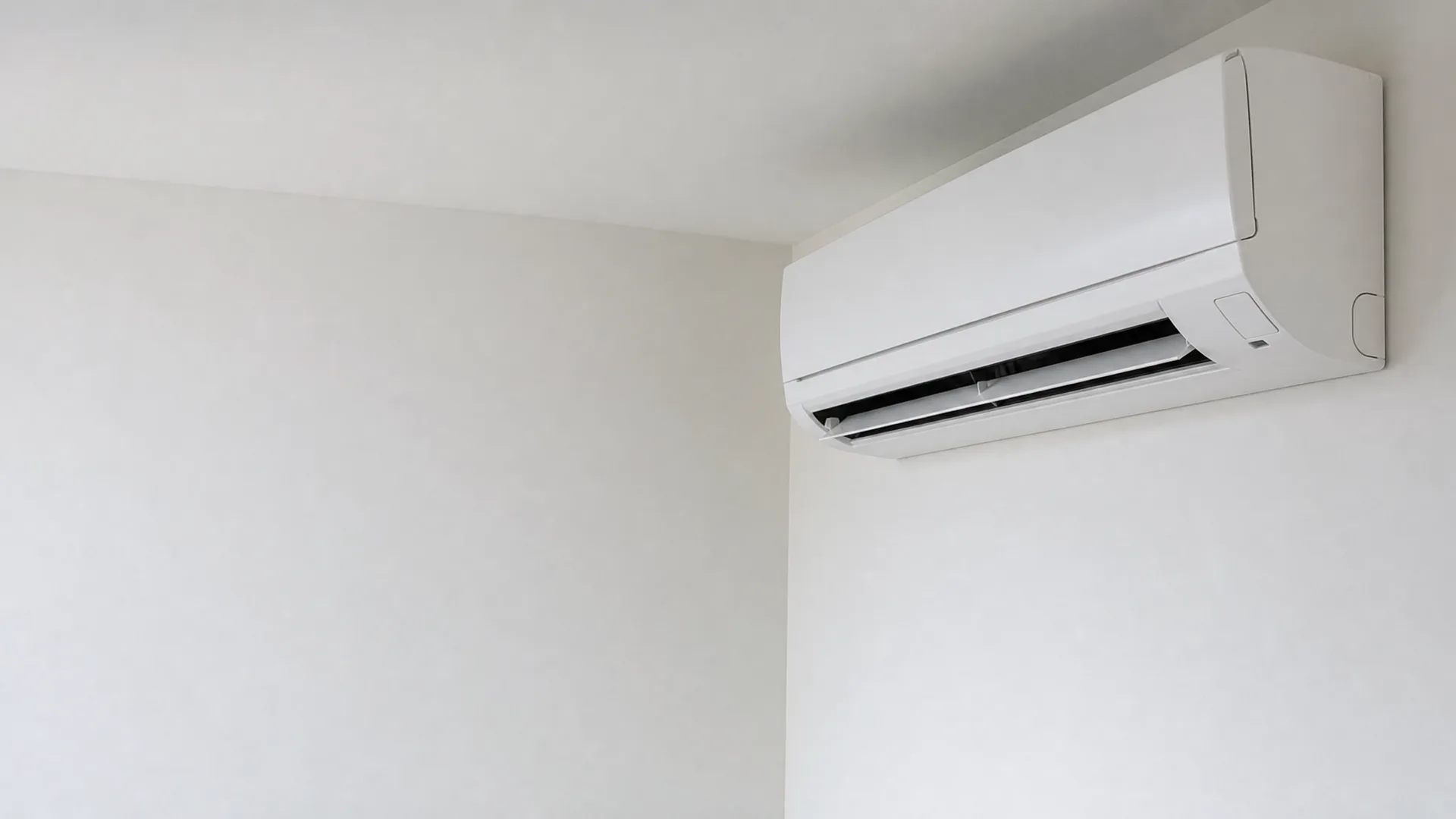
A white wall-mounted mini-split air conditioner installed near the ceiling in the corner of a plain white room.

What a drain line backup does

Condensate from the coil leaves through a small drain line, usually running to the outside or into a drain. If that line gets a clog, water backs up instead of draining clear. It can sit in the drain pan or in the line itself for days, long enough to turn stale. A unit with a partially blocked line can still cool the room fine while that water sits there going bad behind the wall or in the pan, which is why the smell shows up with no other sign anything's wrong.

Why does a Leavenworth County mini split grow this smell every summer?

  • Cooling runs May through September

    Cooling runs May through September. That's five months of condensation sitting on the coil and blower wheel with barely a break in between.

  • Heat runs October through April

    Heat runs October through April. The unit sits unused and damp for long stretches before summer humidity starts the cycle again.

  • Power here costs 14.29 cents per kilowatt-hour

    Power here costs 14.29 cents per kilowatt-hour. Running the fan a bit longer after cooling to dry the coil costs little against that rate.

NOAA nClimDiv 1991-2020 · EIA-861 2025

Where the smell actually lives

  • The coil sits behind a plastic housing, so condensation drains down into a pan most owners never see.
  • That drain pan and the short hose running from it collect a film of dust and skin cells that mold feeds on.
  • The blower wheel has dozens of small curved blades, and wet dust packs into the gaps between them.
  • A mini split's filter catches dust in the air, but it does nothing for what's already sitting on the coil or wheel.
  • Running the fan-only mode for a few minutes before shutdown helps the coil dry, but it doesn't reach the blower wheel or drain line.
  • Once mold is established on the blower wheel, turning the unit on stirs the smell into the room before the air even reaches the coil.

The coil gets blamed first, but the coil isn't the only part holding water. Behind it sits a drain pan, and a short length of hose carries that water out of the unit. Both sit out of sight behind the plastic housing, so nobody checks them until the smell shows up. Dust drawn in with the air settles into that pan and that hose, and once it's wet, it stays wet longer than the coil does, since it's not sitting in the direct path of airflow the way the coil is. Mold works on that film the same way it works on anything damp and left alone.

The blower wheel is worse. It's not a flat fan blade, it's a cylinder lined with small curved blades, dozens of them, and the gaps between those blades trap wet dust the way a comb traps hair. Water clinging to the coil gets flung onto the wheel every time it spins, and that wheel never fully dries between cycles in a Leavenworth summer. A filter stops new dust from getting past it, but it was never built to clean the wheel itself, and nothing about normal operation reaches down into those gaps.

Running the fan by itself for a few minutes after the compressor shuts off dries the coil's surface. It does nothing for the drain line, and it doesn't move air through the blower wheel the way a mechanical cleaning would. That's why the smell comes back even for owners who already do this.

A woman wrapped in a thick cream knit blanket sits in an armchair beside a lit table lamp, with an open book in the foreground and a frost-covered window behind her.
A woman in a cream knit sweater sits in an armchair indoors, eyes closed and smiling, beside a window showing yellow and orange autumn foliage, with a mug on a wooden side table and shelves holding vases behind her.

Get matched with a mini split pro in Leavenworth County

That smell isn't going away on its own, and running the fan more just pushes it through the room faster. A musty mini split needs the coil, the pan and the blower wheel actually cleaned, and the housing has to come off to reach them. That's not a filter swap you do on a Saturday. A contractor who works on these units in Leavenworth County sees this same complaint all summer, on units from every brand, and knows which models hide the drain line where you'd never find it. Getting someone out to look at it now, before the unit runs another humid stretch, means the smell gets dealt with instead of just masked. You've already read what's causing it. The next step is getting a hand on it.

Clean it yourself or call someone

A wipe-down of the filter and the grille takes care of dust, and that's worth doing on its own. It won't reach the smell. The coil sits behind the housing, the drain pan is underneath that, and the blower wheel is further in still, behind the fan motor. None of those come apart with a screwdriver and five minutes. Opening the housing wrong can bend the fins on the coil or crack a plastic clip that's not sold separately from the rest of the part. A homeowner with the right tools and some patience can get the filter and the grille spotless and still have the same smell the next time the unit kicks on, because the water sitting in the pan was never touched.

What a cleaning actually involves

A contractor who services mini splits pulls the housing off the indoor unit, lifts out the blower wheel, and cleans each curved blade by hand or with a pressure washer made for coil work. The drain pan and the hose running from it get flushed so nothing is sitting and feeding mold between cooling cycles. The coil gets rinsed from both sides, since buildup on the back of the fins doesn't show from the front and still holds moisture. Once that's done and the unit goes back together, the smell doesn't come back when the mini split kicks on, because the water that was causing it isn't collecting in those spots anymore. Finding someone to do that is the next step, not a project for a weekend.

Cooling runs May through September

Five months of cooling means five months where that coil barely gets a chance to dry out between cycles. Every time the unit short cycles on a mild evening instead of running a full cycle, it adds moisture without the airflow to clear it, and the smell builds through the summer instead of fading.

NOAA nClimDiv 1991-2020

What you're breathing when it runs

Every time that mini split kicks on, the air moving past the blower wheel picks up whatever is growing on it before it reaches you. In a bedroom or a small living room, that's the air you're sitting in for hours. It's not just an unpleasant smell to get used to. Mold on a blower wheel sheds spores into the airstream every single cycle, and a closed-up room gives them nowhere to go. If anyone in the house has allergies or asthma, a musty mini split running all summer is working against them, not for them.


What happens if you wait it out

The smell won't fix itself, and leaving it alone gives the mold more time on the coil and in that drain pan to build up. A unit that's already struggling to drain between cycles doesn't get better on its own, it gets wetter. The longer that film sits on the blower wheel, the more of it has to be removed later, and a drain pan that stays damp all summer can eventually clog the hose running off it. At that point water backs up instead of draining, and that's a different problem on top of the smell.

An older man with gray hair and a beard, wearing a dark coat dusted with snow, stands smiling in a doorway of a warmly lit home with a sofa, lamp and window visible behind him.
An older man with grey hair and a beard, wearing a dark coat dusted with snow, stands in a dimly lit entryway with a ceiling lamp, a side table with two shaded lamps, and a lit fireplace visible in a room beyond.
A bearded older man in a dark snow-dusted coat and scarf stands just inside a home's front door, with a lamp-lit room and snowy window visible behind him.
An older man with gray hair and a beard stands in a doorway of a home, wearing a dark coat dusted with snow, with a lit fireplace and lamp visible in the blurred room behind him.

Ignore it

The smell keeps coming back every time the unit cycles on, and it doesn't fade with time. Whatever is growing on the coil or the blower wheel stays there and keeps shedding into the air of that room.

Get my match

Get it cleaned

A contractor can pull the housing, clean the coil, the drain pan and the blower wheel, and get the unit running clean again. You get matched with someone who handles mini splits in your area.

Get my match

Is this musty smell something to worry about?

You notice it most in whatever room that mini split serves, a bedroom or a living room where the unit runs for hours at a stretch. The smell is stronger right when it kicks on, then seems to fade, but it comes back the next time the unit cycles. You might see a faint film on the louvers or the grille when you wipe it down, even though the filter looks fine. None of this is dramatic. It doesn't smell like something rotting or like gas. But it means something is growing inside the unit, and every cycle sends a little of it into the air you and your household are breathing in that room.

A white wall-mounted mini-split air conditioner unit installed high on a beige interior wall below white crown molding, with a window and woven shade at the left edge showing green foliage outside.

Running clean

A mini split that's been maintained moves air without that stale edge. The coil and blower stay dry between cycles, so the room just cools, and the air coming off the unit doesn't carry anything with it.

A dusty, stained white wall-mounted mini-split air conditioner indoor unit installed high on a plain off-white interior wall near the ceiling.

Running dirty

Dust on the housing like this usually means dust and buildup inside too, on the coil and the blower wheel. That's what's feeding the smell, and wiping the outside down won't touch what's behind it.

The musty smell from a mini split comes from water sitting where it shouldn't, on the coil, in the drain pan, on the blower wheel, with five months of Leavenworth County summer giving it every chance to take hold. A filter rinse won't touch any of that. Getting rid of it means opening the housing and cleaning the parts the air actually passes over before it reaches you. That's a job for a contractor who works on these units regularly, not an afternoon project with a shop vac and good intentions. Once you send the form, you're done hunting for someone to call and comparing reviews at ten at night. A contractor who handles mini splits in this area gets matched to your situation, and they take it from there. The smell didn't start overnight and it won't need guesswork to fix. It needs the right parts cleaned, by someone who's done it before.

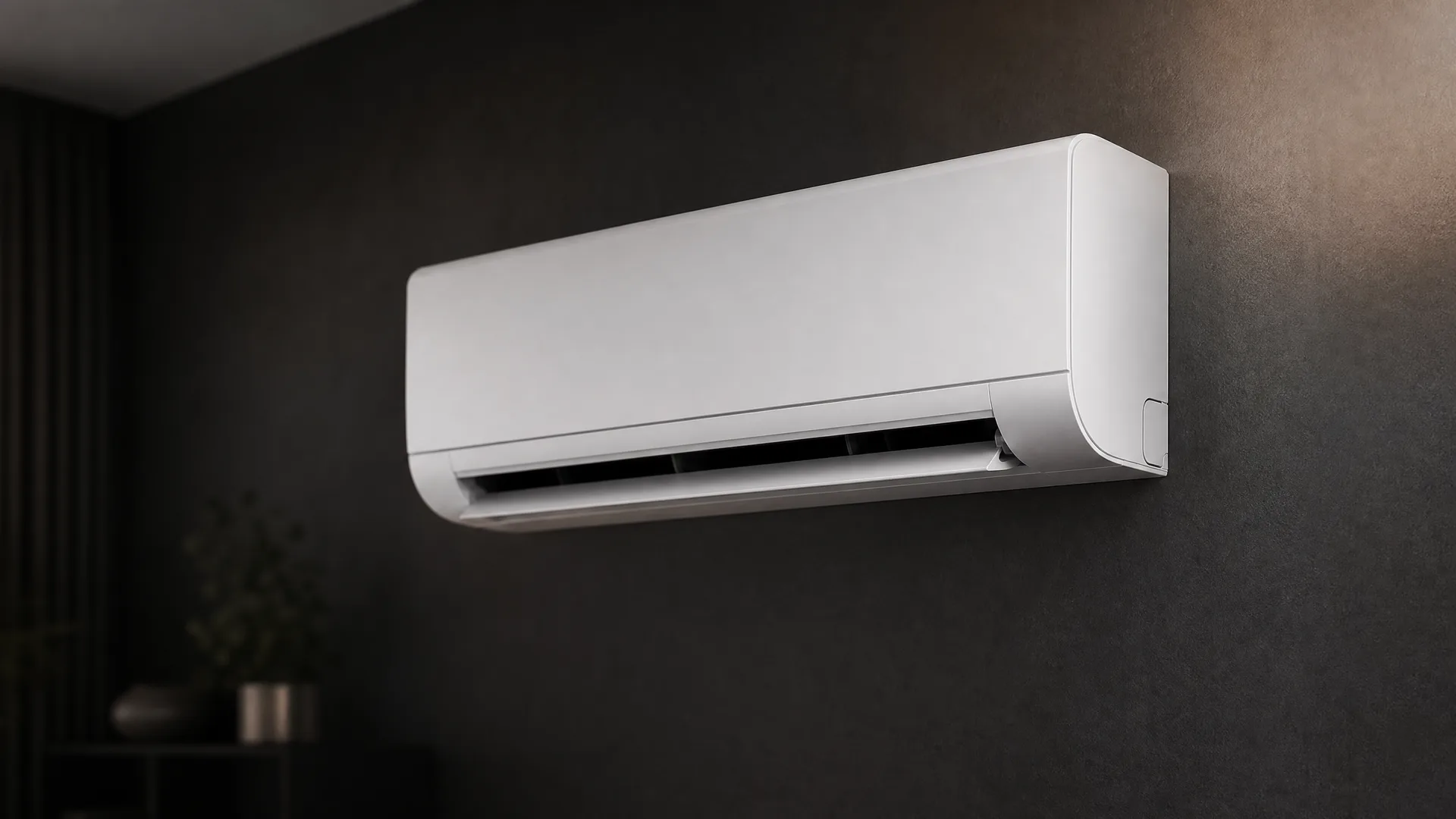
A white wall-mounted mini-split air conditioner on a dark gray interior wall, with a plant and low cabinet dimly visible at the lower left.

Get the right pro for your mini split

Step 1 of 3: Equipment