Tell us about the job
Takes about a minute. No obligation.
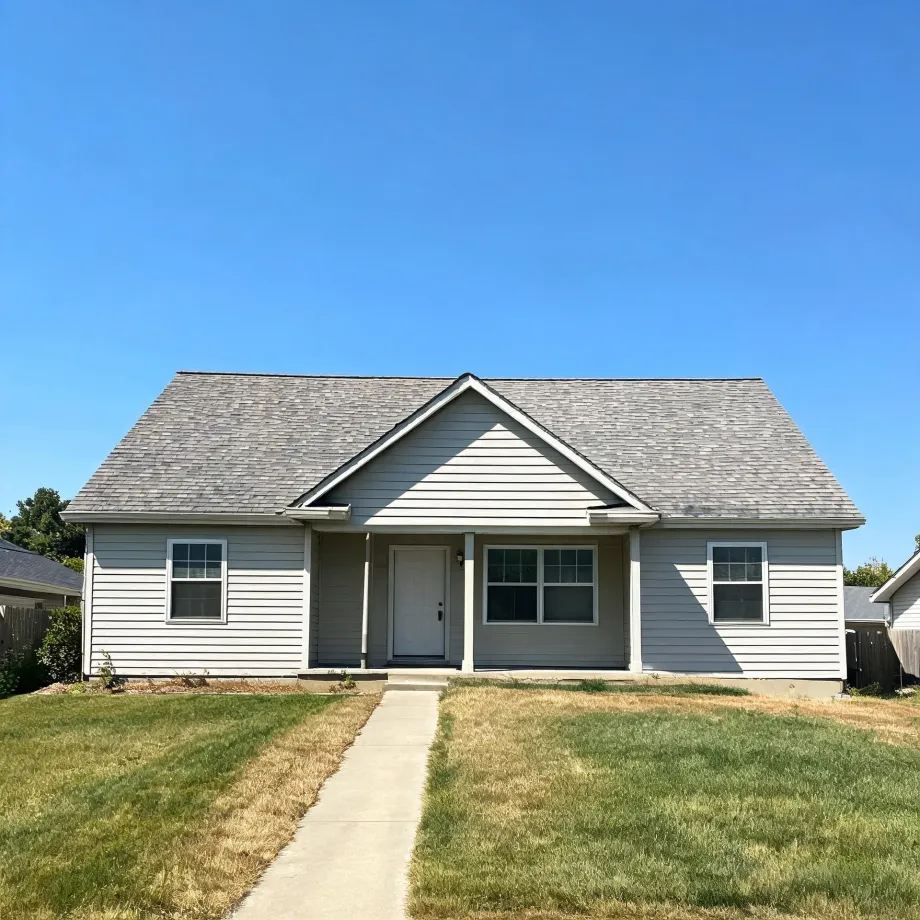
Sizing a mini-split here is a load question before it is a price question. Homes in Russell County, KS run cooling about four months a year, from June through September. A compressor that starts and stops through that whole stretch accumulates wear on the contactor and the condenser fan in ways a loose estimate does not account for. A contractor who skips a proper load calculation and prices by square footage alone leaves the homeowner with a unit that runs harder than it needs to, shortening the life of the parts that cycle most.
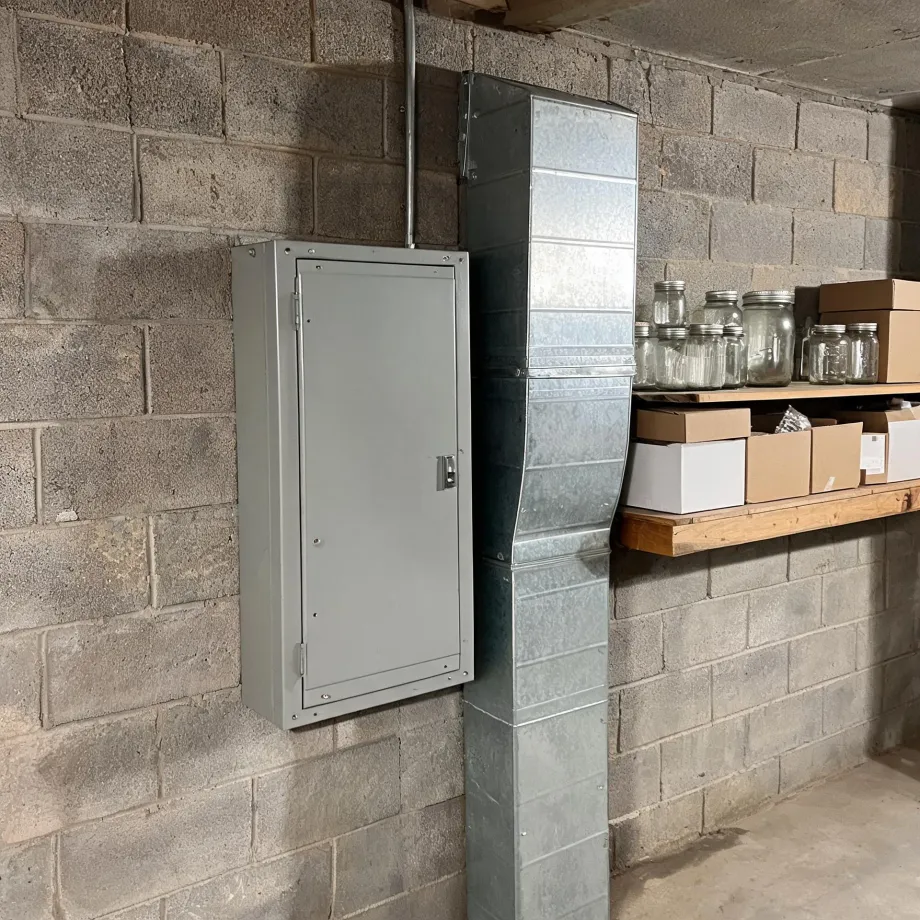
Ductwork routed for a furnace and central air does not disappear when a homeowner switches to a mini-split, but it does stop being the path of least resistance. Half the homes in Russell County, Kansas were built in 1957 or earlier (2020-2024 ACS 5-year). Houses from that period were built around equipment that has since been replaced or abandoned, and the line sets a mini-split needs run differently than what those walls were built to carry. A contractor sizing and placing the indoor and outdoor units has to read the existing framing, attic access, and exterior walls before the equipment question even opens.
What a Mini-split Installation Puts in Your Home
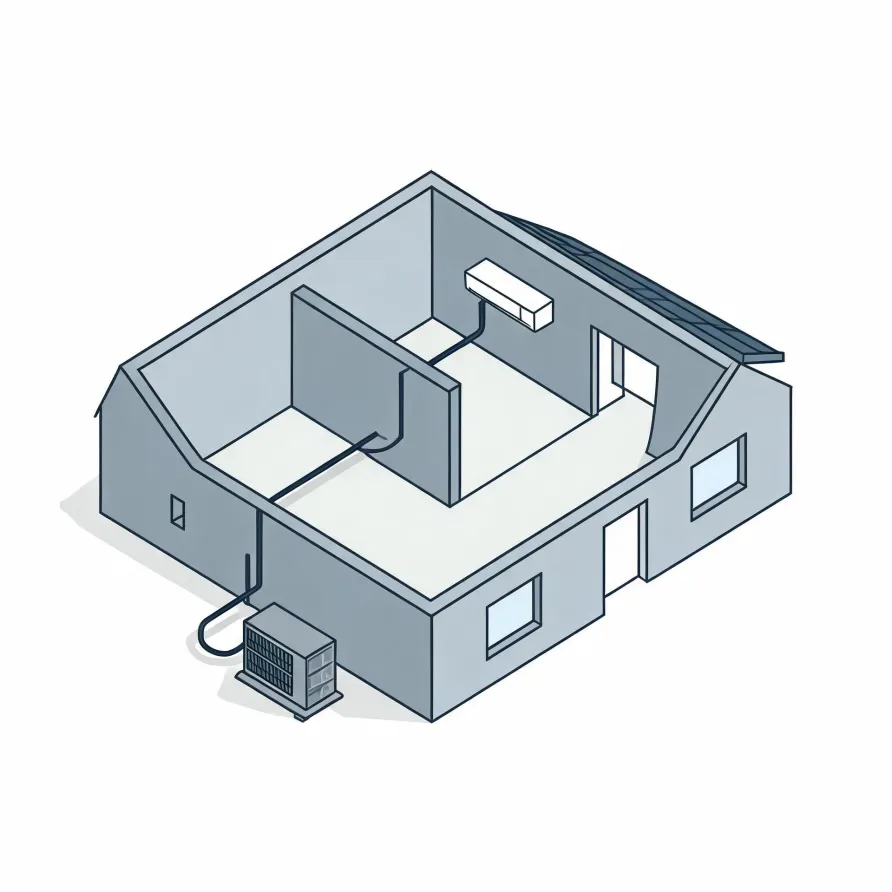
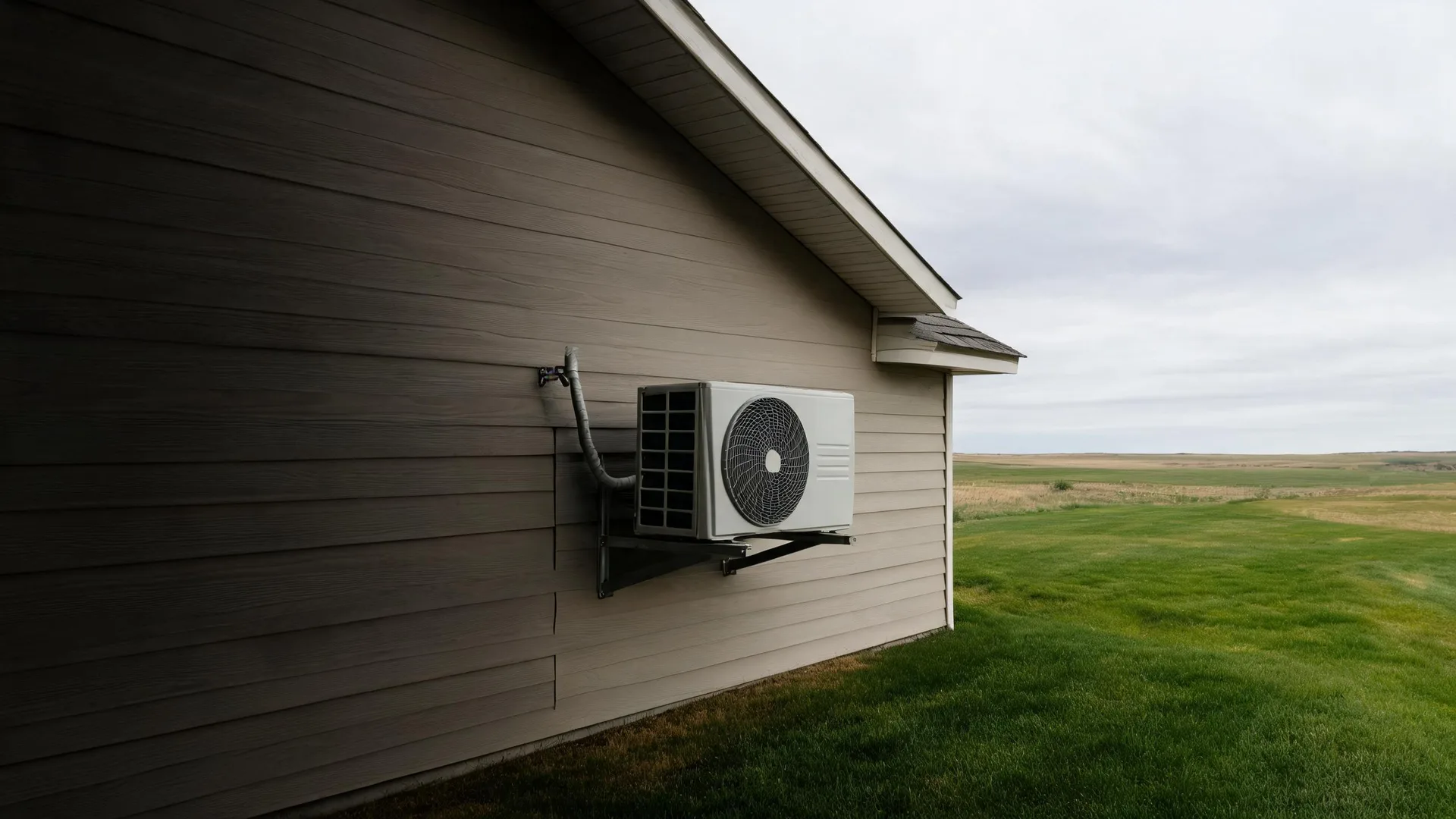
The indoor air handler mounts high on an interior wall in the room being conditioned, and it is the piece a homeowner sees every day. The outdoor unit sits on the ground or on a wall bracket outside the house and holds the compressor and condenser coil. Together these two units form the core of what a contractor installs.
A set of refrigerant lines runs through a small hole in the wall to connect the indoor and outdoor units, and a condensate drain line carries moisture from the indoor handler to the outside. A dedicated disconnect box is mounted near the outdoor unit to allow safe electrical shutoff. These connections are part of every installation.
The drawing shows a typical layout, and a licensed contractor determines exactly how each piece is positioned and routed in your specific home.
Find a contractor in Russell CountyRussell County, Kansas, by the numbers
249 severe weather events were recorded in Russell County, Kansas between 2015 and 2024.
NOAA National Centers for Environmental Information, Storm Events Database, bulk CSV export, events 2015-01-01 through 2024-12-31.Half the homes in Russell County, Kansas were built in 1957 or earlier (2020-2024 ACS 5-year).
U.S. Census Bureau, 2020-2024 American Community Survey 5-Year EstimatesRussell County, Kansas holds 3,674 housing units (2020-2024 ACS 5-year).
U.S. Census Bureau, 2020-2024 American Community Survey 5-Year EstimatesOwners occupy 75.1% of the occupied homes in Russell County, Kansas (2020-2024 ACS 5-year).
U.S. Census Bureau, 2020-2024 American Community Survey 5-Year EstimatesSevere Weather Events in Russell County
Kansas weather puts real load on heating and cooling equipment, and Russell County gets its share of what the plains can deliver. How hard a mini-split works over its life is a local question, and the pattern of weather events here shapes the answer.
249 severe weather events, 2015–2024. Source: NOAA National Centers for Environmental Information, Storm Events Database.