Tell us about the job
Takes about a minute. No obligation.
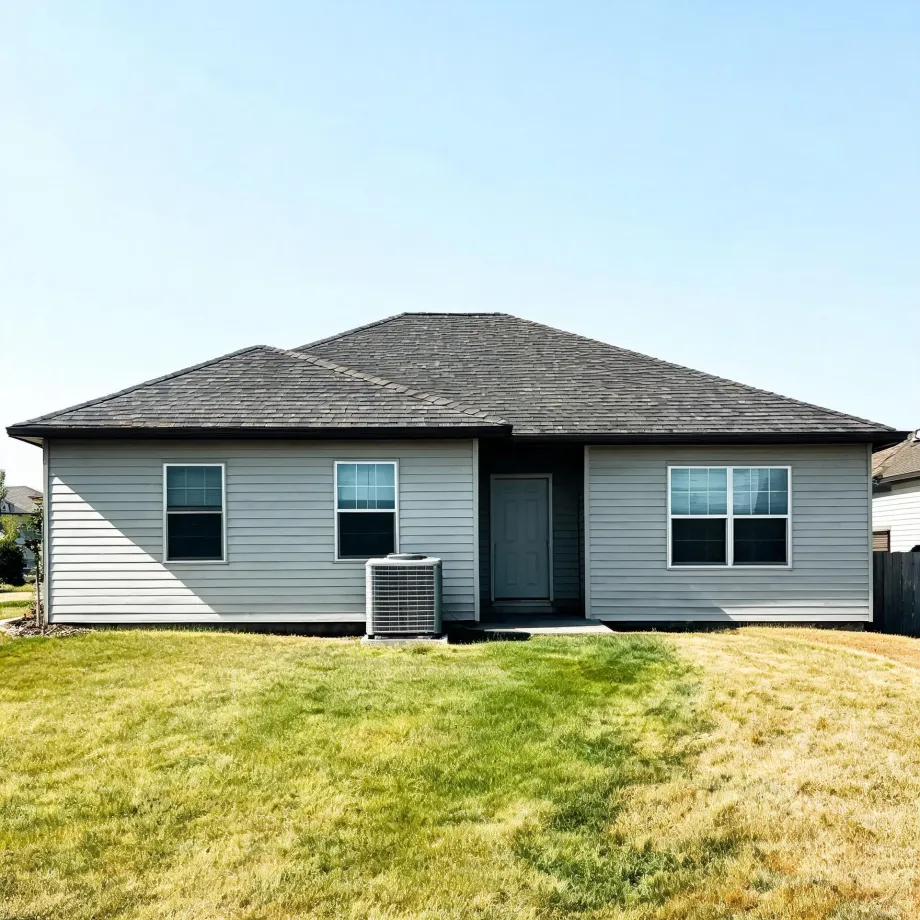
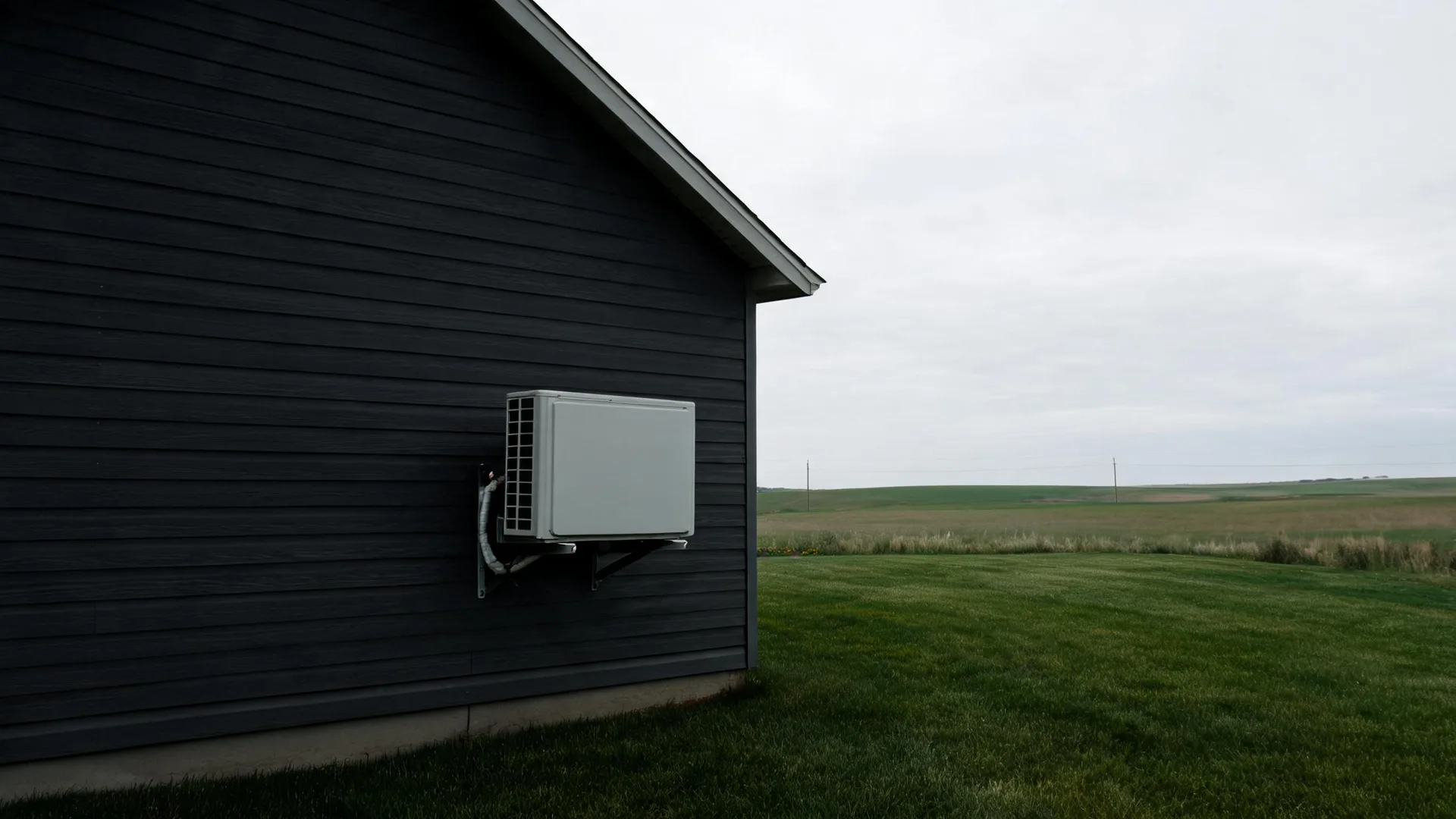
Sizing a mini-split for a Stanton County home is not a generic exercise. Homes in Stanton County, KS run cooling about four months a year, from June through September. The compressor starts and stops repeatedly across those months, and the contactor and condenser fan log the same accumulated cycles. A unit that is undersized for the actual load runs longer and harder to hold the set temperature, which wears those components sooner. A contractor quoting here has to calculate the real load for the structure before settling on capacity, because the equipment does not get long idle stretches to mask a mismatch.
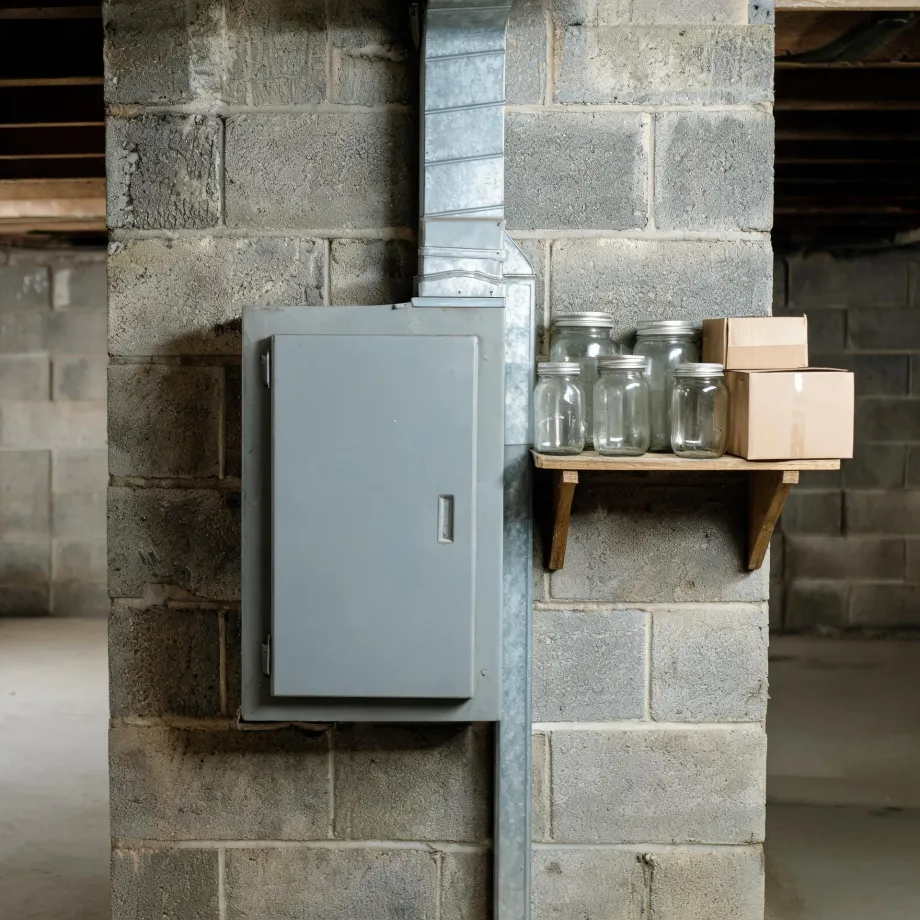
The electrical panel is where a mini-split installation in Stanton County gets settled. Half the homes in Stanton County, Kansas were built in 1968 or earlier (2020-2024 ACS 5-year). A house whose wiring was put in for the equipment of that era has been updated in pieces since, and what a contractor finds at the panel determines whether the new unit can be connected as quoted or whether the service has to come first. Ductwork in a mini-split job is secondary; the panel is what controls the scope and the sequence.
What a Mini-split Looks Like Once It's In
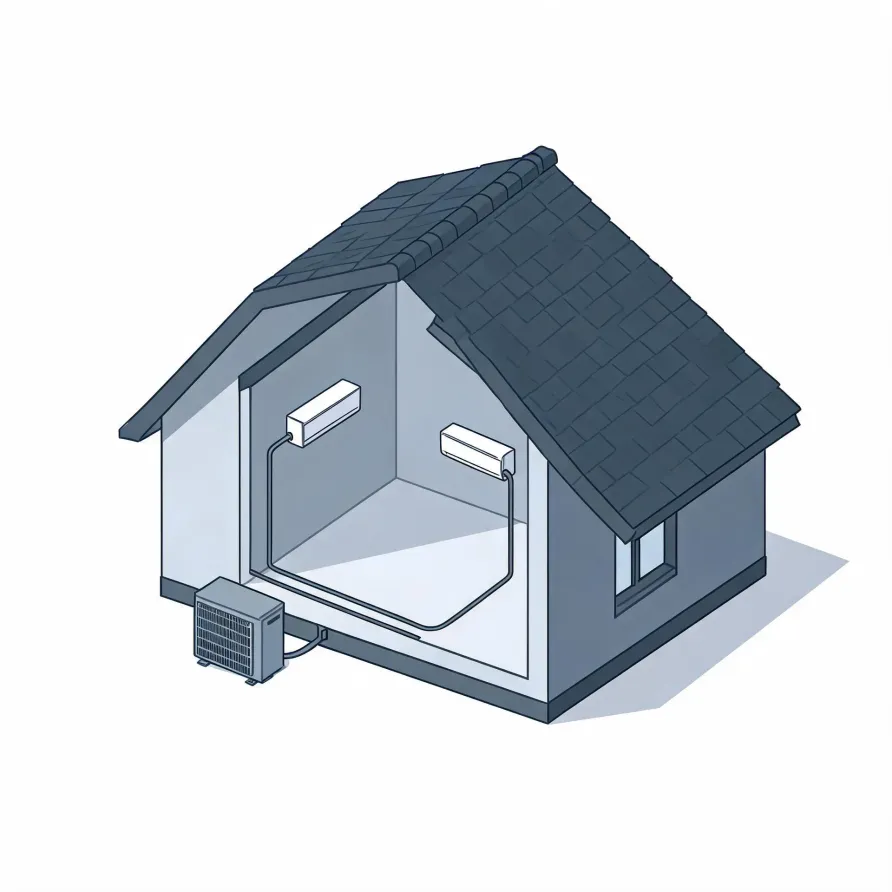
The indoor air handler mounts high on a wall inside the room, where it draws in room air and delivers conditioned air back out. The outdoor condenser unit sits on the ground or a bracket outside the house, housing the compressor and the coils that shed heat to the exterior.
A small bundle of lines runs through the wall between the two units, carrying refrigerant, power, and condensate drainage. A drain line also exits the indoor unit, directing moisture outside or to a suitable drain point nearby.
The drawing shows a typical layout, and a licensed contractor determines exactly how each piece is positioned in your specific home.
Find a contractor in Stanton CountyStanton County, Kansas, by the numbers
126 severe weather events were recorded in Stanton County, Kansas between 2015 and 2024.
NOAA National Centers for Environmental Information, Storm Events Database, bulk CSV export, events 2015-01-01 through 2024-12-31.Half the homes in Stanton County, Kansas were built in 1968 or earlier (2020-2024 ACS 5-year).
U.S. Census Bureau, 2020-2024 American Community Survey 5-Year EstimatesStanton County, Kansas holds 1,029 housing units (2020-2024 ACS 5-year).
U.S. Census Bureau, 2020-2024 American Community Survey 5-Year EstimatesOwners occupy 76.5% of the occupied homes in Stanton County, Kansas (2020-2024 ACS 5-year).
U.S. Census Bureau, 2020-2024 American Community Survey 5-Year EstimatesSevere Weather Events in Stanton County
Weather extremes put real demands on heating and cooling equipment, shortening service life and widening the gap between a system sized for average conditions and one sized for where you actually live. That gap is a local question, and the chart below reflects the conditions contractors in Stanton County work around.
126 severe weather events, 2015–2024. Source: NOAA National Centers for Environmental Information, Storm Events Database.