Tell us about the job
Takes about a minute. No obligation.
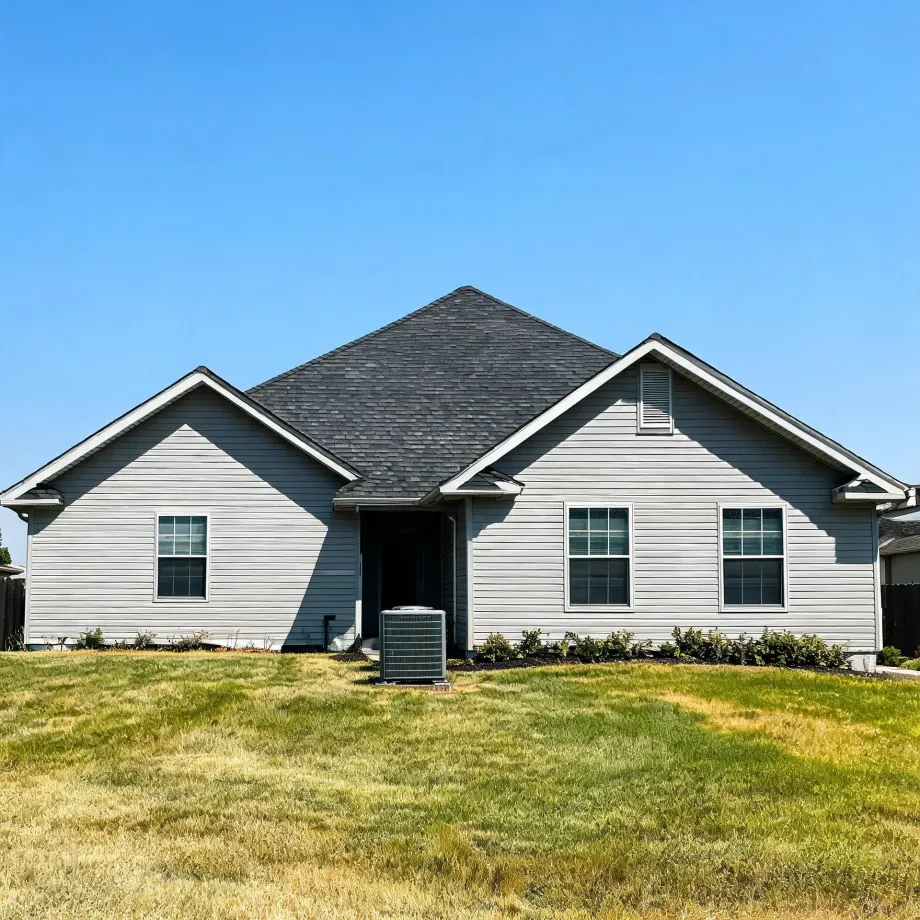
For a mini-split installation in Lane County, a contractor has to size the system around a real cooling load, not a guessed one. Homes in Lane County, KS run cooling about four months a year, from June through September. The compressor starts and stops repeatedly across those months, and each cycle puts mechanical stress on the contactor and the refrigerant circuit. A unit that is undersized for the house runs longer each cycle to keep up, which shortens the interval before the compressor shows wear. Proper load calculation at installation is what keeps that interval honest.
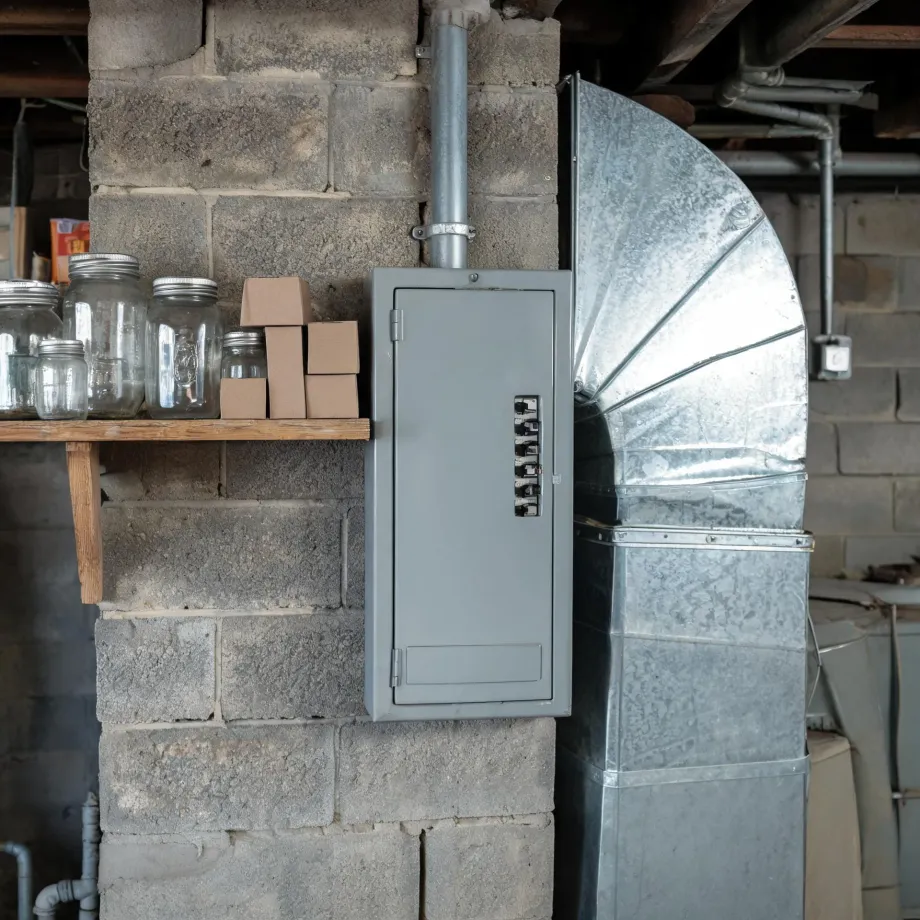
Ductwork in houses built around that median tells a contractor less than the electrical panel does. Half the homes in Lane County, Kansas were built in 1958 or earlier (2020-2024 ACS 5-year). A mini-split does not use ducts, so the ductwork question drops away, but the service panel stays on the table. Houses wired in that era were sized for loads that bore no relation to what a modern split system pulls from the panel. A contractor running a new circuit has to find out whether the existing service can carry it before anything else gets priced.
What Gets Installed With a New Mini-split
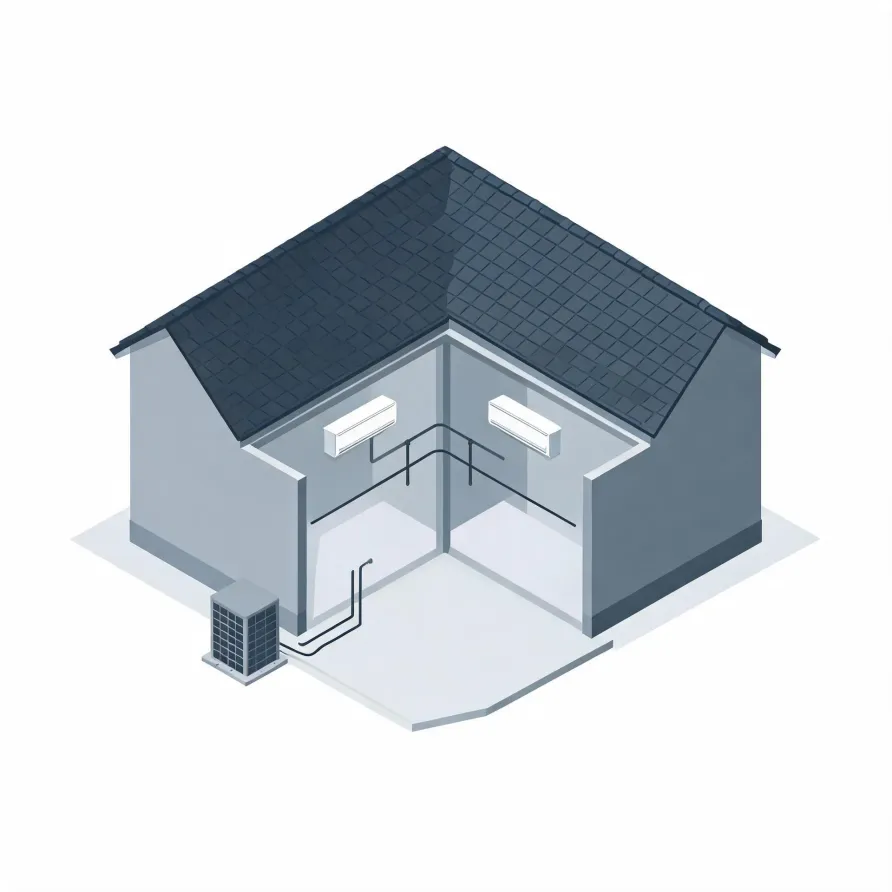
The indoor air handler mounts high on an interior wall, inside the room being conditioned. That is the unit a homeowner sees and interacts with daily. The outdoor condenser unit sits outside the house, usually on a pad or bracket along an exterior wall, and houses the compressor and other core components.
A set of refrigerant lines runs through a small opening in the wall to connect the two units, bundled alongside a condensate drain line and the power and communication wiring. A dedicated disconnect box is mounted near the outdoor unit as part of the installation.
The drawing shows a typical layout, and a licensed contractor determines exactly how the components are positioned and connected in your home.
Find a contractor in Lane CountyLane County, Kansas, by the numbers
100 severe weather events were recorded in Lane County, Kansas between 2015 and 2024.
NOAA National Centers for Environmental Information, Storm Events Database, bulk CSV export, events 2015-01-01 through 2024-12-31.Half the homes in Lane County, Kansas were built in 1958 or earlier (2020-2024 ACS 5-year).
U.S. Census Bureau, 2020-2024 American Community Survey 5-Year EstimatesLane County, Kansas holds 878 housing units (2020-2024 ACS 5-year).
U.S. Census Bureau, 2020-2024 American Community Survey 5-Year EstimatesOwners occupy 88.9% of the occupied homes in Lane County, Kansas (2020-2024 ACS 5-year).
U.S. Census Bureau, 2020-2024 American Community Survey 5-Year EstimatesSevere Weather Events in Lane County
Heating and cooling equipment in Lane County works against local conditions, and local conditions include whatever the sky delivers year to year. A mini-split sized and installed for this climate has to hold up to what actually happens here, which makes the area's weather record a practical starting point.
100 severe weather events, 2015–2024. Source: NOAA National Centers for Environmental Information, Storm Events Database.