Tell us about the job
Takes about a minute. No obligation.
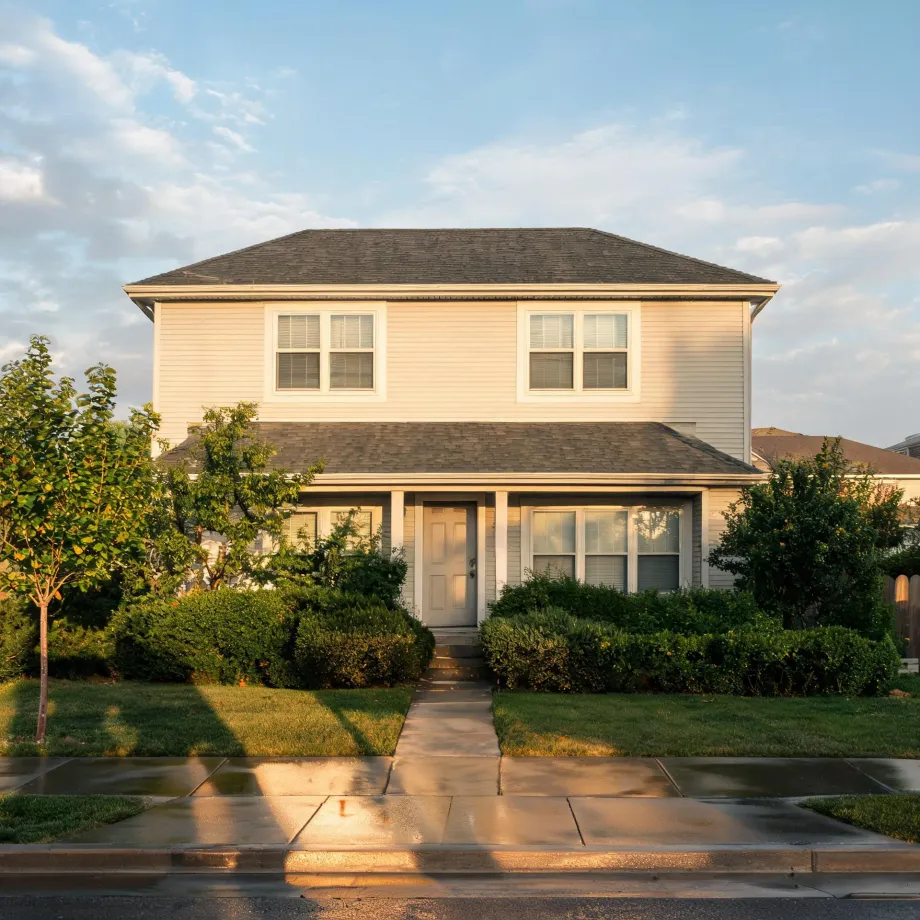
Sizing a mini-split in Cloud County starts with what the compressor is being asked to do. Homes in Cloud County, KS run cooling about four months a year, from June through September. The compressor and condenser fan cycle repeatedly across those months, and the refrigerant circuit absorbs the full cooling demand of the house with no relief from mild stretches. A contractor quoting a replacement or a first install has to account for that load when selecting capacity, because an undersized unit runs continuously at peak demand and the contactor wears faster for it.
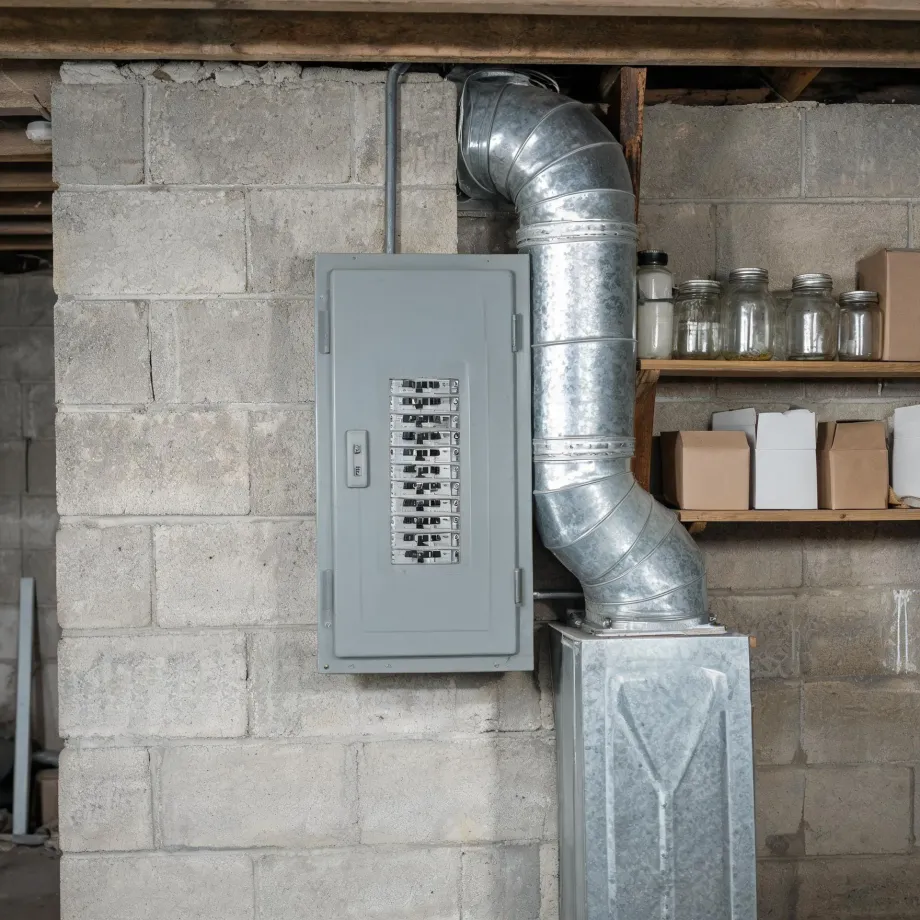
Electrical service in a house built for the loads of an earlier era was not designed around modern split-system equipment. Half the homes in Cloud County, Kansas were built in 1953 or earlier (2020-2024 ACS 5-year). A mini-split installation in stock like this turns on what the existing panel can carry, and whether it can carry it without a service upgrade. A contractor pricing the job here prices the electrical work before settling on the equipment, because the panel decides the scope as much as the unit does.
What a Mini-split Looks Like Once It's In
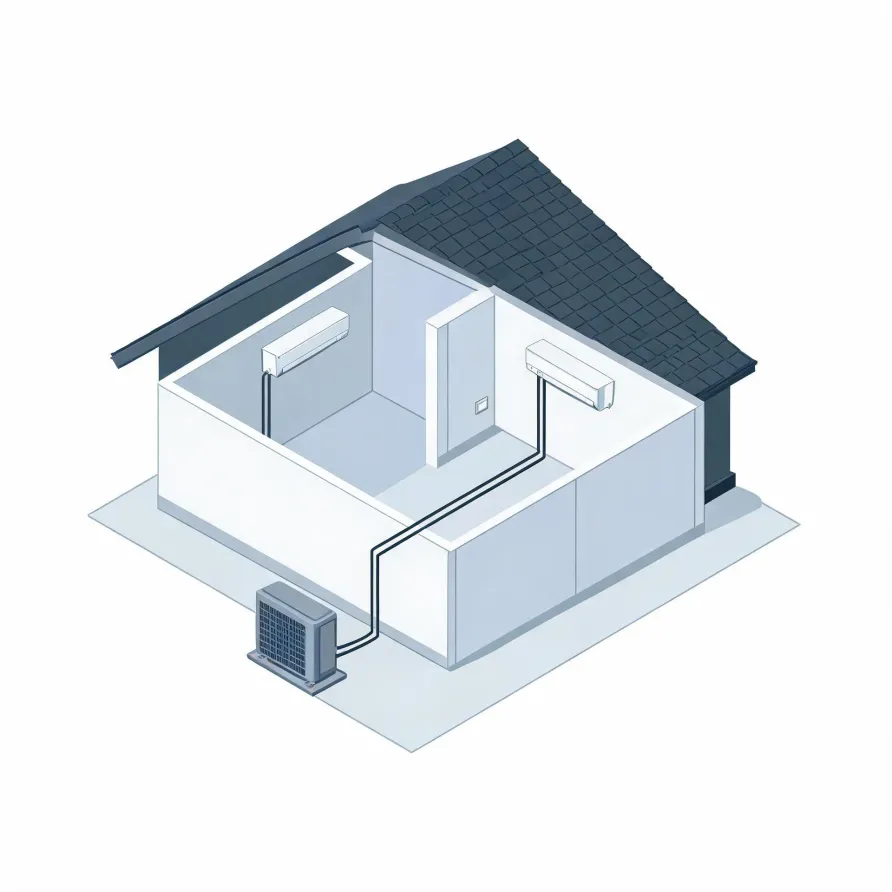
The indoor air handler mounts high on a wall inside the room, where it pulls in room air and delivers conditioned air back out. The outdoor unit sits on the ground or a pad outside the house and holds the compressor and condenser coil. Each room served by the system gets its own indoor unit.
A set of refrigerant lines and a condensate drain line run through a small opening in the wall to connect the indoor and outdoor units. A wired or wireless thermostat or control head goes on the wall or stays handheld, giving the occupant control over each zone.
The drawing beside this text shows the general layout of a mini-split system, and a licensed contractor determines exactly how the components are positioned in your home.
Get matched in Cloud CountyCloud County, Kansas, by the numbers
144 severe weather events were recorded in Cloud County, Kansas between 2015 and 2024.
NOAA National Centers for Environmental Information, Storm Events Database, bulk CSV export, events 2015-01-01 through 2024-12-31.Half the homes in Cloud County, Kansas were built in 1953 or earlier (2020-2024 ACS 5-year).
U.S. Census Bureau, 2020-2024 American Community Survey 5-Year EstimatesCloud County, Kansas holds 4,467 housing units (2020-2024 ACS 5-year).
U.S. Census Bureau, 2020-2024 American Community Survey 5-Year EstimatesOwners occupy 74.0% of the occupied homes in Cloud County, Kansas (2020-2024 ACS 5-year).
U.S. Census Bureau, 2020-2024 American Community Survey 5-Year EstimatesSevere Weather Events in Cloud County
Heating and cooling equipment in Cloud County works against whatever the local climate demands of it, and that demand is shaped partly by how hard the weather gets. A mini-split sized and installed for local conditions holds up better than one specified without them.
144 severe weather events, 2015–2024. Source: NOAA National Centers for Environmental Information, Storm Events Database.