Tell us about the job
Takes about a minute. No obligation.
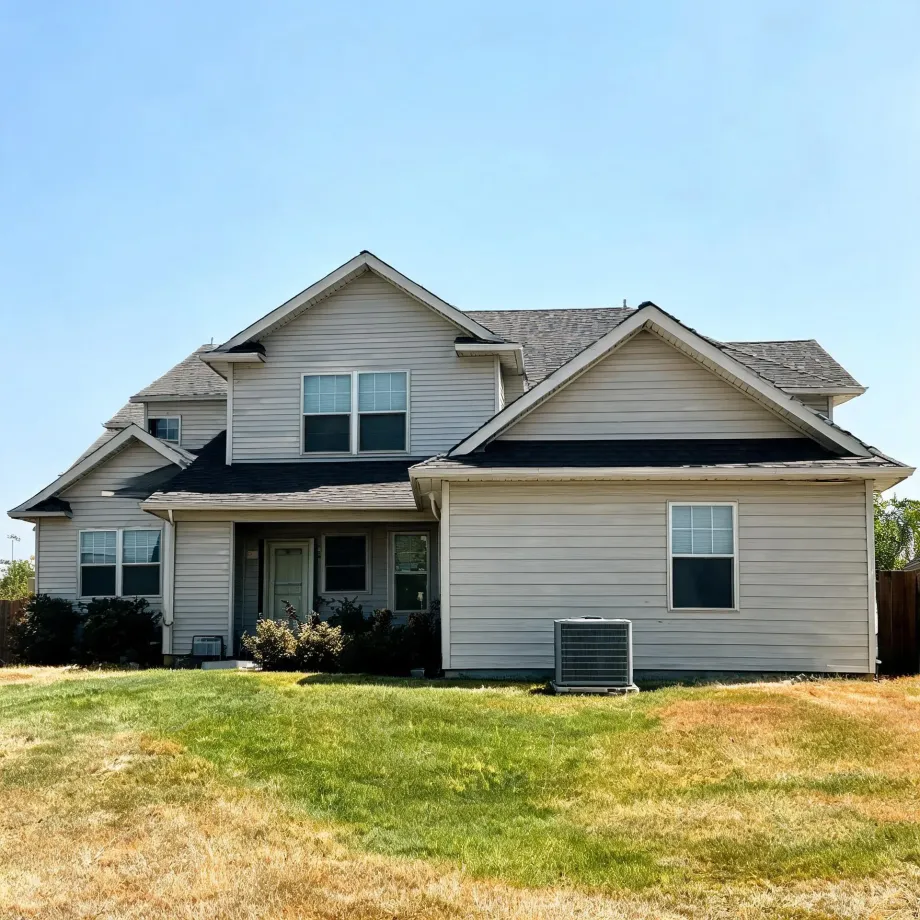
Sizing a mini-split here starts with what the compressor is actually being asked to carry. Homes in Atchison County, KS run cooling about three months a year, from June through August. A short cooling season means the compressor, the condenser fan, and the contactor all log relatively few starts and stops each year. Poorly matched refrigerant charge or an undersized unit will still show up early, because a system that struggles through even a short season makes that struggle visible at first use. A contractor pricing the job has to get the load calculation right before anything else on the quote matters.
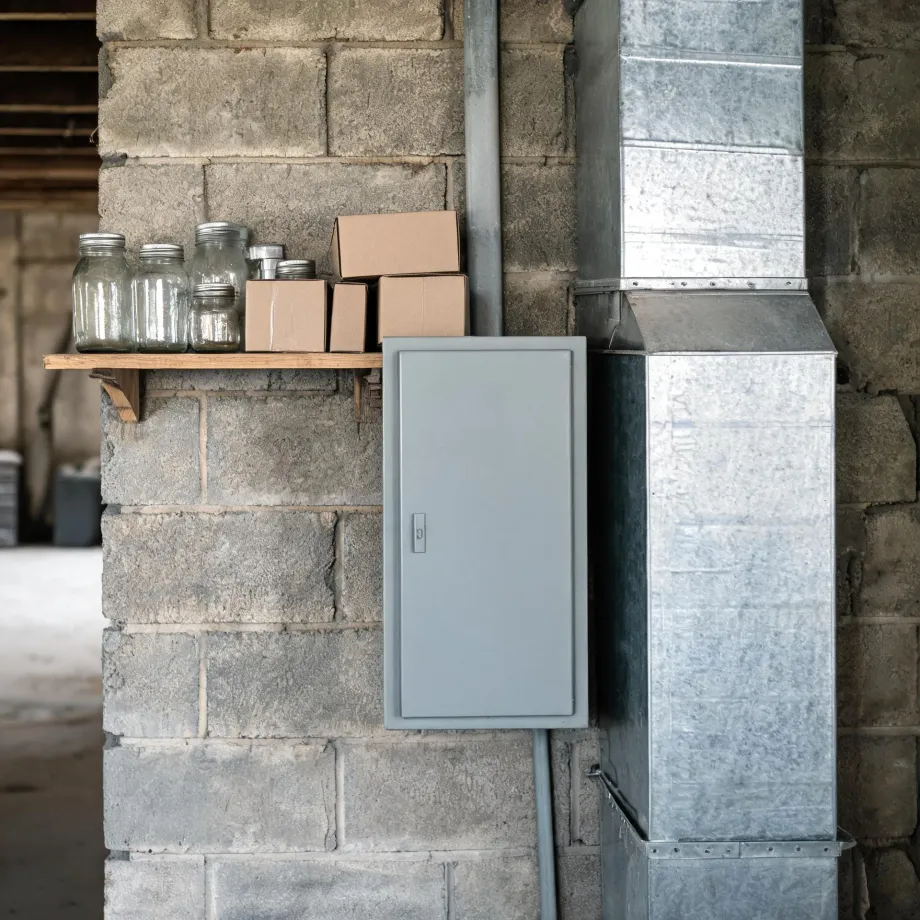
Electrical panels in older housing stock are sized for what the house originally drew, and a mini-split's demand may sit outside that range. A contractor quoting an install here opens that question early, because the answer changes the scope of what gets permitted and priced. Half the homes in Atchison County, Kansas were built in 1968 or earlier (2020-2024 ACS 5-year). That puts the panel assessment ahead of equipment selection, not after it.
What a Mini-split Looks Like Once It's In
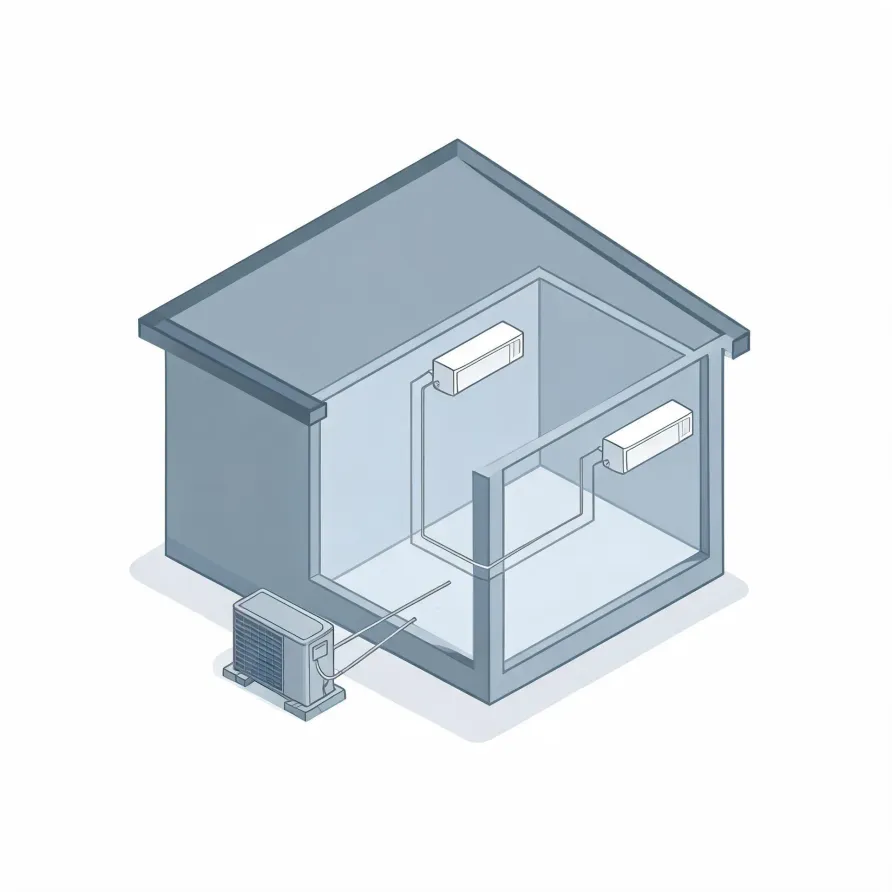
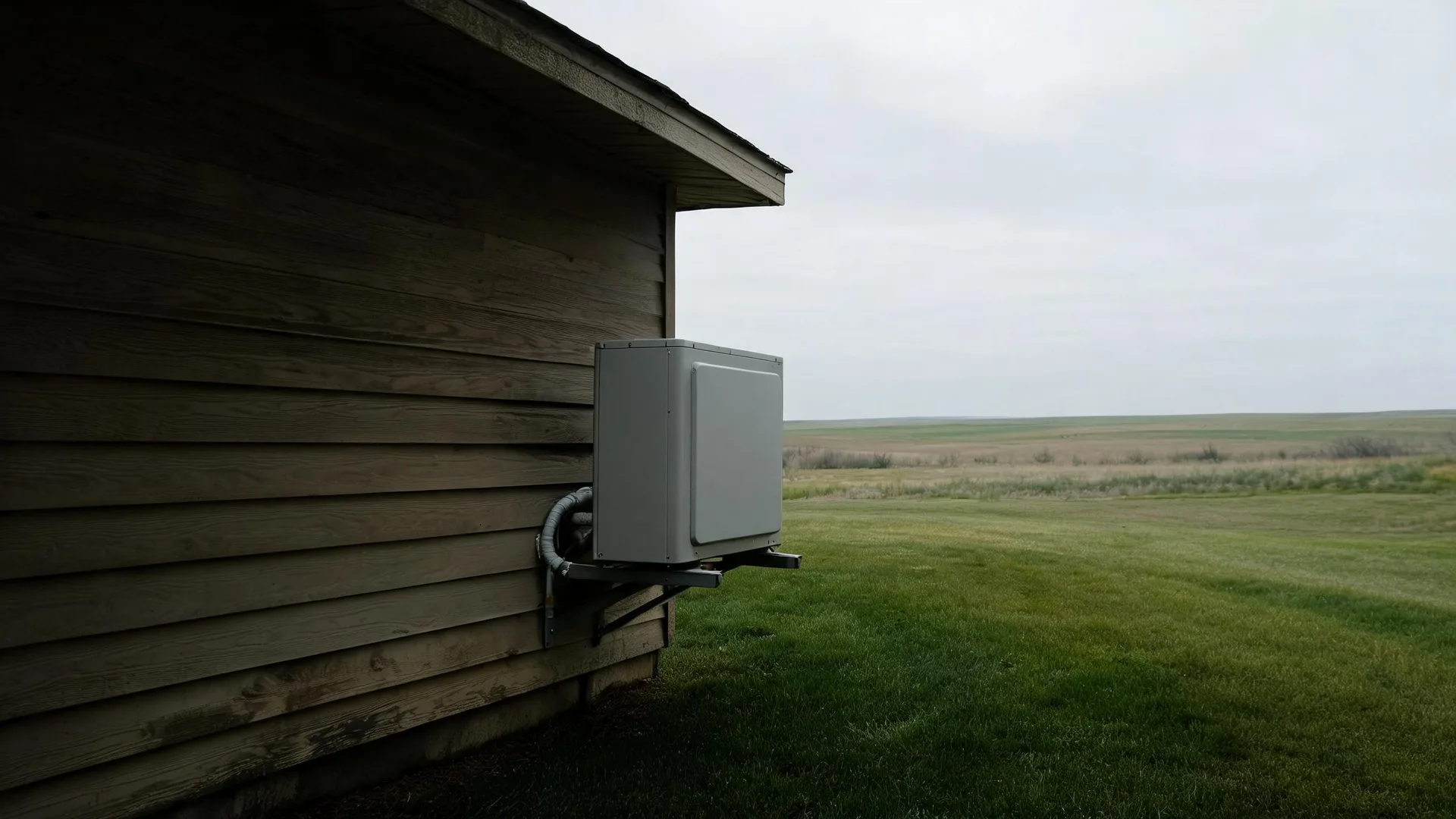
The indoor air handler mounts high on an interior wall in the room being served. It is the piece a homeowner sees every day, and it is where conditioned air enters the living space. Outside, the condenser unit sits on the ground or on a bracket against the exterior wall, housing the compressor and the fan that reject heat to the outdoors.
A refrigerant line set runs through a small penetration in the wall to connect the two units, bundled alongside a condensate drain line and the power and communication cables. Some installations also include a dedicated disconnect box mounted near the outdoor unit, which gives a technician a safe local shutoff point.
The drawing shows a typical layout, and a licensed contractor determines exactly how each piece is positioned in your home.
Find a contractor in Atchison CountyAtchison County, Kansas, by the numbers
54 severe weather events were recorded in Atchison County, Kansas between 2015 and 2024.
NOAA National Centers for Environmental Information, Storm Events Database, bulk CSV export, events 2015-01-01 through 2024-12-31.Half the homes in Atchison County, Kansas were built in 1968 or earlier (2020-2024 ACS 5-year).
U.S. Census Bureau, 2020-2024 American Community Survey 5-Year EstimatesAtchison County, Kansas holds 6,817 housing units (2020-2024 ACS 5-year).
U.S. Census Bureau, 2020-2024 American Community Survey 5-Year EstimatesOwners occupy 71.9% of the occupied homes in Atchison County, Kansas (2020-2024 ACS 5-year).
U.S. Census Bureau, 2020-2024 American Community Survey 5-Year EstimatesSevere Weather History in Atchison County
Heating and cooling equipment in Kansas carries the load of whatever the local climate delivers, and that load shapes what a system needs to handle year after year. How hard the weather pushes here is part of what makes sizing and installation a decision worth getting right for this area.
54 severe weather events, 2015–2024. Source: NOAA National Centers for Environmental Information, Storm Events Database.