

Profile view of a bearded man wearing a dark baseball cap and a dark gray T-shirt against a plain off-white background.

Mini split frozen up in Lawrence, KS

Step 1 of 3: Equipment

A mini split with ice on the outdoor unit or the indoor coil is usually still running the defrost and fan but moving little or no warm or cool air. Most of the time it's ice building on the outdoor coil because the unit is trying to pull heat from cold air and the defrost cycle isn't keeping up, which is common once temperatures drop hard in a Lawrence winter. It can also happen in summer if airflow across the indoor coil is blocked, usually a dirty filter or a low refrigerant charge, and the coil gets too cold and frost forms. Running it longer won't melt the ice and can strain the compressor. Turn the system off and let it thaw fully before anyone touches the lines or tries to diagnose it further. If it refreezes once it's back on, something mechanical needs a look.

Cooling runs May through September

Five months of cooling here means your mini split runs long stretches without a break. That's more time for ice to build if airflow is weak or the coil is dirty, and more chances for a frozen unit to show up right when you need it most.

NOAA nClimDiv 1991-2020

Keep running a frozen mini split and you risk the compressor. Ice blocks the coil from doing its job, so the compressor can end up flooded with liquid refrigerant instead of gas, and that kind of damage isn't cheap to fix.

Shut it off and let it thaw and you lose a day, maybe less. Turn off the unit, run the fan only if it has that setting, and let the ice melt on its own before anyone touches the coil or the lines.

Why does a frozen mini split matter so much in Lawrence?

  • Cooling runs May through September

    Five months of cooling a year means the outdoor unit logs long hours where a dirty coil or weak airflow can turn to ice before you notice.

  • Heat runs October through April

    Seven months of heat means the system also runs in the cold stretches when frost forms easiest, so a frozen unit can cost you comfort twice a year.

  • Power here costs 14.77 cents per kilowatt-hour

    At 14.77 cents per kilowatt-hour, a mini split icing over and running without moving air still draws power while it does nothing useful for your home.

NOAA nClimDiv 1991-2020 · EIA-861 2025

What a frozen unit costs you

A mini split that's frozen isn't cooling or heating your rooms the way it should, even while it keeps running. You'll notice the room not reaching temperature, the indoor unit blowing weak air, or water pooling under the indoor head as the ice melts back down. Meanwhile the unit is still drawing power and doing none of the job you're paying for. Leave it running like that through a long stretch of a Lawrence summer or winter and you're paying for electricity that isn't turning into comfort. The longer it goes unnoticed, the more water damage you risk near the indoor unit, especially if the drain pan or line can't keep up with all that meltwater.

What's at stake if you wait

A mini split you lean on for most of the year in Douglas County doesn't have much slack built in. If it's your main source of heat or cooling for a room, a frozen unit left alone can mean days without that room working right, not just an afternoon. Catching it early, shutting it down, and having someone look at why it froze usually means a straightforward fix. Waiting through repeated freeze and thaw cycles raises the odds you're looking at compressor damage instead of a cleaned coil or a refrigerant check, and a compressor is the most expensive part of the whole system to replace.

A smiling man in a dark green sweater sits at a wooden table with a light gray mug in a kitchen with white tile backsplash, pendant lights, and an adjoining living room visible.
A smiling man in a dark gray sweater stands indoors looking to the side, with a kitchen counter holding a ceramic mug and open wooden shelves behind him and a living area in the background.
A smiling man in a dark blue button-up shirt stands at a white kitchen island, with open shelving, a gas range, a potted plant and a window in the background.
A smiling man with dark wavy hair and a beard, wearing a dark green knit sweater, sits in an open-plan living room and kitchen with a brown sofa, large windows, and a counter holding a mug and a wooden bowl.
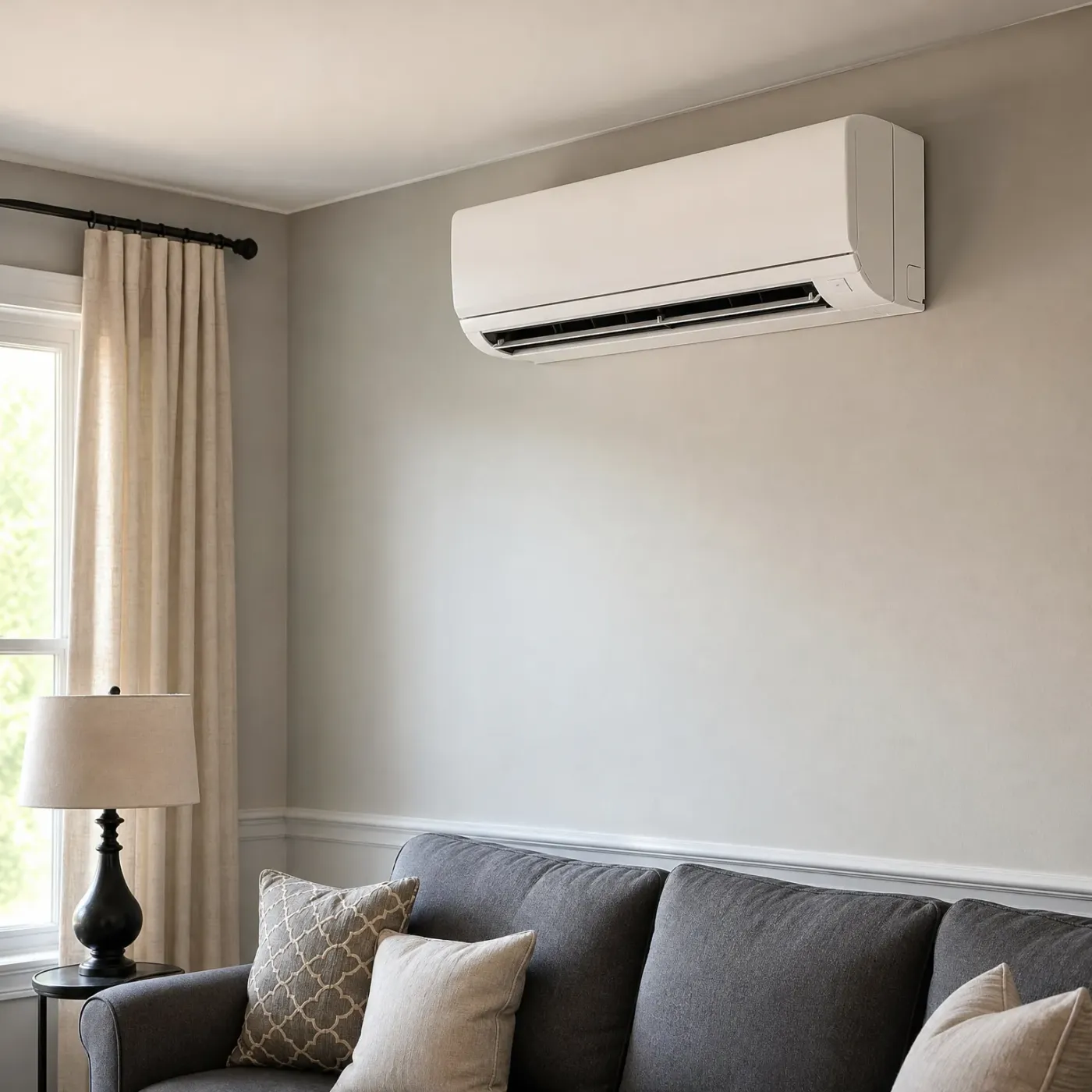
A white wall-mounted mini-split air conditioner installed high on a gray interior wall above a dark gray sofa with patterned cushions, next to a window with beige curtains and a table lamp.

Done looking for a mini split pro

A licensed pro who works in Douglas County gets your request.

Once you send the form, finding a pro is off your list.

Send my request

You only hire the pro if you want to.

Thaw It Yourself or Call Someone

Thaw it out

  • Switch the unit off at the indoor head and let the ice melt on its own, which can take several hours depending on how much has built up.
  • Set the indoor fan to run without the compressor if your unit has that mode, since moving room air speeds up the thaw without adding more cold to the coil.
  • Wipe up the water as it drains, since a frozen outdoor coil often means meltwater pooling by the indoor unit or dripping from the line set outside.
  • Clear leaves, grass clippings or snow away from the outdoor unit while it thaws, since blocked airflow there is one of the common causes of icing.
  • Once it's clear, run the system and watch whether ice comes back within a day or two, which tells you the cause is still there.

Have it looked at

  • A technician can check refrigerant charge, since a low charge is one of the main reasons the outdoor coil runs cold enough to ice over.
  • They can clean the indoor and outdoor coils, since dirt and dust on either one blocks the airflow a mini split needs to keep from freezing.
  • They can test the blower wheel and fan motor, since weak airflow from either one starves the coil and lets frost take hold.
  • They can check the defrost control board, since a mini split that fails to cycle out of defrost on its own will keep icing over no matter what else is fixed.
  • A local contractor who services mini splits through Lawrence winters and summers alike has likely seen this same freeze-up before and knows which of these to check first.
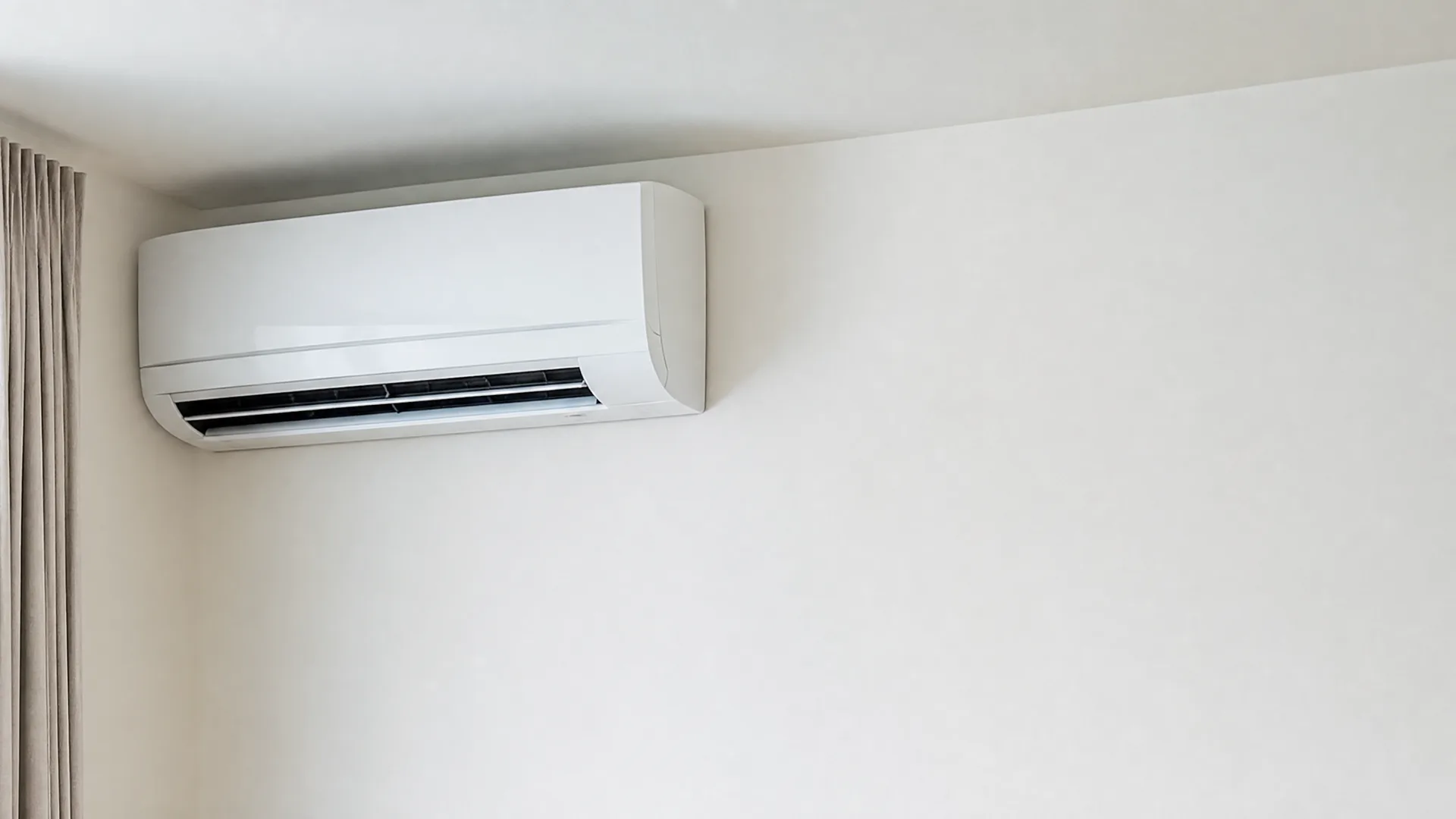
A white wall-mounted mini-split air conditioner near the ceiling of a plain off-white interior wall, with a light curtain at the left edge.

Ice on the outdoor unit

This is the coil you'll see first, since it sits outside where you walk past it. Ice usually forms across the fins or around the base, and the fan may still be spinning under it. It points to the outdoor side not getting what it needs, whether that's airflow blocked by leaves or snow, a low refrigerant charge, or a fan that's slowing down. A contractor checks the charge and clears the coil before anything is tightened or replaced.

A white wall-mounted mini-split air conditioner on a plain light wall above a gray sofa with cushions, with a leafy houseplant at the right edge.

Ice on the indoor coil

This one hides behind the indoor head, so you often catch it from water dripping or pooling instead of seeing the ice itself. It points to airflow being choked off inside, usually a dirty filter or a coil caked with dust and grime. The fix starts with cleaning, not refrigerant, since adding charge to a dirty coil won't stop the ice from coming back. If the filter looks clean and it's still icing, the problem is further in and worth a proper look.

What are you seeing on your unit right now

Look at the indoor head first. If a fine frost or solid ice is sitting on the coil behind the vents, or water is dripping down the wall or pooling on the floor below it, that's your sign. Outside, check the coil and the base of the unit for ice across the fins, sometimes thick enough to stop the fan blades from turning freely. You might hear the fan straining or notice it's gone quiet. The room itself will feel off: it won't reach the temperature you set, and the air coming from the vents will feel weak even on high. None of this fixes itself by waiting, and running the unit this way for days at a time is how a simple ice problem turns into a compressor repair.

A white wall-mounted mini-split air conditioner unit installed high on a light gray interior wall below crown molding, with a bamboo-shaded window at the lower left.

Running normally

This is what a healthy mini split looks like: clean white casing, vanes opening and closing as it calls for heat or cool air, no frost anywhere on the coil. Air comes out steady, warm in winter and cool in summer, and the wall underneath stays dry.


A wall-mounted mini-split air conditioner indoor unit with a dusty, discolored cover, installed near the ceiling on a plain light-colored wall.

Frozen and struggling

Dust and discoloration on the casing usually mean the coil behind it has been fighting weak airflow for a while. Once ice takes hold, the vanes may still open, but the air coming out is weak or barely there, and the unit is working without doing its job.

A smiling bearded man in a green t-shirt sits on a gray sofa, looking down toward a device at the bottom of the frame, with a bookshelf and a green plant blurred behind him.
A bearded man in a plaid flannel shirt stands indoors beside a wood-framed, frost-covered window, looking outside, with a steaming brown mug on the sill and a wooden cabinet behind him.

What to do from here

  • Ice on a mini split means the coil isn't getting what it needs, not that the unit is broken for good.
  • Shutting it off and letting it thaw stops the compressor damage that comes from running it frozen.
  • A frozen unit in Lawrence often points to weak airflow, a dirty filter, or low refrigerant rather than a failed part.
  • A technician who works on these units all season in Douglas County knows which of those three to check first.
  • Getting matched with one local, licensed contractor means one call back, not a string of them to sort through.
  • Once the ice is gone, the real cause still needs to be found, or it will freeze again.

A frozen mini split is a sign, not a verdict. The ice tells you the coil isn't getting the airflow or refrigerant it needs, and the fix starts with shutting the unit off and letting it thaw rather than running it through the problem. Once it's clear, the question is why it froze, and that's where a filter, a blower, or a refrigerant charge comes into play. Guessing between those three from the owner's manual wastes the thaw you just waited through.

This is where it helps to have someone who sees this equipment all season in Douglas County, not just once. A technician who works on mini splits through five months of cooling and seven of heat has a sense for which of the three usual causes shows up in which situation, and checks that one first instead of working down a list from scratch. That's less time with the system down and less chance of the same ice forming again next week.

Sending the request here puts you in touch with one contractor, licensed and local, not a handful of companies calling to bid on the job. You explain the problem once, to someone who can act on it, and the search for who to call is done. The unit still needs a real diagnosis, but you're not the one running it down anymore.

A dark wood cabinet with a drawer and black knob holds a ceramic vase of green leafy branches and a wooden bowl, beside a window with a woven basket of knit blankets.
Sunlit interior corner with white baseboard molding, cream walls, a wood floor, a woven jute rug, and a potted green plant on a window sill with trees visible outside.
Sunlight falls across a marble countertop by a window, where a small stone bowl with pebbles sits beside a potted pothos plant in a ceramic planter and a folded beige towel.
Exterior corner of a house with lap and shingle-style siding, a white gutter and downspout with offset elbows, a stone veneer base, a window at right, and flowering hydrangea shrubs at lower left in warm low-angle light.
A wooden console cabinet with a caned front holds a ceramic vase of green leafy branches and a shallow wooden bowl, below a framed landscape print on a beige wall beside a curtained window.

It's off your list after this

A licensed pro who repairs mini splits in Douglas County gets your request.

Find a licensed pro

Asking costs nothing, and the choice to hire stays yours.