
Adding a mini split to a Kansas home with a furnace
Can I add a mini split to my house if I already have a furnace?
You've got a gas furnace, and summers in Kansas get sticky enough that you're thinking about a mini split to handle the cooling, or maybe just one room that never feels right. You're not looking to rip out the furnace. You just want to know if the two can work side by side before you plan anything further.
Yes, a mini split runs alongside your furnace without conflict
A mini split and a furnace don't compete for the same job. The furnace burns gas and pushes heat through your ducts. The mini split is its own separate system, with its own line running to an outdoor unit and an indoor head, and it doesn't touch your ductwork at all. That's why homes add one onto a house that already heats with gas, often to cool a room the main system struggles with, or to cover the whole house with something that doesn't rely on ducts. Most mini splits also heat, so you'd have two ways to warm that space, but there's no wiring or gas line conflict to sort out since they run independently. What matters more is where the outdoor unit goes and how the line set reaches it, which is a question for whoever installs it.






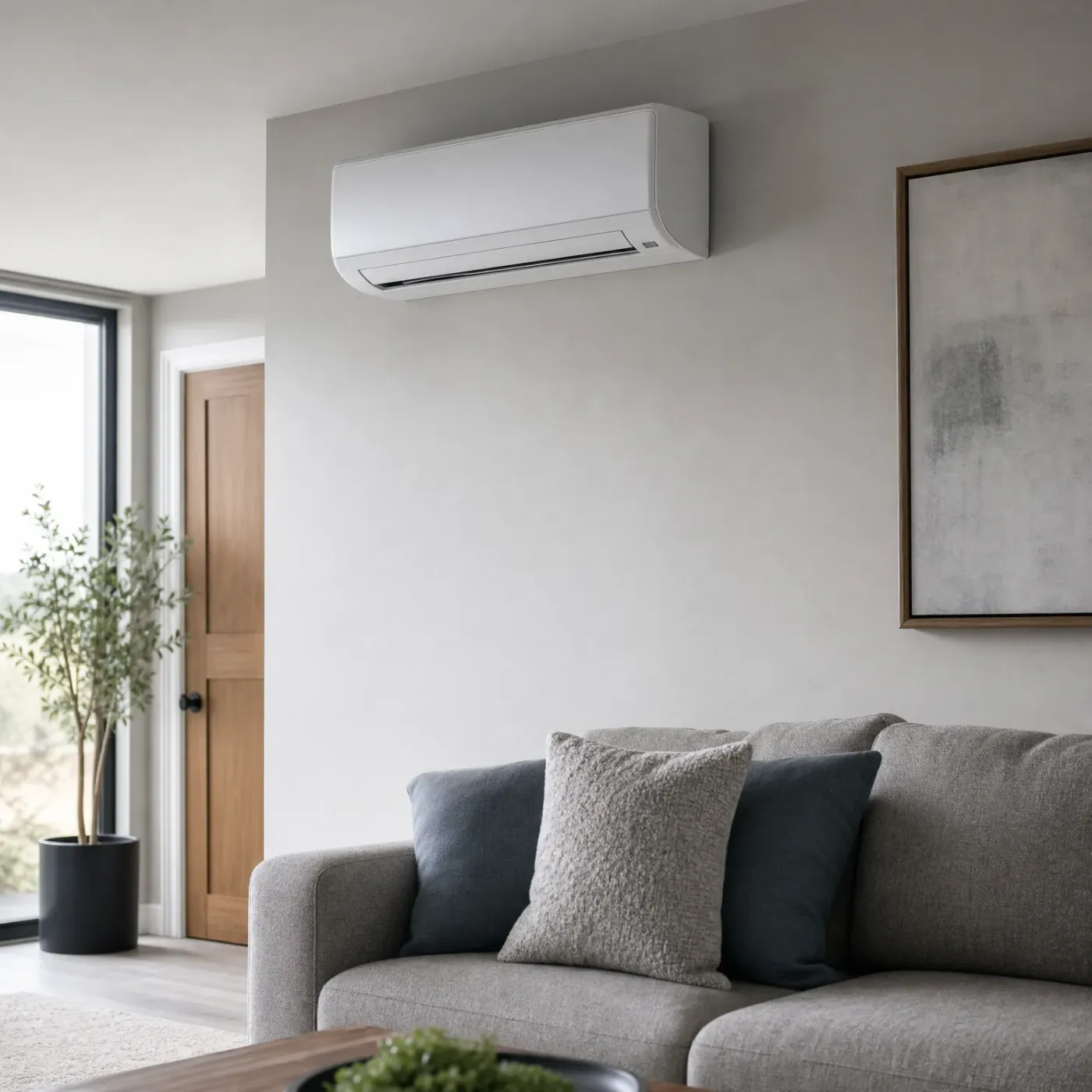
A mini split doesn't tie into your furnace or its ductwork at all. It's a separate system from the ground up. The outdoor condenser gets its own wiring, usually its own circuit, since it pulls more power than a regular outlet is built for. Inside, the wall-mounted head pulls warm air across a refrigerant coil and starts cooling the room fast, often within a minute or two of switching on. Everything that connects the two halves, the refrigerant lines and the small condensation drain, runs through a single hole in the wall, usually three inches across or smaller. Your furnace doesn't know any of this is happening. It keeps its own thermostat and blower, running the rest of the house the way it always has. You end up with two controls instead of one, which sounds like a downside until you're heating that one problem room in winter too. Most mini splits run in reverse for that, so your furnace can sit idle in a closed-off room while the mini split handles it alone.
How a mini split actually works
- A mini split runs as its own standalone system, with an outdoor condenser wired separately from your furnace and no shared ductwork between them.
- The indoor head mounts high on a wall and pulls warm air across a refrigerant coil, so cooling starts within a minute or two of power-up.
- A line set carrying refrigerant and a small drain line for condensation run through one hole in the wall, usually three inches or less.
- Your furnace keeps its own thermostat and blower, so adding a mini split means two separate controls instead of one zoned system.
- Most mini splits also run in reverse to heat that one room, which means your furnace can idle in rooms you've closed off.
- An electrician usually needs to run a dedicated circuit for the outdoor unit, since it draws more than a typical household outlet handles.


Matched to your mini split job
One installer gets your project, so there's no bidding war over it.
Get in touch with a local installer about a new mini split.
There's no charge for the request.
Furnace Heat vs. Mini Split Room
Whole-house furnace
- Your furnace pushes heat through the same ducts to every room, so the thermostat setting applies evenly across the house.
- One filter and one blower handle the whole system, which keeps maintenance simple and centered on one piece of equipment.
- Gas furnaces are common in Kansas, and parts and service for them are easy to find locally.
- A furnace can't cool, so it does nothing for the sticky months unless you already have central air tied into the same ducts.
- Rooms far from the furnace or at the end of a duct run sometimes heat slower or less evenly than rooms closer to it.
Mini split, one room
- A mini split cools and heats only the room its indoor head is mounted in, so it won't touch the temperature anywhere else in the house.
- It runs on its own thermostat, separate from the furnace, so you can set that one room colder or warmer without changing the rest of the house.
- No ductwork is needed, which matters in a room that was never connected to the furnace's duct runs to begin with.
- It draws its own electricity, and since power in Kansas runs at a typical rate, running it is a straightforward add to the bill rather than a markup.
- It won't help a different room that runs hot or cold, since its reach stops at the walls of the space it's installed in.
No ductwork changes needed
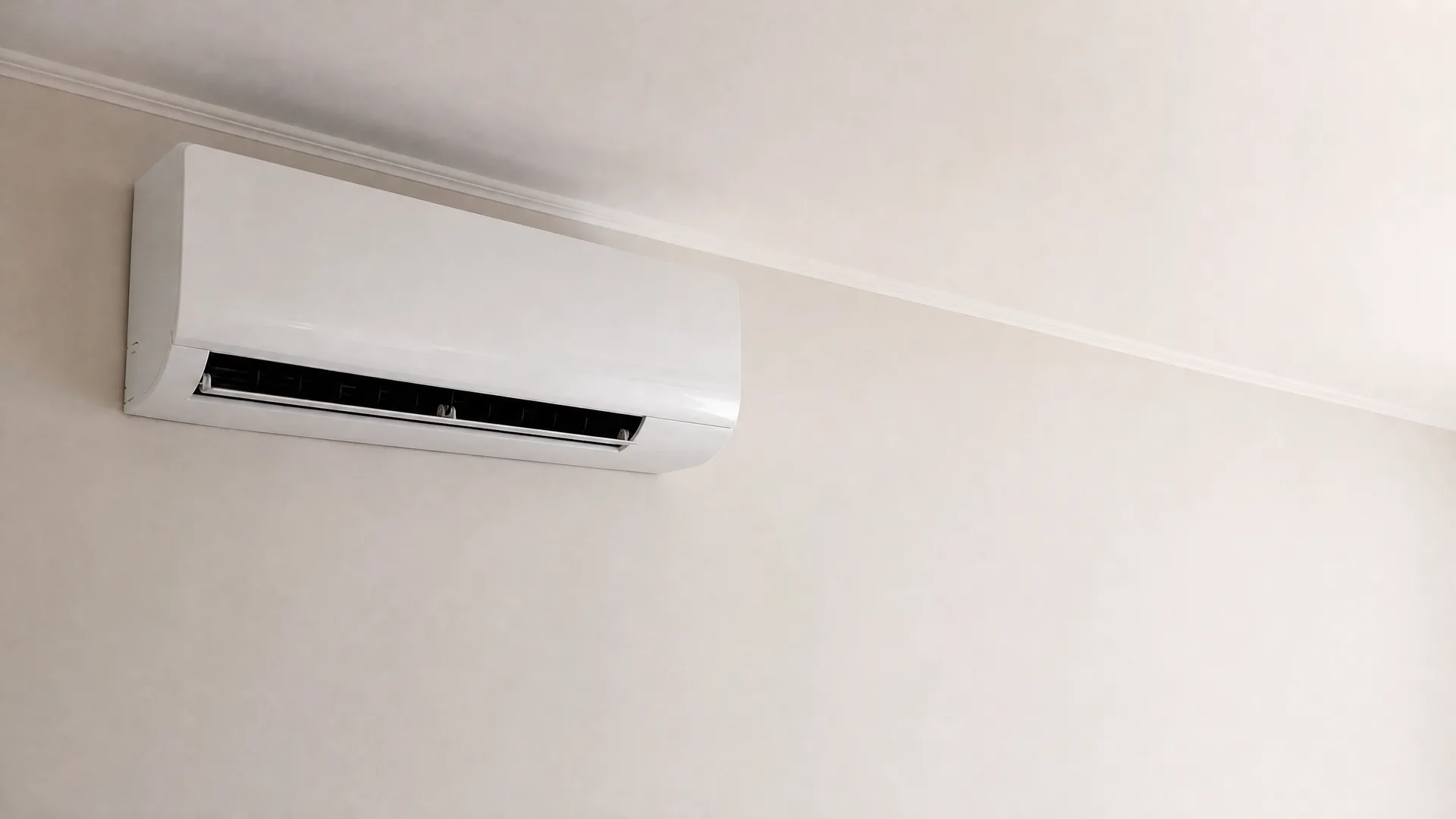
Your furnace moves air through ducts that run behind walls and through the attic or crawlspace. A mini split doesn't touch any of that. The line set and power wiring run from the outdoor condenser to the indoor head through a small hole in the wall, usually three inches or less. Your furnace's ductwork stays exactly as it is, untouched and unaffected, whether the mini split goes into a sunroom, a converted garage, or a bedroom addition that never got its own vent.
Two thermostats, two zones
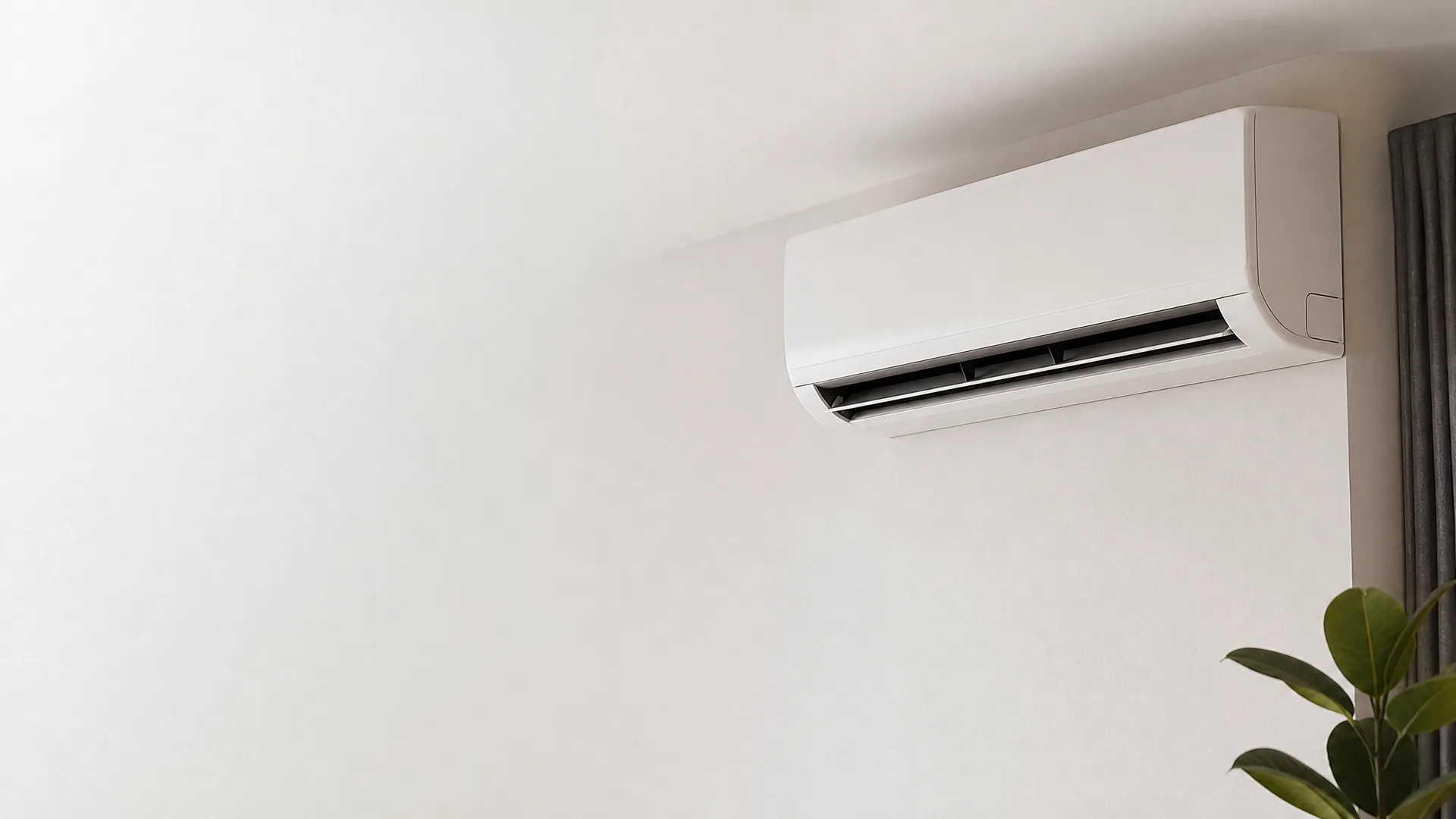
Your furnace runs off one thermostat for the whole house, but the mini split comes with its own remote or wall control for just that room. That means the room with the mini split can sit at a different temperature than the rest of the house without a fight over the setting. Some people run it cooler in the room they use most during the day and let the furnace-fed rooms stay at whatever the main thermostat says. Each system works independent of the other.
Power costs 14.44 cents per kilowatt-hour statewide
At 14.44 cents a kilowatt-hour, running your mini split in a room your furnace already heats isn't a big add to the power bill. It's the unit sized to the space, not your whole house, that keeps summer cooling costs in a range you can plan for.
EIA-861 2025 statewide residential average
A mini split and a gas furnace can share a house without sharing anything else, each one doing its own job, and that's really the whole answer. The furnace keeps heating the way it always has, and the mini split takes on the room or the season where it falls short. What matters after that is who hangs the indoor head and runs the line set, because that work decides whether it cools evenly for years or gives you trouble by the second summer. A contractor who installs these in Kansas homes every year has seen which rooms give the most trouble and which mounting spots hold up, and the match here sends you one licensed local contractor who does this work, not a handful of companies competing for your callback. You end up with someone who already knows your climate and your kind of install, not a stranger learning on your house.

A mini split pro near you
Only one pro gets your request, so you hear from one company.
You only hire the pro if you want to.